When words are not enough

It really is so difficult to describe what it is like to go to church at 7:30 on a Sunday morning and find the service already so full that the only available seats are in the very back of the church. As time passes, however, you realize how lucky you are just to have those seats because people who arrived even later are now watching from the windows or standing around the door.

That was the experience I had this past Sunday at the cathedral in the Diocese of Yei, about 100 miles outside of Juba. The previous Sunday I had been in a congregation in Juba where the announced attendance was 1300+. That, apparently, was a down Sunday because I heard that the Sunday I was in Yei the attendance at the church in Juba was over 2000.

It is simply flabbergasting to worship in situations like this when I am so used to the empty pews of American churches. Pictures do not even begin to do justice to the experience but here are a few.

One of the (many) remarkable things is how young the congregation is. In Yei, I probably skewed the average age higher rather than lower it (substantially) as I often do in American churches.

There is nothing terribly surprising about all this. It is a fact that Christianity’s centre of gravity is shifting south and east. For some time, more Christians have lived south of the equator rather than north of it. But there is something exceptional about the church in Sudan. In South Africa, I routinely went to church with 300 or 400 people. That was one thing. But 1000? Or 2000? Stunning.

I’ve been re-reading Vincent Donovan’s Christianity Rediscovered while here, about his evangelism among the Masai in Tanzania. I was struck this time through by this section:

As I pass on this message of Peter and Paul and John to the segment of the nation before me, I am overcome with a kind of melancholy. History is playing itself out, in capsule form, before my very eyes. As I watch these Masai men and women…ponder the implications of this message, I know they will have to work out their own response to it. And their response, whatever it is, will not have very much to do with me.

As the message passes from us to them, I find myself hoping that they will make better use of it than we did.
Rocking out

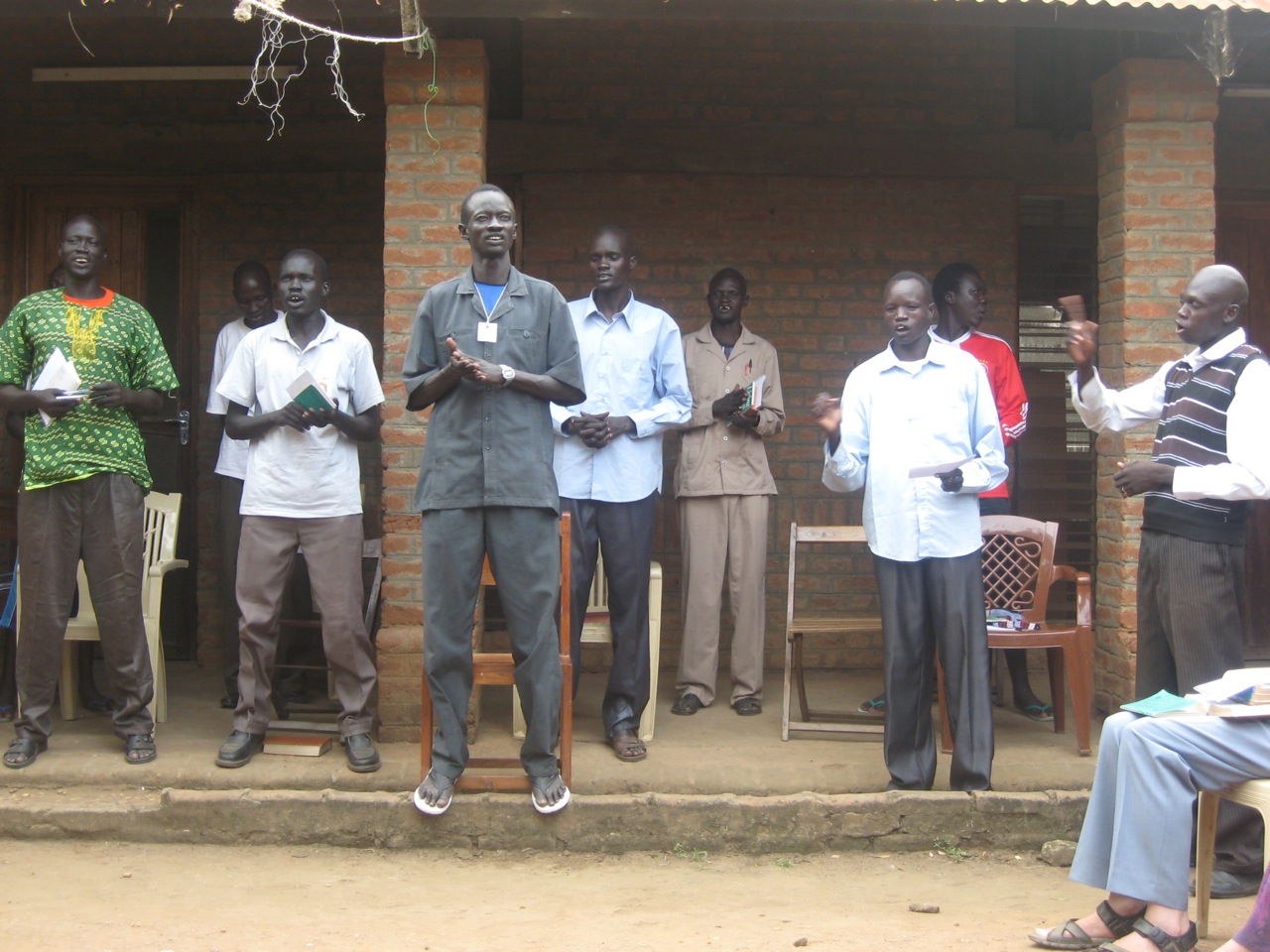
As there are so many different cultural backgrounds represented among the student body, each evening a different choir performs at evening prayer. One evening it is the Dinkas, another the Nuer, another the Zandes, etc. The Dinkas, for instance, performed not long ago.

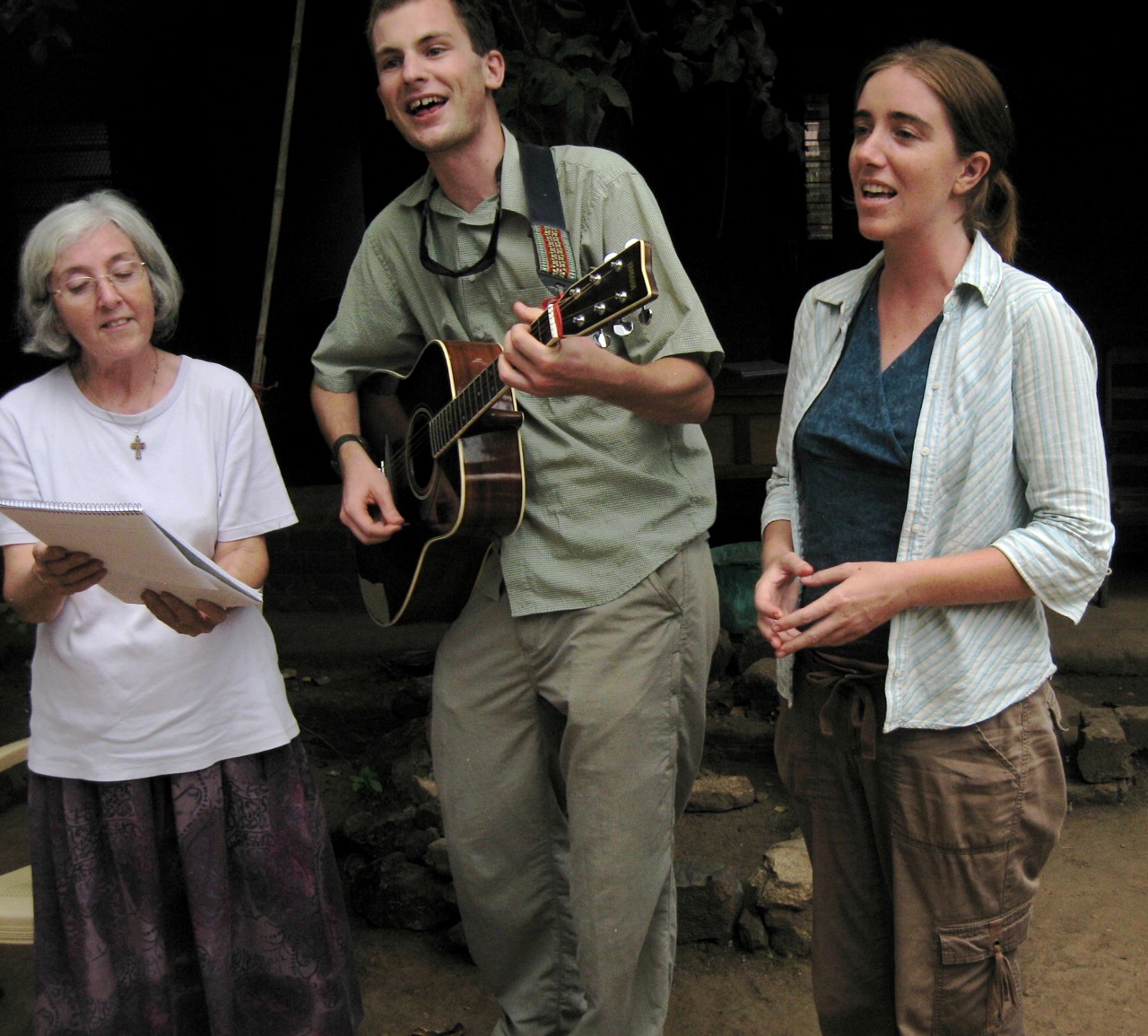
By popular demand, the ex-pats performed a number recently, opting for “Shine Jesus Shine” as a number that we all knew. Fortunately, I also remembered the chords from my camp-counseling days. We really got into it, as you can see.

Juba e-mail #2

Dear friends,

The other weekend I found myself following four students at Bishop Gwynne College to visit a relation of theirs in a neighbourhood of Juba some distance from the college. As we travelled across town and then spent the afternoon in the relation’s tukl (thatch-roofed hut), I was continually aware of how these students were watching over me and welcoming me as one of them. Through Juba’s hectic streets and into a neighbourhood where, based on the stunned looks on the children’s faces at the sight of me, khawajas (white people) rarely travel, I marveled at the way these students had opened up their lives to me and welcomed me in.

And why? What had I done to deserve this welcome? Sure, I am a guest and they treat guests nicely around here. But no one had to invite me along on the afternoon excursion. Their hospitality and welcome were extended solely on the basis of our common membership in the Body of Christ. That alone was qualification
enough to be included in this group as a co-equal member.

As I move into the latter half of my time in Juba, Sudan, I continue to be amazed at how thoroughly I have been welcomed and made to feel at home here. In so many ways, little and small, these students have treated me as one of them simply because of that common membership in the Body of Christ. What a gift it has been, a gift made all the more amazing because I don’t even remember my entry into that Body.

I have been to some incredible church services here. Last Sunday, I was at the cathedral in Yei, a town 100 miles from Juba. At the 7:30am service, there were over 1000 people in attendance and the average age of the congregation was about 25. The job of the ushers is to pack people into the pews to ensure no space goes to waste. Yet there is still an overflow crowd outside the doors. How do I explain to people here that in the U.S. you can arrive for church 10 minutes late and still reasonably expect to get an entire pew to yourself?

South Sudan’s tenuous and uncertain political situation is forefront in the minds of everyone I meet. Everyone is looking forward to the referendum on independence in January. The Episcopal Church of Sudan is the country’s largest non-governmental organization, with a presence in virtually every village. If the referendum goes as anticipated, these students will be returning home to be on the front lines of building a new nation. It is clear that for them the Christian messages of peace, love, and liberation are at the forefront of their minds as they consider that future.

Knock on wood, my health remains fine and my spirits high. It has been terrific to be on African soil again and I have a feeling of peace I haven’t experienced at all in the last year. I am tiring somewhat of sorghum and beef (especially for my vegetarian sensibilities) for every meal but it’s a small price to pay for this opportunity. I continue to post stories online at https://jessezink.wordpress.com. If you look now, you’ll find stories about priests as farmers, how noted feminist scholar Phyllis Trible came to Juba, and what I learned about Christian unity from a conversation about cattle and monkeys.

Your man in Sudan,
Jesse

Jesse Zink
Yale/Berkeley Divinity Schools, M.Div. 2012
jessezink@gmail.com

Phyllis Trible comes to Juba?

It may not sound like it from some of my other posts but I actually am attending classes here. And I sat in on a really great one last week with the senior students – “Theology from the Perspective of African Women.”

The conversation was about what the Creation story(ies) have to say about the relationship between men and women. To begin, the students offered some opinions – since God created men first, men take priority; the woman is a helper for men. The class knew about the different accounts of creation and the J source and the P source. They discussed how, if at all, these accounts fit together.

But then the teacher, an Italian Baptist (who knew they existed?), started looking at the Hebrew. The class looked at all the different Hebrew words that are used for “[hu]mankind,” “male,” “female,” “man,” and “woman,” and how adam is used differently in the two accounts. It reminded me of the article we read in my Old Testament class last year by noted feminist scholar Phyllis Trible.

The class was very engaged to this point, following the Hebrew and asking good questions. Just before the break, one student said, “But God still made man before woman,” implying that gave greater precedence to men. “But what did God create before man?” “Animals,” replied the student. “So should animals be in charge of men?” Then we took a break during which there was conversation about whether Dinkas, a pastoralist people, should let their cattle be in charge. We talked in that break about what it means to be created “in the image of God” and what it is that humans have that animals don’t. When I said that animals can’t think (meaning that they can’t reason in the same way as humans), one Dinka student told me, “But the cows know to stay away when it is time to slaughter one of them!”

After the break, we looked at some passages from Paul about gender relations – I Cor. 14:34 and Gal. 3:28 and Rom. 16.

To this point – except for the conversation about cows during the break – this was all material I had covered in previous classes at YDS. But then the class took the conversation to a level we never reached at YDS. They began to think out loud about how their cultural backgrounds influenced how they read the Bible, the relationship between Bible and culture, what is lost and gained by looking at gender relations in the Bible in a new light, whether this new interpretation is just an imposition of white people, how the cultural background of the authors of the Bible influenced their views, and so on. What was so interesting is that because the students represent so many different tribes, each has different cultural beliefs and practices regarding gender relations. I stayed quiet while student after student contributed to what was a remarkable and wide-ranging conversation.

I don’t think everyone was on the same page by the end of the class and it’s not like gender relations are suddenly going to improve because of this one session. But the major conclusion the class agreed on during the conversation was that if we approach the Bible with preconceived notions we will likely find them confirmed in the text. One student, realizing this, asked, “What in our culture is going along with the Bible? And what is not? And how can we challenge our people to follow along with the Bible and do away with what is not following the Bible?”

Good questions to ask ourselves, I think.

More goings-on

So I am feeling quite overwhelmed by the number of things I want to write about and the lack of computer time I have to write about them. So here come some assorted notes. Maybe some day I’ll be able to write more about them or you’ll be able to ask me in person.

I went to church yesterday at the cathedral in Yei, a town south and west of Juba. We went to the 7:30 (am!) service. There were at least 1000 people in attendance – in a not very big place. The job of the ushers is to pack people into pews so not a seat is wasted. How do I explain to Sudanese Christians that in the U.S. I can often expect to have an entire pew to myself?

While in Yei, I had the opportunity to visit a clinic run by the diocese. I couldn’t help compare it with my own experience working in a clinic in South Africa. The HIV prevalence rate is still quite low but they encounter malaria all the time.

I’ve been struck by the prayers the students offer at daily chapel services. The upcoming referendum is on everyone’s mind and that shows in the deeply heartfelt prayers for peace that are offered several times each day.

Without any prompting from me – or even mention of my family – my family is frequently a topic of prayer. Here’s one I heard on Thursday night.

We pray for our brother Jesse’s family that they know he is alright and healthy. We pray for all the white people in the other countries who believe what they hear about Sudan. We pray that they know our brother will return healthy and free from sickness and that Sudan is not different from the other countries.

That concern was reflected in the welcome I received when I returned “home” to Bishop Gwynne College on Sunday evening. EVERYONE wanted to personally welcome me back and hear all about the journey, even though most of them have never been to Yei and likely never will be. The transportation infrastructure is so poor here that it is a major trek for each student just to make it to Juba from his home town, let alone visit another town.

Inch by inch, row by row…

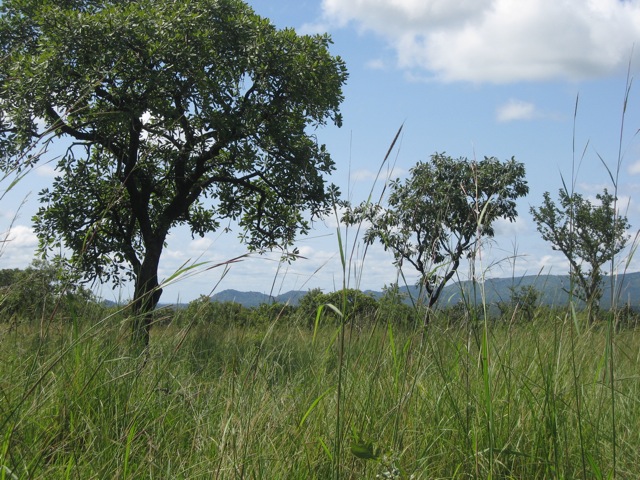
One thing South Sudan is definitely not lacking in is fertile land and the Episcopal Church of Sudan owns some of it. When I hear about churches owning land, I think first of the medieval church and get a little queasy. But not so here. ECS sees the land as a way to feed people, generate income for priests who are otherwise unpaid, and help form the basis of the economy. (Just the other night, I was listening to the BBC here and they had an interview with a World Bank official just returned from a visit to Juba who was convinced agriculture was the future of south Sudan’s economy.)

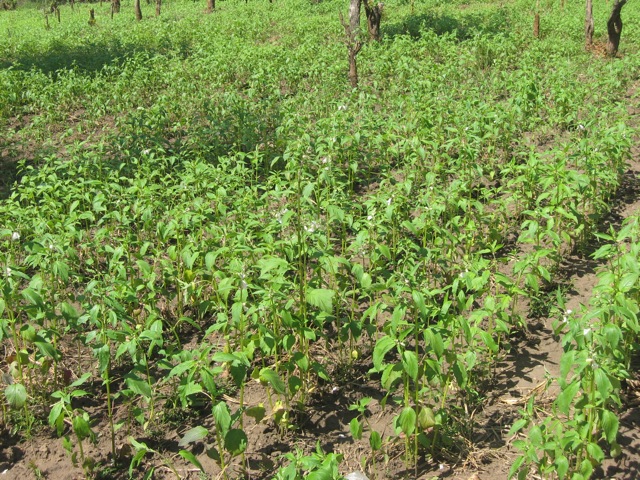
The other day I visited a newish ECS project in the Diocese of Torit, about 60 bone-rattling miles (three hours) away. The project is really remarkable. ECS owns 2000 acres (!) in this particular diocese but has been able to pay people only enough to clear 10 acres. When I first heard ECS owned land, I thought of rolling cornfields in the midwest. I didn’t think of this.

This is a tropical place and clearing the land takes a while. But the results are impressive. In this area, sorghum and sesame (known in Arabic as simsim, as in Simsim Street – no, seriously, look it up) are staple crops and they are growing well. Since this is the tropics, there are two plantings a year.

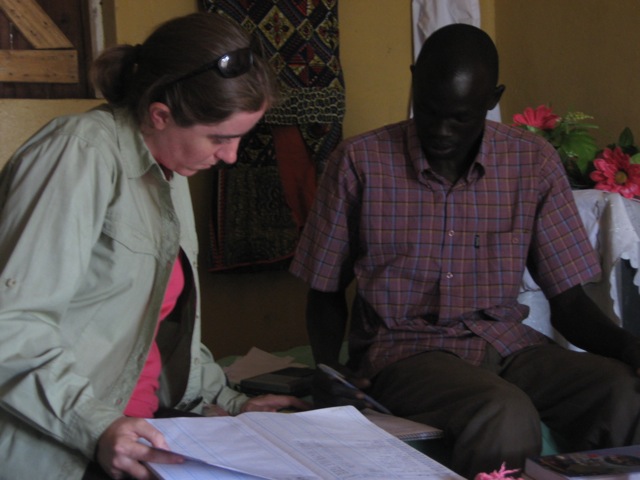
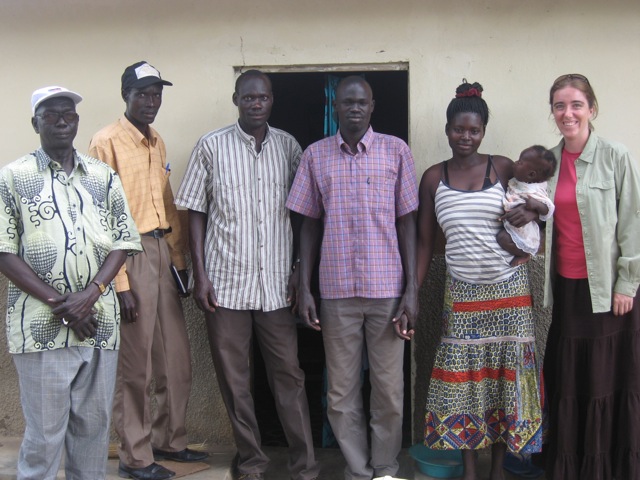
The project is overseen by a committee in the local village and also employs people in the village, including an impressive project manager. Robin Denney, an Episcopal missionary and the agriculture consultant for ECS, provides advice and support to the project but it is a great example of local control.

The Diocese of Torit is a fascinating place. Just a few years ago, it was pretty well overrun by the Lord’s Resistance Army, a marauding rebel army that began life some decades ago in Uganda but now causes havoc around the region. People fled to cities and/or to Uganda. In the just the past few years, people have begun to return to the rural areas. The growing village we visited was almost deserted just a few years ago. People have almost no money – it is clear that everyone is living on far less than a dollar a day, mostly getting by with subsistence agriculture. This is a project that is making concrete change in the quality of life.

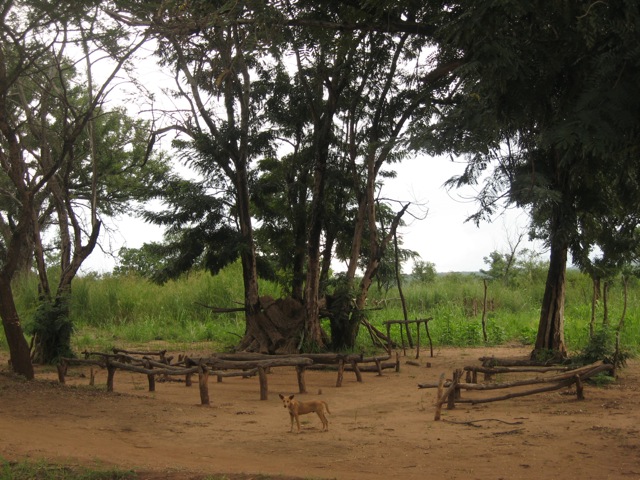
The church in this village is some logs under a tree. Where two or three are gathered in my name…

I’ve been reading a book of former Archbishop of Canterbury Michael Ramsey’s lectures I found in the library here. At one point, he quotes Cyril of Jerusalem to make the point that the church is catholic (that is, universal) not just because it covers the earth but because it “teaches universally and without fail all the doctrines which ought to be brought to the knowledge of men concerning things visible and invisible in earth and heaven.” In south Sudan, agriculture is clearly one of those “doctrines” which needs to be taught and it’s encouraging to see the church so heavily involved.

Bishop Gwynne vs. YDS

When I use the word “seminary” or phrase “theological college,” certain images might pop into mind. When thinking about Bishop Gwynne College, I’d get rid of most of those right away. They’re not helpful in picturing this place.

This week I’ve been continuing to sit in on classes, worship, and meals with the students and pondering the differences between my own school, Yale Divinity School, and Bishop Gwynne College.

At Bishop Gwynne, we haven’t had electricity the whole time I’ve been here and the water has been out the past few days. The former has turned me into an outlet nomad to keep the computer charged enough to write these posts. The latter has made me a sticky, sweaty mess. Such is the life.

The library at Bishop Gwynne has about 200 volumes total, though it is growing rapidly. I take it as a sign of divine providence, however, that as I was browsing the shelves I came across An Anglican Turning Point by Stephen Bayne. I spent a lot of time with this book last semester for a paper and liked it so much I went in search of my own copy. It is long since out of print but after much searching I found one. All that time, however, there was a copy sitting here, likely having survived much of at least one of Sudan’s civil wars.

There’s no chapel so the four daily services are outside in the courtyard. Since there are several tribes represented here, each evening there is rotating choir. One evening a song is Dinka, another evening it’s in Nuer, and so on. It’s kind of neat to compare the musical styles.

There are only a handful of faculty – four, really, at the moment – with one or two more on the way, God willing. They all work really hard and each teach a wide variety of subjects. And the students work really hard as well. They are in the library or in the courtyard, working on assignments and sharing the limited books with each other.

One of the courses I sat in on this week was Agriculture. I’ll have a longer post about this at some point but agriculture is a huge opportunity for south Sudan and the Episcopal Church of Sudan is helping to lead the way. ECS is one of the only NGOs in the country with a presence in virtually every village. If its priests could teach people to farm in a sustainable way, the possibilities are endless, addressing hunger, poverty, and economic growth all at once.

Not only was it neat to learn about agriculture with a bunch of priests, but I learned lots of fascinating things as well. Did you know there are male and female papaya trees? And that if you “shock” the male one, it can become female? When it comes to papaya, males, it turns out, are pretty useless.

More pictures, especially of the agriculture class, are online here.

Women as priests

An astute e-mailer – two, actually – responded to my last letter asking about women in the Episcopal Church of Sudan. On the assumption that more than one person is interested in this question, I’m posting the answer here.

There is one female student (out of ~48) at Bishop Gwynne College. Not great odds, admittedly. She is already a priest and about to graduate. She’s also an older woman and all her children are grown.

She trained as a nurse and a midwife and during the war she lived and worked in Uganda. But her church “chose” – I must confess I don’t really understand what that means – her to be a priest and she was among the first women ordained to the priesthood in 2004. (The decision to ordain women was made several years earlier but the exigencies of the war made it such that the ordinations were put off for several years.) She has served as a priest and has all the rights and privileges thereof. At the service I attended on Sunday, there was a female priest on the altar.

I asked the student why there weren’t more female students at Bishop Gwynne and she had several reasons. For the younger ones, she said, they want to know who will take care of their children while they are at school. (Many – I’d say a sizable majority – of the male students are married with children at home, whom they do not see for the year while they are here.)

Furthermore, many of the female priests in ECS don’t have the educational qualifications to be admitted. They just haven’t finished secondary school.

Finally, many dioceses just don’t have the means to support students at Bishop Gwynne. This affects male and female students but likely compounds the effects of the first two reasons.

Goings-on

I’ve only been in Juba four nights but it feels like a month and I mean that in a good way. It is such a wonderful feeling to have been welcomed so warmly into this school community simply of the basis of my standing as a fellow Episcopal seminarian.

Some moments worth remembering:

Sitting around and listening to students tell me more about their lives. Some are evangelists who have spent years traveling village to village preaching the Gospel and, by necessity, following Jesus’ commands in Luke 9:2-5 (and other places) almost to the letter. Others have been priests for many years and are only now being educated. Some lived in refugee camps during the war, some stayed here. Each story is fascinating. I want to listen but I also don’t want to interrupt their studies. They all spend a lot of time in the library, poring over the small collection of books and working on their assignments.

Church on Sunday morning at the local Dinka congregation. We had to get there 45 minutes early to ensure we could get a seat. There were 1300+ people in attendance that morning, spilling out the doorways.

(For interested Anglicans, there’s no Sudanese prayer book – the church has had other priorities during decades of war – so they use a translated version of the Anglican Service Book, which is moderately familiar to me. Because Sudan was evangelized by the Church Missionary Society, it is low church, especially in contrast to my experience in South Africa – no smells, no bells, very little ceremony.)

After church, I went with five Dinka students to visit friends from their home village. It turned into an all-afternoon expedition around Juba, which really needs a separate post to explain but won’t get it now.

Teaching students how to play the guitar and playing for them during some of the chapel services. Seeing the look of surprise on one student’s face when he realized he could play several of the songs in their song book with the three chords I had just taught him (and which he mastered quickly).

And lots more like this…

There are some pictures in an album on Facebook. You don’t even have to be on Facebook to view them.

E-mail #1

I just sent this to some of my supporters.

Dear friends,

Last year at this time, I was sitting in a lecture hall at Yale Divinity School listening to a lecture about persecution and martyrdom in the early church. Yesterday, I sat with a class of 15 Sudanese first-year seminarians and heard almost the same lecture in their introductory church history class. Perpetua, Polycarp, Diocletian, and Donatism, among much else, were all discussed, as they were last year in my class. There are some things that divide Christians from each other. But it is lectures like these that remind me how much we share.

I arrived in Juba, Sudan yesterday afternoon, where temperatures are an “unseasonably cool” 25-Celsius with a lovely 82-per cent humidity. I’m spending the next three weeks at Bishop Gwynne Theological College, the rapidly-growing seminary of the Episcopal Church of Sudan. Classes began two weeks ago. Last year, there were 14 students. This year, there are 48. My goal for this time is to experience what seminary life is like in a different part of the Anglican Communion, share in the learning experience, and listen to the stories of my fellow Anglican seminarians.

As the experience in the classroom indicates, there is much that is familiar to me. Last night at dinner, we sat around and talked about familiar topics – the future of the church, the relevance of the Gospel to the contemporary world, our families. (Happily, I have yet to hear a single person talk about vestments!) We said prayers that were familiar to me. 

But when Sudanese talk about the future of the church, they can talk about a rapidly-growing church that is creating new dioceses as fast as it can to keep up with the growth. When they talk about the relevance of the Gospel, they talk about a situation of precarious peace after decades of civil war and oppression that many of them remember clearly. When they talk about their families, they talk about wives and children left at home so they can travel hundreds of kilometers in difficult conditions to study here.

Even as they confront difficulties that would confound me, these students are eager to learn about me and where I come from – what classes do I take at my school? am I married? what are my fellow students like? I’ve asked them when they introduce themselves to tell me their diocese and I tell them mine. Many dioceses here have short names – Bor, Yei, Wau. “Western Massachusetts” doesn’t come tripping off a Sudanese tongue quite so easily.

Christ prayed for unity among his followers. My prayer is that my time in Juba would be one very small but concrete instance of that unity in the worldwide Body of Christ. What a gift it has already been simply to sit and talk with people who seem so different to you and me and realize both how similar they are and how much we have to learn from each other.

I hope you’ll follow along with me on this trip. I’ll send another e-mail or two and post more stories and pictures to https://jessezink.wordpress.com. There’s already a post there with some more reflections on my first day in Juba.

Your man in Sudan,
Jesse

Jesse Zink
Yale/Berkeley Divinity Schools, M.Div. 2012
jessezink@gmail.com
https://jessezink.wordpress.com