Hidden Obstacles to Women in the Episcopate

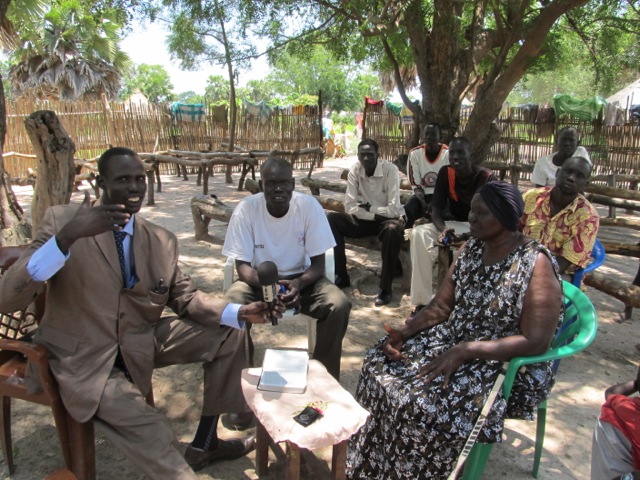
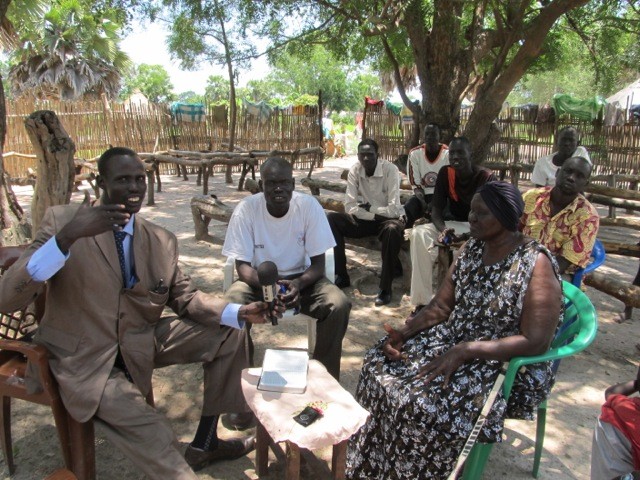
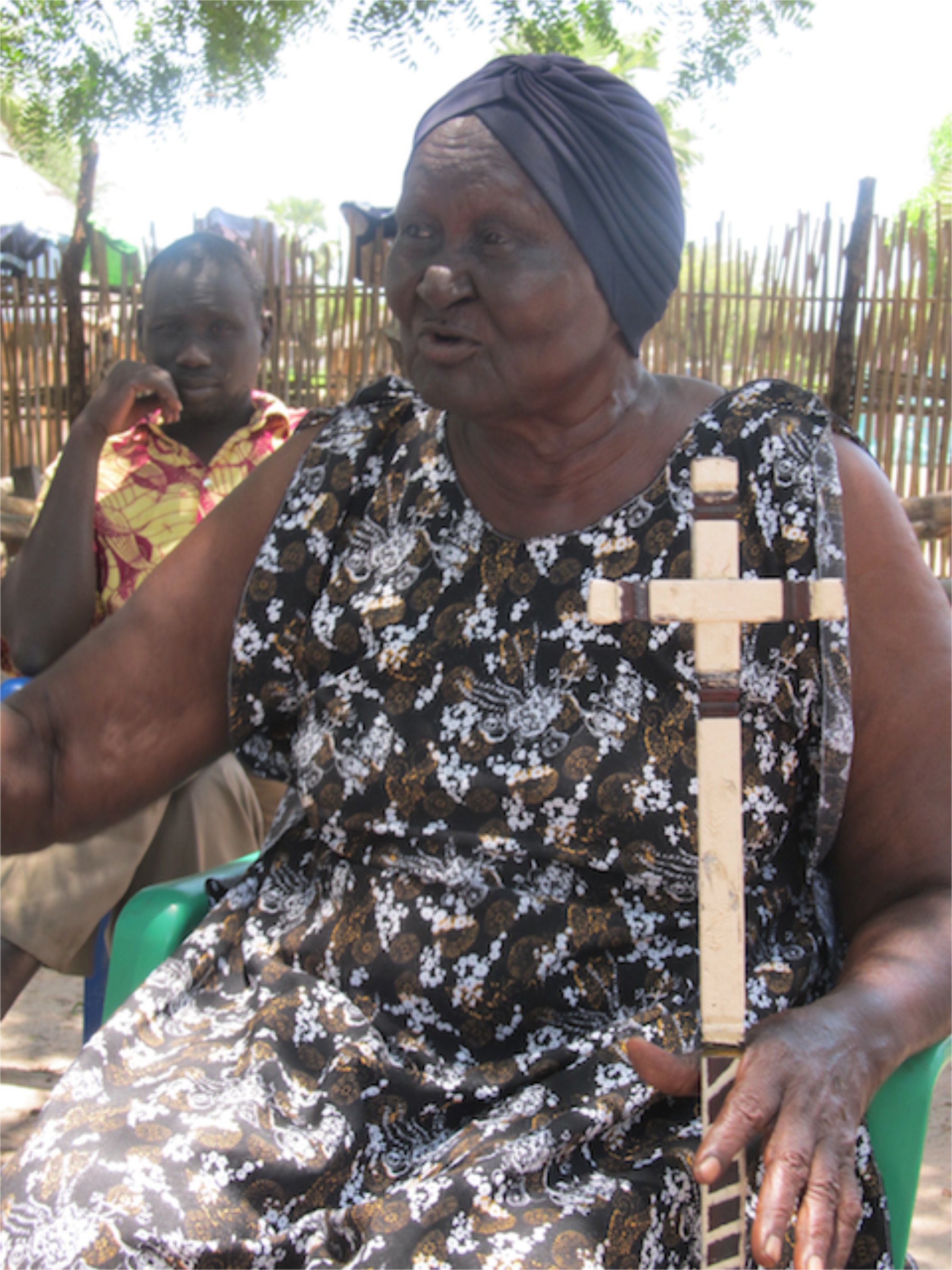
IMG_0239The woman on the left is Martha Yar Mawut, the archdeacon of Akot in the Episcopal Church of the Sudan. Akot is a see city, so it’s a pretty important role. She was an important lay evangelist during the war, was later ordained, and now, by all accounts, performs her job with admirable skill and talent.

If you believe, as I do, that having women bishops is part of the Anglican charism to the wider body of Christ, then women like Martha matter. Archdeacons are among the prospective bishops of the church. The more women like Martha there are in South Sudan, the greater the chance that one of them will become a bishop.

But I don’t think Martha will ever be a bishop. And thinking about her helps us think through some of the obstacles to women bishops in the Anglican Communion.

The topic of women as bishops came up frequently on my recent visit to South Sudan. Everyone I spoke to—male bishops, male and female priests, lay people—were in favour of the idea. It makes sense. Women played a huge role in the growth of the church during the civil war. Male church leaders know that the strength of their church is in the women.

The Episcopal Church of the Sudan has ordained women for about a dozen years. A few are archdeacons, canons or, in one instance, a cathedral dean. In fact, on a rough estimate, I’d say the proportion of female clergy in ECS compares favourably to that in the Church of England, given that the C of E has ordained women as priests for roughly twice as long

Nor is there any canonical impediment to women bishops in South Sudan. When ECS made the decision to ordain women as priests and deacons, they (sensibly) concluded that it did not make sense (theological or otherwise) to deny women to be ordained as bishops.

So there are women like Martha in leadership in dioceses—not many, but some—and there is a path towards women bishops. So why aren’t there any?

The answer I heard, time and again, is education. Given the civil war and the lack of resources in South Sudan, training for ordination is of a necessarily ad hoc and contingent nature. Some people go for a few months to a vernacular Bible college or a diocesan training course, others are fortunate to attend ECS’ English-language seminary, a very small handful have studied abroad. For a variety of reasons, women clergy, by and large, are less educated than their male counterparts.

But ECS has a de facto requirement that its bishops be able to speak English so that they can take part in churchwide meetings. They also have to have some kind of diploma or degree. These are good requirements to have, but it means that many women who perform faithful, important ministry in their local context are unable to be considered when it comes time to elect bishops. Martha could greet me in English, but all my conversation with her was through a translator.

None of this is to minimize the unique array of cultural obstacles women in South Sudan face in pursuing leadership. But to people who know only about the “African church” that it is some kind of misogynistic institution, you would be surprised how much support I heard for women bishops in ECS.

There has been good news of late for supporters of women bishops: the first woman bishop in the Church of Ireland and the Church of South India, the first woman ordained in the Church of England elected bishop (albeit in New Zealand), and canonical changes in Wales to permit the possibility of women bishops.

So much of the debate about women bishops focuses on the canonical changes necessary. That’s good, but it’s not enough. The lesson of my recent visit to South Sudan seems to be that if you want more women bishops, support theological education.

UPDATE: Conversations sparked by this post led to a second post laying out ways to support theological education in South Sudan.
The end is (not) nigh…

There’s been a spate of articles in the secular press recently, keyed to a conference at Wycliffe College in Toronto marking the 50th anniversary of “Mutual Responsibility and Interdependence in the Body of Christ.” (They’re a month late, but who wants to go to a conference in August anyway?)

If the only thing you knew about the Anglican Communion was what you read in these articles, you could be forgiven for thinking the end of the Communion is nigh.

It’s not.

That’s the message I have heard time and time again as I travel around the world church. (I’m writing this post in South Sudan, as a matter of fact, where I have been spending the last month with the church here.) But articles such as these propagate a narrative of disunity that has largely gone unchallenged.

Let’s look at what these articles have in common:

  • They quote mostly bishops. Fair enough, I suppose, since bishops are leaders in the church. In my experience, however, bishops are far from the most interesting (or representative) people in the church.
  • Relatedly, they quote mostly men. Most bishops are men. Of the Anglicans who speak English (and thus can be interviewed by reporters who speak only English), a larger percentage are men. But this neglects the viewpoints of the majority of Anglicans who happen to be women.
  • They quote people who can travel. Articles like these are written by reporters who don’t leave the comfort of their home. They let the subjects come to them: attend a conference, interview a few people on the sidelines, go back to the office, and write it all up. What about people who can’t afford plane tickets, whose visa applications are rejected, or who are too busy in ministry to travel? When I was a reporter, I wrote several stories like this. I rarely found that they did more than scratch the surface.
  • They call reporting “analysis”. (Like this one) If we’re going to analyze a topic, it seems that something more than merely quoting other people is necessary. For instance, the conference at Wycliffe featured a line-up of speakers of a decidedly conservative tilt. That fact is barely mentioned in the news coverage.

My new book, Backpacking through the Anglican Communion: A Search for Unity is born of precisely these frustrations. As I have traveled around the world, working and visiting and listening and praying with my fellow Anglicans, I have found stories that fundamentally challenge the narrative of disunity that is propounded in articles such as these. I have found these stories precisely by going past the bishops, men, and English-speakers who dominate stories such as these.

This is not to say that what these male bishops have to say is necessarily wrong. There’s truth in their comments, of course, but it is, at best, partial truth. Nor is it to say the Anglican Communion is in a perfectly unified body. Like other parts of the body of Christ, it has its own dysfunctions, idiosyncrasies, and broken bits that create a unique set of challenges.

But if we’re serious about being a worldwide family of churches, we need to start with an honest appraisal of the situation. Articles like these do nothing to help with that.

Backpacking through the Anglican Communion will be published in January 2014.

Doctoral Research, accompanied by a Greek Chorus

On the surface, the purpose of my visit to South Sudan is pretty straightforward. Since I am writing a dissertation about the history of the church here during the 1980s and 1990s, and since that was a period of civil war from which few written documents survive, my primary goal is oral history interviews with the men and women who were central to the church during that period. It’s relatively recent, so many of them are still alive and active in ministry.

Sounds easy, right?

IMG_0017Last week, I was trying to find a woman named Mary Aruay. During South Sudan’s civil war, she was a critical evangelist who travelled all over her county, founding about two dozen churches, mentoring hundreds of young people, and ultimately laying the foundations for her home area to be turned into a thriving archdeaconery where before it had no churches of any kind. It is an accomplishment all the more remarkable for the fact that she was a single, childless woman in a society in which marriage and children are prized.

The first thing was to locate her. Aruay is now retired and living in Rumbek, where I am staying, so it spared me a trip to her home county. But it’s not like South Sudan has many street names or numbered houses. You just kind of have to know where a person lives and then start heading in that direction and ask for the person as you go along. This means I was traveling with John, the bishop’s assistant, who was also doubling as my translator. We only had to ask once before we found our way to the church near Aruay’s home.

While we waited for her to arrive, a stream of other people came to see us. It’s not often a khawaja makes it to this part of town, so there were lots of young children. But several older people came as well—clergy, youth in the church, the archdeacon of the area—who wanted to know just what this khawaja thought was so interesting in Aruay to come all this way to see her.

Eventually, Aruay herself arrived and we launched into the interview. I used to be a reporter. Most of the interviews I did for that job involved pulling people to the side of a room or talking to them in a sound-proof studio. That is, they were more or less private affairs. Not here. To have a khawaja ask an older woman questions about her life was just such a strange and mysterious event that the crowd we had gathered decided to stay. Their contributions were various. One child fell asleep and started snoring. Another fell off the bench he was sitting on and started crying. A few of the youth spoke English and at a few moments decided John’s translation was not good enough and so offered their own. Some of the other clergy occasionally thought that they had a good answer to my question—or that Aruay’s answer was missing some crucial detail—so they freely volunteered their own answers. So much for the private interview. It was like having a Greek chorus peering into my conversation.IMG_0022

To them I am not just a doctoral student (which is a hard concept to communicate in a place where so few people even graduate from high school) but a priest and a fellow Christian. When I was done asking questions about the past, they wanted to tell me about the present and the future—their plans to turn their archdeaconery into a diocese, the challenges they currently confront, and how important it was to them that I had come to visit. We finished in prayer.

My understanding and expectations of my research are shaped by knowledge of a certain cultural form—the private, one-on-one interview. But that’s a cultural form that is largely foreign in South Sudan. Much more common than one-on-one conversation is the group conversation of everyone sitting around together under a tree. What I perceive as people butting in to my conversation is really just them doing what they always do.

And in the end, it didn’t matter. I got some great information from Aruay—and some of what other people said will be helpful too. And they seemed to appreciate my presence. Over the weekend, she sent a message to the bishop: “Thank you for sending that khawaja to see me so I could tell him my story. I now feel like I am leaving something behind for others.”

The best hour of the day

One of my favourite parts about traveling in South Sudan is how quickly I become in tune with the rhythm of the day, a rhythm that is largely governed by the sun.

I wake up with the sunrise, and I am often asleep within two hours—and oftentimes less—of sunset. Back home, electricity and a whole host of other conveniences allow me to block out what is happening outside—I can burn the candle at both ends (at my peril) much more easily than I can here.

During the day, my activity is concentrated in the morning and late afternoon. After lunch, when it is hot, I am fine to sit in the shade and read a book or have a nap. It’s what other people are doing, after all. And it’s too hot to do anything else.

But the absolute best time of day is between 6 and 7 in the evening. The sun is setting so it is cool enough to be active. But it hasn’t set all the way so there’s still plenty of daylight to see by. As I walk through town, I am aware of all the football and basketball games that are going on. I smell the cooking fires that are preparing dinner. I hear the children running off their last bits of energy, and the creaking pedals of bicycles as people return home. The light comes at such an angle that is an excellent time to take pictures. You get a whole new perspective on something when the sunlight is not directly overhead, baking it in the sun. In some places I have stayed, this is the time of day to say evening prayer—to gather chairs in a circle in a yard somewhere and pray for the day that is passing and intercede for the world as it passes by. It is a beautiful liminal hour between day and night, between activity and rest, between the public world of our day-to-day existence and the private world of our home life.

Then the sun dips below the horizon. In the gathering gloom, the mosquitos come out, generators come on, and people head indoors. The rare electricity of the generator means that it is time to charge one’s electronic devices and flip on the television. It is good to see the news of the world, and I appreciate having a charged computer on which to write items such as this. But sometimes the artificial noise can become too much, so I step outside again, look up at the stars that are appearing, and start counting down until tomorrow’s late afternoon and the beautiful hour that is coming again.