“Refreshing glimpses” into a growing church

Anglican Journal, the newspaper of the Anglican Church of Canada, has a review of Backpacking through the Anglican Communion:

For Anglicans and non-Anglicans alike who have become inured to the seemingly endless debates and strife—mostly recently focused on sexuality—between various members of the leadership of the Anglican Communion, Zink’s anecdotes offer the reader a series of refreshing glimpses into a church that is vital and growing in some places but faces tremendous social, political and developmental challenges in others.

Read the whole thing here.

Canadian readers have reported difficulties ordering Backpacking through Cokesbury and other American outlets. May I suggest trying Crux Books in Toronto, which ships within Canada?

Stuck in the middle in South Sudan: on reconciliation and peace

IMG_3295Daniel Deng Bul, the Archbishop of the Episcopal Church of South Sudan and Sudan, and leader of South Sudan’s National Platform for Peace and Reconciliation, has written an important letter outlining the efforts of so many to bring about peace in South Sudan.

I have uploaded the letter here so that you can read it in its full, but here are a few excerpts that struck me.

Why is it so important at this point to raise an independent voice for peace and reconciliation? The war is dividing and polarising the people and communities of our country. The middle ground is eroded. When you listen to one side you are criticized as biased towards one or the other. Each side wants you to be with them. And if you are not with them you are against them. Tribal allegiance is expected and people labeled accordingly. This makes it very difficult for people and leaders to stand in the middle and reach out to both sides equally. Motives are questioned, actions are doubted and words are twisted. Reaching out to both sides requires courage and commitment to the ideal of a healed nation. This is why being independent and united is so important. Standing in the middle is necessary to reach both sides and to bridge the divide between people and political leaders, between divided communities. We serve the people and we serve our leaders. We are inspired by the courage of our people and guided by our belief in the Word of God. Independence does not mean you are against the government or the Opposition, against one or the other community. Independence for the [Reconciliation] Platform means we can listen to everyone equally, openly and inclusively to bring the voices of all the people together to advance peace and reconciliation.

To be a reconciler is to be stuck in the middle of deeply conflicted situations. I am reminded of the Latin word for priest, “pontifex,” which means bridge-builder. The trouble with being a bridge, however, is that you get walked all over. It is that holy work of bridge-building to which Archbishop Daniel and others are dedicated.

Reconciliation is not just about a cessation of hostilities between warring parties but involves actors from across society.

To start the journey for our healing, we have to come together and speak with one voice against this war that is tearing our nation and our people apart. The Platform is reaching out to all constituencies and groups. The role of women, youth, religious communities, traditional leaders, government and opposition and many more are recognized as equally essential if we want to build a broad coalition of people to stand up against the war and urge our leaders to find and implement solutions that stop the war and begin the healing and development we all need. The Scriptures have countless calls for us to be of the same mind and consider others better than ourselves.

Be of the same mind toward one another… And let us consider one another to provoke to love and to good works (Romans 12.16; Hebrews 10.24, NKJV)

In all that is happening in the world—you can read about the work of an Anglican priest in Iraq here—it is easy to lose sight of South Sudan, particularly as the onset of the wet season leads to a necessary diminution of violence (though not of suffering). But the need for reconciliation remains acute and we can continue to pray and support the work of Christians there.

Remembering the Melanesian Brotherhood on D-Day

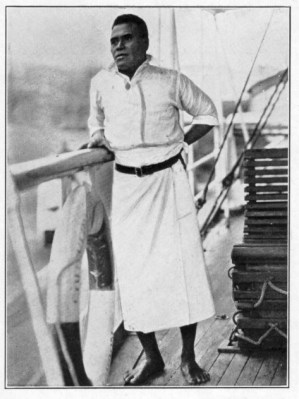
inikopuria-473It was only this morning that I realized that the anniversary of D-Day coincides with the church’s commemoration of Ini Kopuria, founder of the Melanesian Brotherhood. It is, I think, an apt coincidence. The Melanesian Brotherhood is a religious order in the South Pacific—you can read more on Wikipedia—that entered Anglican consciousness perhaps most forcefully in 2003 when seven of their members were killed in violence related to civil turmoil in the Solomon Islands. At the time, the attention of many Anglican leaders was focused on the consecration of a new bishop in New Hampshire but the witness of these men was so powerful it demanded attention. I have just finished reading Richard Carter’s In Search of the Lost, a moving account of the months before and after the martyrdom of these seven Brothers. By 2003, the turmoil in the Solomon Islands had moderated and the Brothers had been asked to take the lead on a disarmament campaign. At a time when the police were suspect and international forces were only just establishing themselves, it was only the Brothers who could make a credible claim that weapons needed to be collected and destroyed if peace was to be reestablished. Their trustworthiness was rooted in the life they lived as a community—prayerful, open, honest, mutual. By living the values of the Gospel, they held up a vision of a different kind of community. People saw that and responded. The Gospel is powerful stuff. The death of the seven Brothers came about when one went to meet with a rebel leader and work towards peace. When he didn’t come back, six others went to look for them. For several agonizing months, it was unclear what had come of them. Finally, it was confirmed that they had been tortured and killed.SI_Brotherhood_Funeral (As a taste of the book, you can listen to this interview that Richard Carter gave last year to Vatican Radio on the 10th anniversary of the martyrdoms.) Ini Kopuria, whom the church commemorates today, died long before the 2003 martyrdoms. But the vision of a community that in its way of living challenges the ethos of the world around it remains strong. I have incredible admiration and respect for all who participated in D-Day and for those who fought in the World War II. But I also want Christians to be able, at the same time, to hold up a vision of a different kind of community that is not based on violence, submission, and force. Christians do this best when they are living those values in their own lives. One of the stated priorities of Justin Welby is a revival of the religious life in the church. It is not only in religious orders that Christians are able to show forth this alternate religious community, but given their nature it is a particular charism of such orders. We pray for the success of the archbishop’s efforts so that we can all be enriched by the example of orders like the Melanesian Brothers. Then, together, as the body of Christ, we pray that we may model the other world that is brought about in the life, death, and resurrection of Jesus Christ.melanesianbrotherschapel