Preparing for the Primates

Leaders of Anglican churches around the world will be gathering in Canterbury next week. It’s a so-called “primates meeting,” named because each is the chief bishop in his—and they are all men—church. The last of these meetings was held in January 2016. Here are some of the things I’ll want to learn as this meeting unfolds.

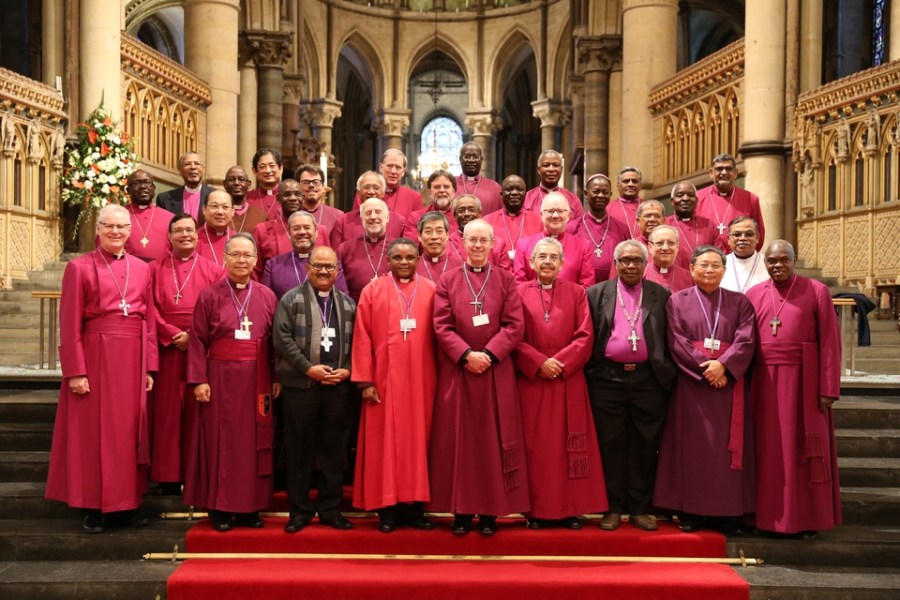
Primates in Canterbury, 2016

Follow through from the last meeting: At its last meeting, the primates noted that they “discussed tribalism, ethnicity, nationalism and patronage networks, and the deep evil of corruption. They reflected that these issues become inextricably connected to war and violence, and derive from poverty.” This may be one of the most fundamental issues shaping the future of the church. If you spend even a little time in churches around the Communion, you will quickly learn how church relations are often marked and marred in ways that take them a long way off from the kind of relationships God calls us to. Corruption in elections for bishops and other church offices, bishops who are created for certain ethnic groups, and divisive church politics that are rooted in underlying ethnic differences have devastated churches around the world. Here is one little example of that, but there are many others.

Happily, the last primates meeting also asked the Secretary General of the Anglican Communion, Josiah Idowu-Fearon, to “commission a study for the next Primates’ meeting” on precisely these subjects. Given the importance of these issues, we can only hope that this report will be made public, that it is the result of extensive consultation, and that it makes concrete recommendations for future action. Separately, the Secretary General has called for a debate about the “moral weight” of resolutions produced by Anglican bodies. Anglican leaders can ensure their decisions have moral weight by grounding them in study and research and ensuring they are followed through from one meeting to the next.

The agenda for the current meeting: we are told that topics on the list include “mission and evangelism; reconciliation and peace-building; climate change and environment; and migration and human trafficking.” These are all worthy and important issues and if the Anglican Communion is to have any moral suasion in the world, it must be able to speak to precisely these issues, clearly, passionately, and with conviction. The agenda for the last primates’ meeting was composed of suggestions from the bishops themselves (as is often the case for Anglican meetings). It will be interesting to see what merits the most time of these topics.

“Relational consequences”: The communique issued after the 2016 meeting was overshadowed by its Addendum A, which set out a series of consequences for the Episcopal Church, which had recently changed its canons on marriage. American Episcopalians were asked to not represent Anglicans on ecumenical or interfaith bodies, not be appointed to an internal Anglican committee, and not participate in decisions related to “doctrine or polity.” At the time, I noted that this met one definition of insanity: trying the same thing over and over again and expecting a different result. Others noted that what had once been called “relational consequences” in a proposed Anglican covenant were now being resurrected in a different guise.

The follow-through on Addendum A was, to say the least, confused and confusing. Episcopalians did stand down from ecumenical bodies and many chose not to participate in internal Anglican committees. But these consequences were the subject of a contentious bit of resolution-politiking at the 2016 meeting of the Anglican Consultative Council in Zambia when Archbishop Justin Welby sought to have the ACC ratify the consequences, Episcopalian representatives (rightly) noted that the primates could not decide who could and could not vote at ACC meetings, and various resolutions were put forth, withdrawn, amended, until one was finally passed that essentially said nothing at all but led to a debate about the meaning of the word “receive.” Later, different parties sought to put different interpretations on the same resolution and claim victory. I could expand on this story but it quickly gets tedious.

More significantly—and one might say more ominously—the consequences in Addendum A began to broaden in their applicability. Addendum A is clear that the consequences apply only to the American Episcopal Church, but as time passed it seemed that these consequences were applied to a growing list of Anglican churches. The primate of the Scottish Episcopal Church, for instance, reported that the Archbishop of Canterbury told him he would be forced to step down from his chairmanship of an international Anglican ecumenical dialogue if the Scottish church changed its understanding of marriage. Similar noises were made around the time the Anglican Church of Canada took similar steps on marriage. What’s worrisome about all this is that it is not clear on what authority these decisions are being made: who is making the decision—and by what right—to extend the consequences from the 2016 meeting more broadly than they were first presented? It will be interesting to know what, if anything, primates have to say about how their 2016 Addendum A has been, in Anglican parlance, “received” by the Communion.

Looking to Lambeth: There is often a complex relationship between the so-called Instruments of Communion, especially primates’ meetings, Lambeth conferences, and the Anglican Consultative Council. As preparations begin for the next Lambeth Conference scheduled for 2020, it will be interesting to see what, if anything, primates might do that would influence the shape, content, and direction of that conference. Will they suggest themes, agenda items, or actions that might be central to that conference? Or will they let the planning committee and archbishop of Canterbury take a lead?

No doubt lots will happen during next week’s meeting. These are just a few things that might be interesting to pay attention to. What are you looking for?

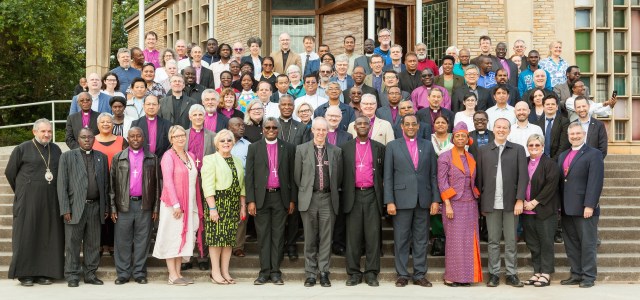
One bishop without a home, and one bishop with two

In January, there was an odd story from the Episcopal Church of South Sudan and Sudan: Precious Omuku, an Anglican priest from Nigeria who currently works in Lambeth Palace for Archbishop Justin Welby, was made a bishop in ECSSS.abpandbps

He’s not a diocesan bishop, but has rather a roving, ambassadorial role.

According to the Revd. Dr. Joseph Bilal, a board member of the Justice, Peace and Reconciliation of the Province of ECSS& S, Bishop Omuku will continue to work in his base at the Lambeth Palace as special adviser of Archbishop of Canterbury on Anglican Communion Affairs. “He will not necessarily be move out from his base at Lambeth Palace, but he will continue with his duties as adviser of the archbishop of Canterbury on Anglican Communion affairs. He will be keenly involved on issues of sustainable development, justice, peace and reconciliation in South Sudan and Sudan,” Dr. Bilal explained.

What’s odd about this? It’s not odd that a person ordained in one country became a bishop in another country. (The bishop of Waikato in New Zealand was ordained in the Church of England. Desmond Tutu was once the bishop of Lesotho.) It’s not odd that a bishop is doing a non-diocesan role. (The bishop of Algoma is about to become the principal of a theological college. There is a “bishop at Lambeth.“)

The oddity has something to do with place.

For Anglicans, geography shapes the church. The Church of England, for instance, divides the entire country into parishes, groups parishes into deaneries, deaneries into archdeaconries, archdeaconries into dioceses, and dioceses into provinces. The bishop is the head of a diocese and an archbishop is the head of a province. Other Anglican churches do things in various different ways but all still maintain in one way or another that a bishop is linked to a particular place, called a see. You can give up that see later on and still remain a bishop, but to become a bishop you need to be linked to a place.

So it’s odd, then, that the church in the Sudans should consecrate someone to be a bishop without a place but rather with a role.

I probably would have let this oddity pass me by except I then read another odd story about bishops and place recently: the suffragan bishop of the Diocese of Virginia, Susan Goff, has now become an assistant bishop in the Diocese of Liverpool. The oddity here also has to do with place: a bishop is to be linked to a place, as Bishop Goff, already is, but it is to be one place. Now Bishop Goff is a bishop connected to two places. I have no doubt that the link between Liverpool and Virginia is strong and important to both dioceses. I want to take nothing away from that relationship. But in ecclesiological terms, this particular move doesn’t make much sense. (And, indeed, Bishop Goff had to post a video clarifying that she’ll only be in Liverpool up to two weeks a year.) To ask one particular question: who is Bishop Goff’s metropolitical authority? Is it the Archbishop of York (through the bishop of Liverpool), as it is for other bishops in the northern province of the C of E? Or is it the rather diffuse metropolitical authority of the Episcopal Church (through the bishop of Virginia), as it is for other Episcopal bishops?

The church is full of oddities, ecclesiological and otherwise, and I’m usually content to let them go unremarked upon. But these particular oddities reveal some deeper confusion in our Anglican thinking about bishops. There are many voices (with which I heartily agree) that tell us about the importance of all orders of ministry, about the need for priests and lay people to take an active role in governance and decision-making, and so forth. In the Anglican tradition, bishops are not the sole locus of authority. Readers of this blog and my books will know how frequently I have nattered on about the importance of involving more voices in determining the direction of the church, rather than just those that wear purple shirts.

Yet at the same time we have this fixation on bishops: who they are, what they do, what they say. We develop fancy ways of referring to them (+ or ++, which is an oddity for another time). We struggle to call them by their first names. We surround their visits with a kind of aura. The result of all this is that we are developing this unstated assumption that the only things that matter in the church are what bishops say. There’s no reason that ECSSS could not have appointed a priest or lay person as its roving ambassador. If the Diocese of Liverpool wanted to cement its ties with Virginia, the bishop could have made a priest or lay person from Virginia a canon in his cathedral. But in each case, it was decided the role needed to be filled by a bishop—a response to and a furthering of this over-emphasis on episcopal ministry. And that emphasis has real world impacts, not least the proliferation of bishops and dioceses in a church like ECSSS so that ever-smaller regions of the country can feel like they have an adequate voice at the table.

If you’ve read this far, then you’re probably as far into the weeds of Anglican ecclesiology as I am. These situations are not the most pressing issue facing the church or the world. But they are odd. And in their oddity, they reveal a rather worrisome trend in the life of our churches.

3 things you might have missed at #ACCLusaka

The 16th meeting of the Anglican Consultative Council comes to a close in Lusaka, Zambia today. Many worthy topics have been discussed and there has been good coverage from a handful of Episcopal/Anglican news organizations. But it’s easy to let meetings like this slide by. I wasn’t there but here are a few things I noticed from afar that are worth highlighting.

You might have missed that the meeting happened at all. In stark contrast to the gathering in January of senior Anglican bishops, the ACC meeting has received almost no coverage in secular global press. It’s probably a safe bet that you won’t hear a report on the ACC on NPR or see it on the front page of the Guardian, as you could after the January meeting. No news editor will ever run the article, “Anglicans meet, read Bible, celebrate Eucharist, and discuss climate change, discipleship, and transitivity in Anglican-Lutheran agreements.” Plus, Lusaka is a lot harder for international media to get to than Canterbury.

This is a recurring problem in the Anglican Communion: our perceptions are formed by media coverage that is decidedly selective. Yet meetings such as the one in Lusaka have as a great a claim to represent the mind of the Communion as anything else does.

You might have missed the discussion of finances. In the past, there has been a curious divide in discussions about how the Anglican Communion Office is funded. On the one hand, conservative Anglicans claim it is funded by the Episcopal Church to spread its liberal influence around the world. But some Episcopalians say their church should not give any money so long as the Anglican Communion is unresolved on questions related to sexuality. This issue occasionally crops up at Episcopal General Conventions with proposals to cut back on the amount given to the ACO. Then there was the curious announcement a year or two back (with great fanfare) that the Episcopal church would give more—but still less than was being asked (there was less fanfare for that).

But in the middle of this, it’s never quite been clear just what the ACO is asking for from provinces. This year’s ACC had an open conversation about precisely this subject. It raised some good questions about reasonable expectations for contributions from churches. Above all, it raised the issue directly. That’s a good thing.

(Amidst all these debates in recent years, the staff of the ACO have continued to do important and innovative work that goes largely unnoticed by the rest of the Communion. But that’s a post for another day.)

You might have missed the steps taken on an Anglican archive. In a passing reference, we read of how the Standing Committee (meeting before the actual ACC meeting) “adopted objectives for the management of the Anglican Communion Office Archives.” Why does this matter? In the Anglican Communion, we lack a good historical narrative. Events, actions, and reports from even just a few years ago are forgotten, even as we talk through the same set of issues. Having consulted these archives myself in the past, I can attest that they are a valuable resource for the Communion if they could be made more widely available.

To take one example: there was considerable debate in the run-up to this ACC meeting whether the American church should even be present after actions taken in January at the Primates meeting. The debate turned on interpreting a sentence or two in the statement from that meeting. But few people in the debate looked to past precedent. In 2005, at a similar Primates meeting, the Primates requested that American (and Canadian) representatives withdraw from a forthcoming ACC—and they did. In 2016, it seems that if the Primates had wanted the Americans to stay away from the ACC in particular, they would have directly said so as they have in the past. History can help give some context and specificity to our conversations.

And another thing you might have missed: the guy who is taking a selfie during the group shot at the top of this post. Can you find him?

96 days of travel, 14 trips, and 11 days in airplanes

The Archbishop of Canterbury today addressed General Synod, reporting on his travels in the last 18 months to visit with every primate (senior bishop) of the Anglican Communion.

It is a gooarticle-2230787-15EFE482000005DC-637_306x423d address and he highlights several central issues to the future of the Communion: the opportunity and threat of instantaneous communication, the suffering of the church, the important day-to-day work of the church, and, simply, that Anglican churches around the world are flourishing. It is impossible to contest any of these points.

Readers of my book Backpacking through the Anglican Communion will not be surprised that I particularly liked this section:

The future of the Communion requires sacrifice.  The biggest sacrifice is that we cannot only work with those we like, and hang out with those whose views are also ours.  Groups of like-minded individuals meeting to support and encourage each other may be necessary, indeed often are very necessary, but they are never sufficient.  Sufficiency is in loving those with whom we disagree.  What may be necessary in the way of party politics, is not sufficient in what might be called the polity of the Church.

Talking with people we disagree is an important spiritual discipline—Jesus did it all the time—and like all such disciplines it self-evidently involves sacrifice.

But there were two areas of the address where I wanted to hear more.

The first is the archbishop’s continued emphasis on episcopal—and particularly archiepiscopal—leadership. This is not surprising, given that he himself is an archbishop, that he is reporting on visits with other archbishops, and that the structures of governance in the Anglican Communion, such as they are, are dominated by bishops.

Given the last decade(s) of life in the Anglican Communion, might it not be time to ask how we might credibly lift up the voices of other Anglicans in conversations about our future together? The archbishop makes no mention of the flourishing work of many of the Anglican Communion’s networks or of the serious work done in diocese-to-diocese relationships and the Continuing Indaba program. Nor does he mention a recent call by some bishops and primates for another Anglican Congress, an event expressly designed to move beyond simply hearing bishops’ voices. It is precisely in these areas that we see the kind of flourishing and sacrifice that the archbishop rightly highlights.

Again, none of this is a surprise, given his position and his interlocutors. But surely there is a more exciting way to frame a future agenda than in terms of a potential Primates’ Meeting and a Lambeth Conference, two meetings which will be dominated by men and (of course) bishops.

The second concern is related to the first. In addition to highlighting the flourishing of the church, he repeatedly discusses the divisions in the church. I want to be very clear that I understand that there are divisions within the church, not only over sexuality but (as the archbishop rightly notes) over a host of other issues as well. I have experienced these divisions in many, personal ways, as have many Anglicans around the world.

But I also think we need to be clear that there is a great spirit in the Communion of relatedness and connection in spite of (and often because of) these apparent divisions. This is not often a message we hear from our purple-clad leadership but it is my experience—and I know that I am also not alone in this—that when we move past outspoken bishops, we find not agreement on divisive issues but a real effort at reconciliation. Part of the reason I wrote Backpacking was to highlight these very voices, those that don’t agree with me on every last issue but with whom I nonetheless found deep relationship based on our common baptism and commitment to the good news of Jesus Christ.

I think Justin Welby has lots of good things to say about the Anglican Communion. I think he places great value on this aspect of his role. But his position—as all positions do—places confines and constraints on him. I hope he can continue to see beyond them and lead us all into seeing beyond our own shortcomings.

Lambeth Conference? How about a Lambeth Congress instead?

Six primates of the Anglican Communion and a handful of other bishops recently met in New York City for several days and, at the end of their gathering, expressed their “fervent and urgent hope that another Anglican Congress might be held in the next two years.” (The full statement is here.)XIII-1_1

To which I say: hooray! I have been banging on for the last several years about the significance of the 1963 Anglican Congress and how we ignore it at our peril. That meeting, which drew together lay, clerical, and episcopal representatives from across the Anglican Communion produced a document known as Mutual Responsibility and Interdependence in the Body of Christ, which, I have argued, is an important—but neglected—resource for Anglicans of our time. (These are arguments I’ve made at length in the Anglican Theological Review, the Church Times, and The Living Church.)

Actually, I have more than just “hooray” to say.

First, it’s worth noting that what these bishops are suggesting has been suggested before. In the run-up to the 2008 Lambeth Conference (of bishops), there was an effort to hold a parallel Anglican Congress in Cape Town. But, when it became apparent there wasn’t enough money to fund two major conferences, the Congress was abandoned and Lambeth went forward. (A telling sign, not incidentally, of whose voices are most valued in the Communion.)

Second, this suggestion comes at the same time as some (very spurious) speculation about the next Lambeth Conference. To call for an Anglican Congress in this context helpfully shifts the focus away from episcopal naval-gazing (which Anglicans are so good at) and broadens the conversation to include many more voices.

Third, as the conversation about the next Lambeth indicates, there’s some rather great dissatisfaction with the four “Instruments of Communion” in the Anglican Communion. The Primates have not gathered in over three years. The next Lambeth is open to question. The Anglican Consultative Council meets to apparently little notice. And it is now seriously suggested that one need not be in communion with the archbishop of Canterbury to be Anglican. The call for a Congress essentially recognizes this dissatisfaction and proposes a new way forward. Rather than concentrating our energy, time, and money on holding these meetings to apparently little end, perhaps there’s an alternative.

Fourth, the bishops say a Congress should be held in the next two years. That’s an awfully ambitious timeline. But it does seem that there is a vacant window in 2018 (the putative date of a next Lambeth Conference) that could be usefully taken advantage of.

So let’s put some flesh on the proposal. Instead of a Lambeth Conference, let’s have a Lambeth Congress, and instead of having it in London or Canterbury, let’s have it in Accra, Cape Town, or Dar es Salaam.

Last year, on the 50th anniversary of the Toronto Congress, I wrote this reflection:

In its fractures in the early 21st century, the Anglican Communion stands as a mirror-image of the divisions that stalk a world ever more divided by class, race, region, background, and so much else. “Frontiers” abound, in parishes, dioceses, and the worldwide Church. The body of Christ seems not a reality, but an ideal hardly to be grasped.

Fifty years on from MRI, it is worth returning to the manifesto and the period that produced it. In its emphasis on the patient work of building genuine relationships across lines of difference, the importance of genuinely coming to know one another in the context in which each lives, and above all in its recognition that God is always calling us to something greater than ourselves, MRI has much to teach us.

It is risky to reach out to those who are different from us, and daring to ask what we might learn from someone from a different background. But it is precisely these things that are at the heart of what it means to be God’s people in the world – a fact that is no less true today than it was in August 1963.

UPDATE: I just saw this comment posted on the Episcopal News Service version of this story. It says much about Toronto’s important—but forgotten—legacy.

comment

Remembering the Melanesian Brotherhood on D-Day

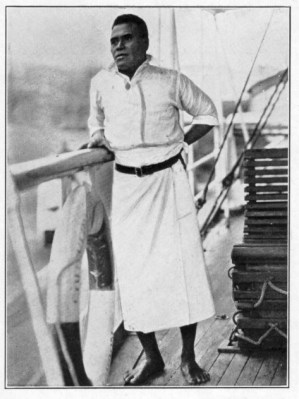
inikopuria-473It was only this morning that I realized that the anniversary of D-Day coincides with the church’s commemoration of Ini Kopuria, founder of the Melanesian Brotherhood. It is, I think, an apt coincidence. The Melanesian Brotherhood is a religious order in the South Pacific—you can read more on Wikipedia—that entered Anglican consciousness perhaps most forcefully in 2003 when seven of their members were killed in violence related to civil turmoil in the Solomon Islands. At the time, the attention of many Anglican leaders was focused on the consecration of a new bishop in New Hampshire but the witness of these men was so powerful it demanded attention. I have just finished reading Richard Carter’s In Search of the Lost, a moving account of the months before and after the martyrdom of these seven Brothers. By 2003, the turmoil in the Solomon Islands had moderated and the Brothers had been asked to take the lead on a disarmament campaign. At a time when the police were suspect and international forces were only just establishing themselves, it was only the Brothers who could make a credible claim that weapons needed to be collected and destroyed if peace was to be reestablished. Their trustworthiness was rooted in the life they lived as a community—prayerful, open, honest, mutual. By living the values of the Gospel, they held up a vision of a different kind of community. People saw that and responded. The Gospel is powerful stuff. The death of the seven Brothers came about when one went to meet with a rebel leader and work towards peace. When he didn’t come back, six others went to look for them. For several agonizing months, it was unclear what had come of them. Finally, it was confirmed that they had been tortured and killed.SI_Brotherhood_Funeral (As a taste of the book, you can listen to this interview that Richard Carter gave last year to Vatican Radio on the 10th anniversary of the martyrdoms.) Ini Kopuria, whom the church commemorates today, died long before the 2003 martyrdoms. But the vision of a community that in its way of living challenges the ethos of the world around it remains strong. I have incredible admiration and respect for all who participated in D-Day and for those who fought in the World War II. But I also want Christians to be able, at the same time, to hold up a vision of a different kind of community that is not based on violence, submission, and force. Christians do this best when they are living those values in their own lives. One of the stated priorities of Justin Welby is a revival of the religious life in the church. It is not only in religious orders that Christians are able to show forth this alternate religious community, but given their nature it is a particular charism of such orders. We pray for the success of the archbishop’s efforts so that we can all be enriched by the example of orders like the Melanesian Brothers. Then, together, as the body of Christ, we pray that we may model the other world that is brought about in the life, death, and resurrection of Jesus Christ.melanesianbrotherschapel

A rejected visa application and the future of the Anglican Communion

Two stories in the Church Times in the last two weeks highlight the challenges facing the Anglican Communion.

The first, from the current week’s issue, was reporter Madeleine Davis’ commendable effort to track down South Sudanese bishops and ask them what they thought about the Archbishop of Canterbury’s recent comments on same-sex marriage. She also spoke to some people in the UK who disagreed with what the archbishop had to say. To me, the various voices (all male) quoted in the article seemed to be speaking past one another with no one showing much interest in engaging with the particular context in which the other ministered. Perhaps that wasn’t the point of the article or of the questions they were asked. But it jumped out at me nonetheless.

The second article, from a week earlier, was about a Sudanese priest who was planning to visit the Diocese of Salisbury to raise awareness of the ongoing violence in his home—but was denied a visa. In a sense, this is the farthest thing from news. Sudanese and South Sudanese get denied visas to the UK all the time. I have been in South Sudan when church members—including bishops—are in the process of applying for a visa and I see how nervous and uncertain they get. The UK border machine is seen by some as capricious and unpredictable. It favours those who can speak English well enough to do well in an interview and who have the resources to travel to Nairobi or Kampala and then wait there for a result as you can’t apply for a UK visa in South Sudan.

The one conclusion I return to time and again in my travels in the Anglican Communion is how little Anglicans in different parts of the world truly know about one another. I am convinced that the way to remedy this is the patient building of mutual, honest, incarnate relationships, particularly relationships that move past the level of bishops and truly engage Anglicans at all levels of the church. But the difficulty of getting visas continues to obstruct this holy work.

For me, the juxtaposition of the two stories is a reminder of the significance of immigration policy. The pressure British politicians feel on immigration needs to come not only from screaming tabloid headlines but from faithful Christians who say, “We need to welcome these people to our home. They enrich our life together.”

iPhones, Backpacks, and the Best Travel Agency in the World: Mission and Unity in the Anglican Communion

The Episcopal Diocese of Connecticut has kindly posted a video of my keynote address to the diocese’s annual mission conference in early March. It’s adapted from my book, Backpacking through the Anglican Communion.

Some excerpts:

[iPhones are] an honest description of the world we live in. On the one hand, we have globalization, those forces that are drawing us ever more closely together so that distance and time cease to matter in the way they once did. On the other hand, we have the frank recognition that globalization benefits some people more than it does others, that it imposes costs on some people more than others, and that we are a long way from the Biblical model of relationships marked by mutuality, love, and mercy. The very fact that I don’t know where this device came from, that I can only hazard a guess as to who had a role in producing it, is an indication of just how broken these relationships are. St. Paul writes to the Corinthians that they cannot say to one another, “I have no need of you,” but we seem intent of saying something like, “I may have a need of you, but I’m going to do my best to ensure I don’t have to acknowledge that.”…

The way the Christian community shows its distinctiveness and difference is in the quality of relationships within it. Christians are different because we relate to other Christians in a way that is unique in the world….

There’s one more thing to say about the way in which the community of followers of Jesus is different from other communities in the world: we don’t get to choose who else is in the community. God’s love is open to all people and those who respond in baptism become members of this community. Whether we want them or not is, quite frankly, of no concern to God. The community in mission is a community that holds together a lot of difference. People from all different kinds of backgrounds and beliefs are brought together by the gracious love of God. And that’s a good thing, even though it is sometimes painful and difficult, and may make us want to scream at the top of our lungs, “I have no need of you!” Belonging to the church means believing that all other baptized Christians have something to offer us and we to them, no matter how different they may be. This is a truly counter-cultural idea….

Sometimes we hear it said that the church can find unity in mission. But the more accurate thing to say is that unity is mission. Our life together as Christians in a divided world is part of our witness to the world. Does the church model another way of living to a fractured world? Or does it simply mimic the world in its patterns of broken, global relationships?…

At its best and at its strongest, the Anglican Communion is a network of people who share these mutual, life-giving, counter-cultural relationships, people who want to make known the reconciling love of God in Christ. It is our role to seek these people out—to let them seek us out as well—and come to acknowledge the unity in which we are called to live. The unity of the Anglican Communion could be good news to a divided world. 

Does Giles Fraser use an iPhone?

IMG_1085Does Giles Fraser use an iPhone? He’s clearly a Mac user but based on his recent column, you could be forgiven for thinking otherwise.

Writing for The Guardian, Giles Fraser captures a common view of the Anglican Communion:

All this means that the bishops won’t be able to do a damn thing about their clergy having same-sex marriages…. And when this happens, the toys will be thrown from many a Nigerian church pram. The fiction that is the Anglican Communion will be over and we can go back to being the Church of England, rather than the local arm of the empire at prayer. And thank God for that.

This view sees the Anglican Communion as a distraction from the real business of being the Church of England. If only, the argument seems to be, we could stop concerning ourselves with the views of those Nigerian bishops, then we could really be the church we’re meant to be. It doesn’t matter how many toys are thrown “from many a Nigerian church pram.” We need to distance ourselves from global relationships.

Unfortunately, we live in a world where we can’t ignore global relationships. Our iPhones embody this. The next time Giles Fraser uses his smartphone, perhaps he can consider the global relationships it represents, from the rare minerals that are mined in distant corners of the world to make its capacitors function to the Chinese factory workers who assemble it. When you get dressed in the morning or tap out your next tweet, think about all of the people around the world who have touched your clothes and phone before you. Whether we like it nor, in the twenty-first century we are enmeshed in global relationships. And many of these relationships are a long way from the model of mutual, trusting, and truthful relationships set forth in the Bible.

But there’s another possible view here. What if instead of seeing the Anglican Communion as a distraction, we saw it as an asset to our mission to the world? What if the Anglican Communion could present to the world a model of relationship that is different from the world around us, a model that emphasizes wholeness and relatedness, rather than brokenness and fracture? Don’t you think if the world church was offering this kind of model, people might look at it and say, “Hey, look at what they have going on over there. I want to be part of that!”

Anglicans are, of course, singularly failing to grasp this opportunity at the moment. In part, our failure is a result of the poverty of the Communion’s discourse, a discourse that has been defined by a very small group of men (many of them bishops) who are very successful at making their voices heard, issues statements, and denouncing various actions.

The trouble is, of course, most Anglicans are neither bishops, nor men, nor specialize in making their voices heard. It is this reality that prompted me to write Backpacking through the Anglican Communion, a book that tries to give voice to those at the local level of the church around the world. When you move beyond the men who dominate the current conversation, you find many voices offering a variety of opinions on issues of sexuality, gender, and a whole lot else—and this as true in Nigeria as anywhere else. The Anglican Communion is a lot more complex than our discourse makes it out to be.

So the right thing to do is not to turn our backs on our sister and brother Anglicans. The right thing to do is to start listening to those voices which have not yet been heard and moving towards the rich, global relationships to which God is calling us.


Well, that was fast… or, how Anglican communiques become cudgels

John+Sentamu+Justin+Welby+Annual+Church+England+PakUd_nqZ32lOn Wednesday, the archbishops of Canterbury and York wrote a letter in which they “recalled the common mind” of the Primates of the Anglican Communion to say that it wasn’t right to support anti-gay legislation in places like Nigeria and Uganda.

It’s hard to argue with the message, but it is interesting how they chose to phrase it—pointing back to a communique from a meeting of the leaders of the Anglican Communion in 2005. In the years immediately after the consecration of Gene Robinson, there were a fair number of these communiques. When I read the letter from the archbishops on Wednesday, I wondered on Twitter how long it would be before someone quoted from another one of those communiques or some other “common mind” Anglican document to make a different argument.

Not long, it turns out.

Yesterday, the archbishop of Uganda, Stanley Ntagali, responded to the Wednesday letter by reaching for the granddaddy of them all, Resolution 1.10 from Lambeth 1998:

We would further like to remind them, as they lead their own church through the “facilitated conversations” recommended by the Pilling Report, that the teaching of the Anglican Communion from the 1998 Lambeth Conference, from Resolution 1.10, still stands. It states that “homosexual practice is incompatible with Scripture,” and the conference “cannot advise the legitimising or blessing of same sex unions nor ordaining those involved in same gender unions.”

It was the Episcopal Church USA (TEC) and the Anglican Church of Canada’s violations of Lambeth 1.10 which caused the Church of Uganda to break communion with those Provinces more than ten years ago. We sincerely hope the Archbishops and governing bodies of the Church of England will step back from the path they have set themselves on so the Church of Uganda will be able to maintain communion with our own Mother Church.

Then today, the archbishop of Kenya responded by quoting Lambeth 1.10 and a different Primates’ communique, this one from 2007. You can read his whole text here.

It’s worthwhile looking back at the history here for just a minute. The 1998 Lambeth Conference was a fraught affair—one bishop publicly tried to exorcise a gay activist—and Resolution 1.10 was one result of that atmosphere. The resolution says a number of things, though the phrase that is most commonly quoted is “rejecting homosexual practice as incompatible with Scripture.” (Then again, so is eating a cheeseburger.) Throughout its history, the Anglican Communion has had trouble figuring out what weight to accord to the voice of bishops assembled in Lambeth. So some Anglicans point to 1.10 as the final, definitive answer; others do not.

You might note that Archbishop Ntagali slightly misquotes the resolution. The actual text is “rejecting homosexual practice as” and not “is incompatible.” I point this out because it means that this most-commonly quoted phrase is actually a subordinate clause in a larger sentence. And that larger sentence? I’m so glad you asked:

[This Conference] while rejecting homosexual practice as incompatible with Scripture, calls on all our people to minister pastorally and sensitively to all irrespective of sexual orientation and to condemn irrational fear of homosexuals, violence within marriage and any trivialisation and commercialisation of sex;

The “irrational fear of homosexuals”: does that sound familiar to anyone? Oddly, it is not mentioned in any letter I have yet seen.

We are quickly getting lost in the weeds here. Resolutions and communiques, rather than serving as unifying documents that express a common mind, quickly become cudgels which we start selectively (mis-)quoting to beat our opponents over the head with. Frankly, it’s not very fun.

A couple of conclusions, then:

First, responding by saying, “Yeah, but they did it first” is not very effective.

Second, perhaps it is actually time for Anglicans to think seriously about the weight we accord the voices of our bishops and how we integrate that voice into our life of faith. In this context, it is no surprise that the conversation is between (arch)bishops quoting documents written solely by (arch)bishops.

Third, rather than reaching for the nearest cudgel, maybe in the future we can reach for a slightly more constructive instrument and come back to the verb that is at the centre of Resolution 1.10: listen

We commit ourselves to listen to the experience of homosexual persons and we wish to assure them that they are loved by God and that all baptised, believing and faithful persons, regardless of sexual orientation, are full members of the Body of Christ.