“Moral Realism” about Christian service

In his column today, David Brooks encourages those in my generation committed to service around the world to develop a sense of “moral realism” by reading novels by folks like Hammett and Chandler:

There’s only so much good you can do unless you are willing to confront corruption, venality and disorder head-on….

A noir hero is a moral realist. He assumes that everybody is dappled with virtue and vice, especially himself. He makes no social-class distinction and only provisional moral distinctions between the private eyes like himself and the criminals he pursues. The assumption in a Hammett book is that the good guy has a spotty past, does spotty things and that the private eye and the criminal are two sides to the same personality.

Christians say something similar, only we use words like sin, grace, and forgiveness. Christians know that “corruption, venality, and disorder” begin at home, within ourselves. The point that I make in my new book, Grace at the Garbage Dump, about my years as a missionary in South Africa, dovetails neatly with what Brooks has to say: we can be committed to changing the world all we want, but unless we are also committed to changing ourselves then we will get nowhere.

When I first showed up for work in a shantytown community in South Africa, I was committed to making the world a better place, “solving” the problems of global poverty and poor health. Naturally, with an attitude like this, I fell immediately and repeatedly flat on my face. It wasn’t until I began to realize that my attitude towards and outlook on the world and my work needed to change. I had to be willing to confront my fears head-on, instead of burying them in a welter of emotions about world change. I had to be willing to build an actual relationship with someone who seemed markedly different to me and whom I wanted to treat not as a person but as an object whose problems needed to be solved.

Historically, the Christian tradition has seen baptism as the moment when we are received, forgiven, and transformed by God in Christ. We remember this moment each time we celebrate the Eucharist. In my Episcopal Church, however, baptism is now seen as a moment of “commissioning” to join in God’s work in the world. This is right, more or less, except I get the sense we’re sometimes leaving off the part about the personal transformation and focused solely on the world’s transformation. When we do that, we end up eliding a huge part of the Christian tradition and becoming more or less like the folks Brooks is writing about.

The world needs to change, true. But change begins at home.

“Seize the passion of young people”

The Springfield Republican has an article about my new book, Grace at the Garbage Dump: Making Sense of Mission in the Twenty-First Century.

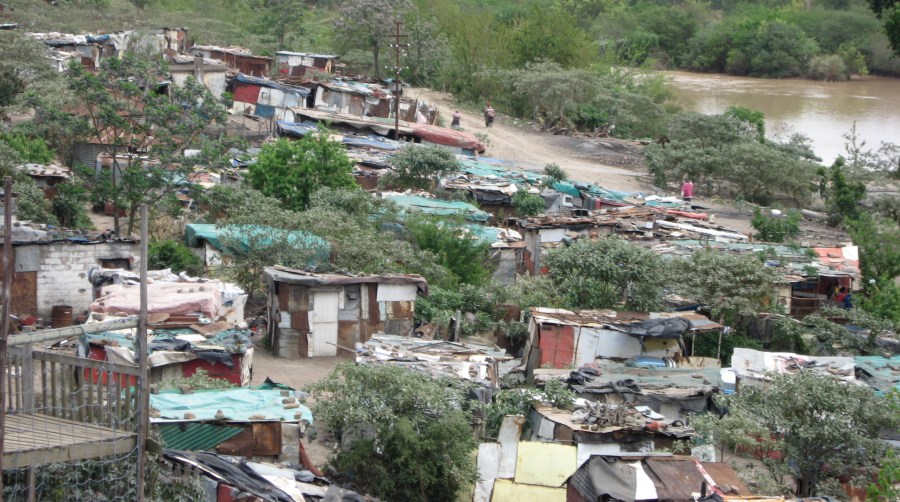
Zink worked in a community called Itipini—the means “at the dump”–a shantytown community built on the site of a garbage dump. “It was built there so people could scavenge off the refuse and live in shacks they built themselves out of whatever is available,” he said. “As you can imagine, the socio-economic indicators here at not great—a high incidence of HIV/AIDS, for instance, high unemployment, high rates of poverty. So it is one of the poorest communities in one of the poorest parts of South Africa.”

At first, the experience was overwhelming to him because of the different culture, different language, different people. “I had shown up with such enthusiasm to ‘save the world’ and quickly realized I wasn’t much help at all,” he said. “It was a frustrating, difficult, challenging and completely humbling experience. Here were people in such great need, people I wanted so desperately to be of some use to, and I could barely say hello to them or ask them their name.”

Over time—and this was the advantage of staying two years—he learned their language, Xhosa. He learned how he could fit in and be of use to people, and he learned that the experience wasn’t so much about what he could do for others but about what they could learn from one another and how they could change in light of their meeting.

“I don’t think I’m alone in having my desire to see change in the world,” said Zink, 29. “I think people of my generation are eager to serve others.”

Read the whole article, read the first two chapters of the book for free online, and then tell your friends and order a copy of the book for yourself—from your favourite book retailer or (for the cheapest price) directly from the publisher.

Grace at the Garbage Dump now on Kindle!

If you’re technologically inclined—and not interested in waiting for the mail to arrive—you can now download Grace at the Garbage Dump directly to your Kindle!. Amazon has it available for the low price of $9.99.
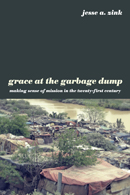
Even if you’re not technologically inclined, you can still surf over there and read the first two chapters for free. What a deal!

The hard copy of the book will be available on Amazon in due time (another few weeks). In the meantime, order it from your local bookstore or directly from the publisher—still the cheapest and fastest way to get it.

For now, orders for addresses outside of the U.S. need to be made by e-mailing or contacting the publisher directly. orders@wipfandstock.com or (541) 344-1528.

Grace at the Garbage Dump Published!

Cascade Press has published Grace at the Garbage Dump: Making Sense of Mission in the Twenty-First Century by the Rev. Jesse Zink. The book is a theological memoir and reflection on the importance of mission drawn from Jesse’s years as a Young Adult Service Corps missionary of the Episcopal Church in Mthatha, South Africa.

The book is being widely praised. Brian McLaren says Jesse Zink is “talented as a writer, honest as a Christian thinker, and smart as an activist—exactly the kind of voice we need.” The bishop of Connecticut, Ian Douglas, says “I can think of no more exciting study of Christian mission than Jesse’s book. It is a welcome resource to the many people who are looking for a meaningful and contemporary presentation of what God is up to in the world today.” Read more about what people are saying.

Here’s the text on the back of the book.

Like many young people in his generation, Jesse Zink had long been eager to work overseas and make the world a better place. As a missionary working in a shantytown community in South Africa, he found all that and much more—in demanding, unexpected, and surprising ways.

Grace at the Garbage Dumptakes readers with Jesse through his years in South Africa: struggling with AIDS patients to get life-saving drugs, coaching women through a micro-credit program, and teaching preschool students to sing (and dance) to “Johnny B. Goode.” It’s a story that leads us to a deeper understanding of our world and is at once hopeful and uplifting while also being credible and serious.

The headlines are dominated by disaster and despair but young people remain passionate about service to the least among us. Grace at the Garbage Dump is an invigorating call to respond to the difficulties of our time with an active and engaged faith. Whether you end up at the local soup kitchen or halfway around the world, you’ll be challenged to seek God’s grace in even the most adverse circumstances.

The best and cheapest way to get a copy of the book is directly from the publisher.