Minority Report: Anglican Communion edition

Some years ago, Tom Cruise starred in a movie called Minority Report. The plot revolves around three human “pre-cogs” who can tell when a murder is about to happen. Cruise and company swoop in, arrest the murderer before he or she can commit his crime, and save the day. Things begin to unravel when—to give away the ending—it turns out that three pre-cogs are not always in unanimous agreement but that the dissenting, minority reports are suppressed.

The phrase “minority report” has been stuck in my head lately—but in the context of the church in 2013, not Tom Cruise in 2054. A clear majority of Anglicans are female—yet three weeks worth of reporting in The Church Times about the GAFCON II conference in Nairobi quoted precisely one woman and allotted her one word: an unnamed Ugandan priest was to said have voted “No” on the final communique.

This is not to pick on either GAFCON or The Church Times. The four Anglican Instruments of Communion—the Archbishop of Canterbury, the Primates Meetings, the Lambeth Conference, and the Anglican Consultative Council—are all dominated by men. (In part, this is because they are dominated by bishops, who tend to be male.) The people who are the primary drivers about debates about global Anglican futures tend to be male as well.

Anglicans have been led to believe that there are two sides in debates about our future: the liberals and the conservatives, each presenting unified and diametrically opposing views. But just as Cruise et al. had to learn that the unanimity of their pre-cogs was not what it seemed, so too Anglicans have to learn that we are dealing with more diversity than we may have imagined. Part of the purpose of my writing a book about the Anglican Communion that tries to move beyond bishops and describe life at the grassroots level in different parts of the world was to demonstrate that the loudest voices in the Communion are rarely the most representative—no matter how strenuously they claim they are.

All of this is to say something obvious: the church has a long way to go before we start reflecting the reality of the body of Christ in which we are joined.

This is not to say that the wounds of the Anglican Communion would be healed if we put women in charge. As I show in Backpacking through the Anglican Communion, my experience does not show that women somehow believe in unity and reconciliation in a way that men do not. But it is to say that the model of communion that has been put forth in the last several years has been one that has privileged a handful of voices and disregarded (suppressed?) a huge number of others.

So when we read reports foretelling the death of the Anglican Communion that are authored solely by men, we should label those minority reports—for that is precisely what they are.

“I’m not dead yet.” -The Anglican Communion

I have been staying up late several nights this week finishing the proofs of my new book about the Anglican Communion. It is a book that argues that not only is unity in a world communion possible, it is a vital part of that communion’s witness to the world.

Then I woke up this morning to read that Andrew Brown (“England’s most sanctimonious atheist,” in the words of one Church Times letter to the editor) thinks the Anglican Communion is dead.

Wow. Poor timing on my behalf.

But then I started reading the article and wondered just what grounds Brown had for making his case.

We might notice that his article commits more or less all the errors I outlined in a previous post about writing about the Anglican Communion—he doesn’t travel anywhere, he relies mostly on bishops and men as sources, etc., etc.

He writes, for instance of the Church of Nigeria, that it doesn’t matter how “many Anglicans there are there and however sincerely they seem to hate gay people.” I read that and I think, “Has he ever actually been to Nigeria? Are we talking about the same church?” Were people who write about the Anglican Communion to start moving from behind their computers and instead spend their time and money visiting with Anglicans, I think the story they would find is different. Instead, everyone sits comfortably in their prejudices and certainties and shows little desire to change that situation.

On the other hand, perhaps the Anglican Communion is dead. Perhaps the days when our understanding of the Communion was constituted almost solely by what bishops and other men had to say are coming to an end. Perhaps we can now start listening to the voices of the young, the female, the non-ordained and see that they are hardly in lockstep agreement with what their bishops have to say.

The core of my faith is the belief that death is not the end. Maybe we can pray that the death of our current forms of relationship will lead to a resurrection in newness and fullness of life.

Maybe.

But it’s going to take a willingness to move beyond the same old ways of doing business.

Backpacking Through the Anglican Communion: A Search for Unity

Exciting news! It’s time to raise the curtain on Book #2!

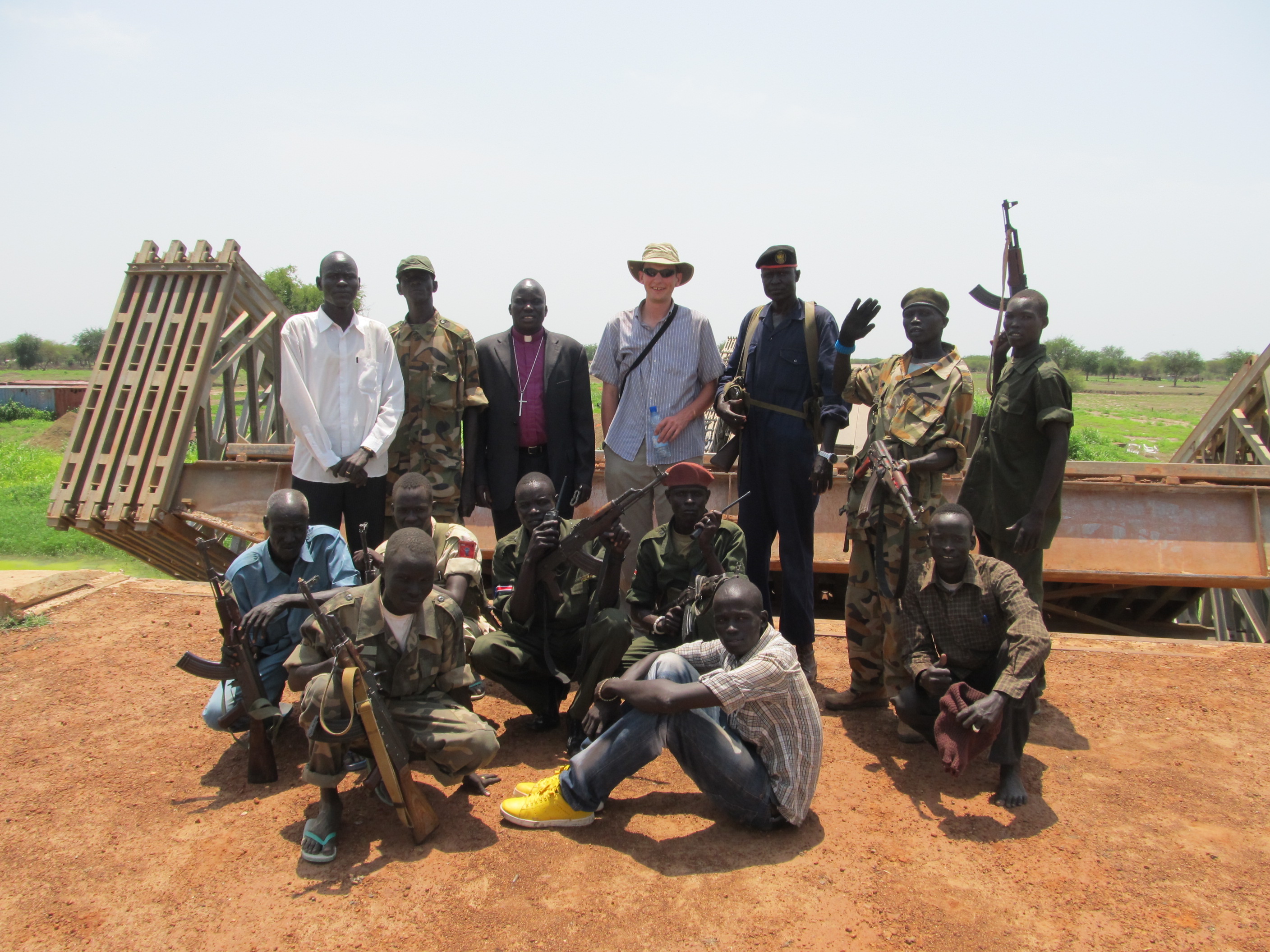
IMG_1594My next book, Backpacking Through the Anglican Communion: A Search for Unity, draws on the tens of thousands of miles I’ve travelled in recent years to show what Anglican life is like at the grassroots level around the world—in places as diverse as Nigeria, Ecuador, England, and China. Some of those travels first appeared in partial form on this blog; many of them did not.

More than a simple travelogue, the book also challenges the dominant narrative of disunity that so colours debates about the future of global Anglicanism. I show how the loudest voices in the Anglican Communion are rarely as representative as they think. In fact, when conversations about divisive issues—sexuality, Biblical interpretation, authority—are undertaken in a spirit of mutuality and vulnerability, they deepen—and not fracture—relationship.

IMG_3661IMG_2946Finally, the book is an argument that unity actually matters and that in our globalizing and fracturing world, Anglicans have an incredible opportunity to witness to the world—an opportunity we are singularly failing to grasp at this moment in time.

Backpacking Through the Anglican Communion: look for it in early 2014 from the Church Publishing family. And if you live outside the U.S. and want it published where you live, let me know so we can start talking about it now. Contact details are here.

The “threat” of the “new churches”

The Anglican province of West Africa has recently reorganized itself, and has a new archbishop and primate, Solomon Tilewa Johnson. In an interview, he identified two challenges for the church: poverty and “new churches.”

The Archbishop was referring to the fact that traditional Churches on the continent of Africa have been increasingly concerned about losing particularly younger worshippers to newer, more charismatic Churches, or losing them from church altogether.

The author of the article in the Anglican Communion News Service subtly opined that this latter threat was “surprising.” But if you’ve been reading this blog, you’ll know it’s not.

After a trip to Nigeria 18 months ago, I asked, “What is Peter Akinola afraid of?” I saw, in my travels, the incredible growth of neo-Pentecostal churches and the way in which the growth of those churches threatened established denominations (Anglicanism chief among them) and made Anglicans become more like Pentecostals in theology, worship practice, approach to Scripture, and much else.

I returned from that trip, thought some more about it, and wrote a paper in which I argued that the Pentecostal explosion and its influence on Anglicans was one of the most under-reported stories in the Anglican Communion. That paper (which is a lot longer than a blog post) was published in the Journal of Anglican Studies, but is available for free online.

So I appreciate the frankness and honesty with which Archbishop Johnson raises the issue. It is clearly one that needs thoughtful reflection and consideration—what does it mean to be Anglican? Is the church designed to give people what they want or challenge them with a new way of living?—and it is encouraging to see a leader addressing the issue so openly.

UPDATE, 27 March 2013: This post is attracting quite a lot of attention lately, which is great. If you’re interested in reading my article in the Journal of Anglican Studies about “Anglocostalism,” you can find it by clicking here.

“Anglocostalism” in Nigeria and Obstacles to Anglican Unity

One of the most important developments in the world church in the last few decades has been the rise of neo-Pentecostalism, sometimes called the “Born Again” church. These denominations, particularly prevalent in Africa, are marked by their concern with spiritual healing, the preaching of the prosperity gospel, fixation on a world of good and evil forces, and much else.

What is perhaps less remarked upon is the way in which these neo-Pentecostal churches have influenced the historic mission denominations, including the various provinces of the Anglican Communion. This is one of the main things I learned on my travels in the church in Nigeria last summer. (The observations prompted the post, “What is Peter Akinola Afraid Of?”)

The Journal of Anglican Studies has just published my article, “‘Anglocostalism’ in Nigeria: Neo-Pentecostalism and Obstacles to Anglican Unity,” which takes a close look at how what it means to be Anglican is changing in Nigeria.

Here’s the article’s abstract:

In the last several decades, the religious landscape in Nigeria has been transformed by the rise of neo-Pentecostal or ‘new generation’ churches. These churches teach a gospel of prosperity, advance an oppositional view of the world, focus on a supernatural arena of spiritual forces, accord a unique weight to the Bible, and practice a charismatic worship style. One result of the presence of these churches has been to change the face of Anglicanism in Nigeria. Concerned about the possibility of diminished influence and prestige, the Church of Nigeria (Anglican Communion) has responded to neo-Pentecostal churches by adopting more of its rivals’ beliefs and practices. This paper argues that this changing environment explains, in part, Nigerian opposition to efforts at global Anglican unity and argues that it is impossible to address the future of the Anglican Communion without first understanding the on-the-ground religious context in Nigeria.

It’s an academic article, which means it’s a bit longer than a regular blog post, but I hope you’ll have a read through. Already, in the few weeks since the article went online, I’ve been pleased with the e-mail conversations this article has generated with people in the Nigerian church. I’d be happy to expand those conversations to folks elsewhere.

As I have travelled in the world church, I’m repeatedly reminded of just how little we know about each other around the world. This article—and others like it, still in the pipeline—are efforts to help increase that sense of mutual understanding.

Anglican Communion awareness increasing?

The Episcopal News Service has a lengthy article today that follows up a lot of the questions raised at General Convention about the Church’s huge cuts to funding for the Anglican Communion Office. It also makes some grand claims about the nature of the Anglican Communion nine years after the election of Gene Robinson as bishop of New Hampshire.

Here’s the article’s lede:

The world’s 80 million Anglicans are much more aware today than they were 10 years ago that they belong to a global communion, a realization that has led to a flourishing of international relationships between the Episcopal Church and other provinces, dioceses and individuals.

Although the article claims to be concerned with Anglicans all over the world, the only evidence it musters is in the Episcopal Church. This is a hallmark of one of the most depressing of all American characteristics, namely the willingness to generalize from quite particular experience. To write an article like this merely reinforces what many people around the world already think: Americans are self-centred, solipsistic, and parochial.

The thing is, our brother and sister Anglicans around the world have known and cared about the Anglican Communion for a lot longer than many Americans have. When I traveled in the church in Nigeria (where 1 in 4 of those 80 million Anglicans live) last summer, one of the aspects of the church that was most noticeable to me was the way Nigerian Anglicans cared about being part of the Communion. The official name of the church is Church of Nigeria (Anglican Communion). When you leaf through a diocesan newsletter, there’s plenty of material about other Anglicans around the world. In a remote diocese in South Sudan a few years back, I was asked what I thought about Rowan Williams’ decision to deny Katharine Jefferts Schori her mitre on a visit to England. In a remote Bible college in a China, I was once asked about the Anglican Communion. It’s the Americans who have woken up and smelled the Anglican Communion coffee in the last decade. The rest of the world, at least, was already aware.

My sense of the last decade is that the American church, particularly its liberal wing, has been rushing to catch up with the rest of the world in terms of understanding itself as part of a global Communion. For a variety of reasons—including prioritizing domestic concerns, feeling unsure about how to relate to newly-independent churches, and so forth—the Episcopal Church began a fairly large retreat from its global commitments in the late 1960s all the way through the 1990s. This, in many ways, set the stage for the “crisis” of the last decade.

In 1963, Anglican lay people, priests, and bishops from around the world got together for an Anglican Congress in Toronto. One of the speakers was a man named Howard Johnson, who, a few years prior, had completed a two-year tour of every province in the Anglican Communion. At the Congress, he had this to say:

We Anglicans stumbled into universality – prodded, I believe, by Providence. But our consciousness of ourselves has not yet caught up with the reality of ourselves. In actuality we are a multiracial, multilingual, multicultural body, but in awareness we are still parochial and provincial.

My sense is that Johnson’s observation is still largely correct. It is true, however, that the election and ordination of Gene Robinson means that Episcopalians now know more than they used to about the Anglican Communion whether they like it or not. But has that had the positive impacts the article claims? On that question, I think, the jury is still out.

The Episcopal Church: The Diocese of Texas of the Anglican Communion

Without much surprise, the Episcopal Church’s General Convention today passed its budget for the next three years. And, as presented on Tuesday, the budget sharply cuts funding for the church’s connection to the Anglican Communion.

While I find the decision disappointing—as I have noted here and here—it was not surprising. What was heartening was that the cuts to funding the Anglican Communion Office were so notably criticized on the floor of the House of Deputies. (I missed the budget debate in the House of Bishops.) I heard one delegate make the point I have made before, namely that how can we expect dioceses to give the full asking to the churchwide budget, when the church doesn’t give the full asking to the Anglican Communion Office?

I’ve heard a couple of figures on this but it seems like the Episcopal Church is currently giving between a third and a half of the asking to the ACO. That puts the church in Diocese of Texas territory: wealthy, well-resourced (comparatively) but unwilling to share any of those resources with the other institutions of the church to which it belongs. There’s been a lot of talk at Convention about the hierarchical nature of the church: as far as General Convention is concerned, the hierarchy stops with it. You give us your money, it says to the dioceses, but we’ll keep it for ourselves. Can you blame other dioceses for saying the same thing to the church?

When we start squabbling over resources like this—pointing out how much some dioceses give but not others, arguing over apportionments, etc.—it’s a sure sign of an institution in decline. If we can no longer meet our commitments, something needs to change. I, for one, am hopeful that the new structure super-committee that has been created by this Convention can discern ways for the church to remain a full, active, and engaged member of the one, holy, catholic, and apostolic church around the world to which we belong.

Memo to bishops-elect

The General Convention of the Episcopal Church will vote in the next day or two to confirm  several new bishops who have been elected in the last four months. No doubt, these bishops will take office full of plans for their tenure and ready to implement them. As they do, I— presumptuously—have a thought for them.

The definition of the ministry of a bishop in the Episcopal catechism includes, “to act in Christ’s name for the reconciliation of the world and the building up of the Church.” Bishops are symbols of unity in the worldwide church, representing the universal to the local and the local to the universal.

My thought for the new bishops is that they be sure to use their time as bishop to establish solid companion diocese relationships. This is not, in itself, that surprising an idea. Many dioceses already have such relationships.

What I want to urge the new bishops to do, however, is to build relationships in unlikely places. As I found out in my travels last summer at this time, there are several dioceses in the church in Nigeria that are eager for American companions. (See my posts here and here for more on this.) I heard time and again how interested people in those dioceses were in establishing relationships that moved the Anglican Communion beyond the divisive rhetoric of the last decade or more. Without ignoring the differences of opinion, these people still wanted to establish companion relationships. And yet, no matter how hard they tried, the Nigerians I met were turned away. “Sorry,” they were told. “Our churches can’t be in relationship.”

These bishops-elect have an incredible opportunity to change the discourse in the Anglican Communion from one of fracture to one of unity. (I’ve written before about the importance of companion diocese relationships.) Just imagine what a companion relationship between an American diocese and a Nigerian one could mean for the Anglican Communion.

I imagine that being a bishop can be pretty overwhelming. I imagine it can be pretty easy to end up focused solely on the pressing concerns of the diocese. My hope for the new bishops—and all bishops—is that they’ll remember to work for the reconciliation of the world.

The church—and the world—needs it.

Committing to the Anglican Communion

It seems pretty clear that the proposed Anglican Communion Covenant will not be approved by the General Convention of the Episcopal Church this summer. Having been rejected in Scotland, stymied in England, turned down by more conservative provinces, and approved by only a handful of churches around the world, the Covenant has had a tough row to hoe. It’s demise, I think, will be little lamented.

Several of the Convention resolutions concerning the Covenant politely turn it down but then use some sort of language about “committing” to the Anglican Communion. No one, it seems, wants the American church’s rejection of the Covenant to be interpreted as a step back from the Communion.

Actions speak louder than words, however, so here’s the question: what steps can this General Convention take to make it clear that its commitment to the Anglican Communion is more than nice words on a piece of paper?

Here’s a short list of ideas:

Fully fund the Anglican Communion Office. Congregations pay money to support the work of their dioceses because they are committed to work in their region. Dioceses pay money to the national church because they see that it does important work. National churches (or provinces of the Anglican Communion) should pay money to the international body that, on a bare shoestring, provides some sort of organization to the Communion and facilitates important projects like the Continuing Indaba or the Bible in the Life of the Church. The first head of the ACO (though it wasn’t called that at the time) was an American bishop named Stephen Bayne. Full disclosure, he is one of my Anglican heroes (yes I have those) and I think his legacy and his vision deserve all the support we can give them.

The budgets that have been proposed for Convention both slash (yet further) the Episcopal Church’s contribution to the ACO. I’m not sure how Episcopalians can gripe about dioceses that don’t pay the full asking when we don’t pay the full asking to the ACO. Other Episcopalians complain the ACO doesn’t do what we want, much in the way that Republicans in Congress are continually threatening to cut off funding to the UN when it “steps out of line.” Fully fund the organization and let it do its job.

Provide increased funding for the networks of the Anglican Communion. These are organizations, like the Anglican Indigenous Network or the Anglican Health Network, that bring together Anglicans from around the world to work on issues that are not, blessedly, the issues that have consumed the Communion for the last decade and more. Networks are important not only for the work they do but for the way they represent an effort to change the discourse in the Communion. The Episcopal Church used to contribute money to some of these networks as a way of bringing people together from different backgrounds to talk about important issues. That money is now gone. (Disclosure: I’ve been involved with the Anglican Peace and Justice Network.)

Challenge dioceses to be involved in at least one companion relationship. Many American dioceses, happily, have overseas partner dioceses. The companion diocese idea (which came out of work done by the Anglican Communion Office, incidentally, way back when) has been an important tool for building relationships across the Communion and sharing the good news of Jesus Christ. But not all dioceses have companion relationships. Some dioceses have relationships that need to be reinvigourated. We can challenge parishes to have web sites (Resolution A025); why not challenge every diocese to have a companion? (Or two: some of the most exciting companion relationships involve three dioceses.) Companion relationships challenge the dominant Anglican narrative of fissure with one of relationship across reconciled difference.

(Convention has passed resolutions in the past encouraging companion diocese relationships but to the best of my searching has not passed one establishing an expectation that every diocese have a companion.)

Encourage the companion idea to spread to parishes. The budget of many dioceses around the world is equivalent (or smaller than) the budget of a good-sized parish in the U.S. What if, in addition to diocese-to-diocese relationships, there were parish-to-diocese relationships? (We’d have to think about how these relationships might be complementary or competing in a diocese.) There are hundreds of Anglican dioceses around the world, many eager for companions, as I have learned. There’s no reason large, mission-minded parishes can’t take the lead in partnering with them. (The Diocese of Virginia has done some exciting things around this idea.)

Encourage better communications. Communications in the Anglican Communion is abysmal. As I have found in my travels around the Communion, there is exciting work being done in so many parts of the world that few people know about because no one tells anyone else about it. Instead, the dominant communications medium in the church is something like Virtue Online, a polemical, often-false source of “news” that drives a narrative of fracture and decline. This needs to be matched with, well, facts. Solving the communications problem in the Communion is not something Convention alone can do. It can, however, take steps in that direction, like increasing funding for the Episcopal News Service so that the organization can broaden its horizons and get more Anglicans talking to one another. Right now, Anglican Journal, the newspaper of the (smaller and poorer) Canadian church does a better job covering the Communion than ENS does.

Many of these ideas cost money (not much) but, again, actions speak louder than words. If we mean what we say in these resolutions, we need to back it up. These are some of my ideas to do so. Yours?

The Commemoration of Stephen F. Bayne, Jr., January 18

On many days of the church year, Episcopalians commemorate figures from the past who are models and exemplars of holy living and Gospel witness. These people range from Ignatius of Antioch (Oct. 17) to Jonathan Daniels (Aug. 14) and everyone in between. There’s a big new revision of this list called Holy Women, Holy Men that is the result of years of hard work.

But there are many figures who are not in HWHM who deserve to be remembered. For me, one of those figures is Stephen Fielding Bayne, Jr. I’ve written a commemoration in the style of Holy Women, Holy Men and encourage you, if you are able, to use it in your worship life. Bayne died on the same day as St. Peter so you might want to commemorate him (as we do with others), the day before or the day after.

The commemoration is below. Who else do you think deserves to be commemorated?

Stephen F. Bayne, Jr.
Bishop 1974

Psalm 133, Romans 12:1-8, John 20:19-23

Collect
Gracious God, whose Son prayed that his followers might be one, we remember in thanksgiving this day your servant Stephen Bayne; inspire in your global church the same passion for unity which shaped his ministry; deepen our relationships in a spirit of mutual responsibility and interdependence, and empower us to be servants of your reconciling Gospel; through the same Christ our Lord who with you and the Holy Spirit lives and reigns, one God, for ever and ever. Amen.

Preface
for Pentecost

Biography
Stephen Fielding Bayne, Jr. was the first executive officer of the Anglican Communion, helping Anglicans around the world understand why their worldwide Communion was important in the challenging post-war years.

Bayne was born in New York City on May 21, 1908. After studying at Amherst College and The General Theological Seminary, he was ordained a priest in 1933 at the Cathedral of St. John the Divine. He served parishes in St. Louis and western Massachusetts, and as chaplain at Columbia University and to the navy during World War II. In December 1946, without informing him he was a candidate, the Diocese of Olympia elected Bayne their bishop. During his episcopacy, he presided over a growing diocese and remained an active scholar, contributing a volume on Christian ethics to the Church’s Teaching Series and writing several other books.

At the 1958 Lambeth Conference, Bayne chaired the committee on “The Family in Contemporary Society” and distinguished himself for the way he navigated difficult issues of sexuality. Bishops at the conference approved the idea of a creation of an “executive officer” for the growing Anglican Communion. Archbishop Geoffrey Fisher invited Bayne to fill the position. Bayne accepted and began work in January 1960. The Anglican Communion was at a crossroads. The demise of the British Empire, the growing ecumenical movement, and a sense that the world was changing challenged Anglicans to determine what it is that held them together.

Bayne’s tenure was marked by his unrelenting travel, on average 150,000 miles a year, to provinces of the church all over the world. It was said of him that “Bishops come and go but not as much as Bishop Bayne.” Declaring the need to make “a frontal attack on provincial and national narrowness,” he emphasized the importance of relationships among Anglicans and developed many new communication instruments—including the Anglican Cycle of Prayer—to facilitate this. Everywhere he went, he emphasized the mission of God, urging Anglicans to figure out what God was already doing in their midst and then join in that task.

The apex of his time as executive officer was the 1963 Anglican Congress in Toronto. There, delegates approved a document drafted primarily by Bayne titled “Mutual Responsibility and Interdependence in the Body of Christ.” MRI called for new patterns of being Anglican marked by “the birth of entirely new relationships” and declared “our unity in Christ…is the most profound bond among us, in all our political and racial and cultural diversity.” MRI—and Bayne—was widely hailed as a break with an outdated Anglican past, even appearing on the front page of The New York Times.

Bayne stepped down as executive officer in 1964. He narrowly lost the election for presiding bishop that year but still accepted a position at the Episcopal Church Center in New York. As a bishop, he chaired the heresy investigation of Bishop Pike. In 1970, he returned to General Seminary as professor and later dean. He died on January 18, 1974.

(Photo from An American Apostle: The Life of Stephen Fielding Bayne, Jr. by John Booty.)