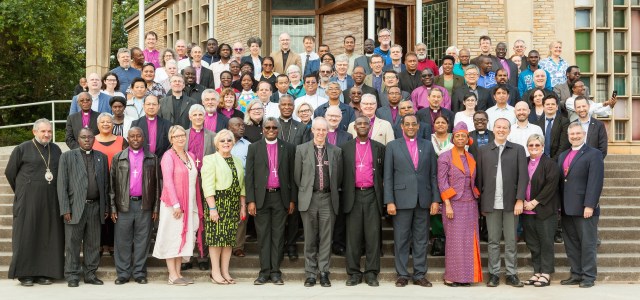
The 16th meeting of the Anglican Consultative Council comes to a close in Lusaka, Zambia today. Many worthy topics have been discussed and there has been good coverage from a handful of Episcopal/Anglican news organizations. But it’s easy to let meetings like this slide by. I wasn’t there but here are a few things I noticed from afar that are worth highlighting.
You might have missed that the meeting happened at all. In stark contrast to the gathering in January of senior Anglican bishops, the ACC meeting has received almost no coverage in secular global press. It’s probably a safe bet that you won’t hear a report on the ACC on NPR or see it on the front page of the Guardian, as you could after the January meeting. No news editor will ever run the article, “Anglicans meet, read Bible, celebrate Eucharist, and discuss climate change, discipleship, and transitivity in Anglican-Lutheran agreements.” Plus, Lusaka is a lot harder for international media to get to than Canterbury.
This is a recurring problem in the Anglican Communion: our perceptions are formed by media coverage that is decidedly selective. Yet meetings such as the one in Lusaka have as a great a claim to represent the mind of the Communion as anything else does.
You might have missed the discussion of finances. In the past, there has been a curious divide in discussions about how the Anglican Communion Office is funded. On the one hand, conservative Anglicans claim it is funded by the Episcopal Church to spread its liberal influence around the world. But some Episcopalians say their church should not give any money so long as the Anglican Communion is unresolved on questions related to sexuality. This issue occasionally crops up at Episcopal General Conventions with proposals to cut back on the amount given to the ACO. Then there was the curious announcement a year or two back (with great fanfare) that the Episcopal church would give more—but still less than was being asked (there was less fanfare for that).
But in the middle of this, it’s never quite been clear just what the ACO is asking for from provinces. This year’s ACC had an open conversation about precisely this subject. It raised some good questions about reasonable expectations for contributions from churches. Above all, it raised the issue directly. That’s a good thing.
(Amidst all these debates in recent years, the staff of the ACO have continued to do important and innovative work that goes largely unnoticed by the rest of the Communion. But that’s a post for another day.)
You might have missed the steps taken on an Anglican archive. In a passing reference, we read of how the Standing Committee (meeting before the actual ACC meeting) “adopted objectives for the management of the Anglican Communion Office Archives.” Why does this matter? In the Anglican Communion, we lack a good historical narrative. Events, actions, and reports from even just a few years ago are forgotten, even as we talk through the same set of issues. Having consulted these archives myself in the past, I can attest that they are a valuable resource for the Communion if they could be made more widely available.
To take one example: there was considerable debate in the run-up to this ACC meeting whether the American church should even be present after actions taken in January at the Primates meeting. The debate turned on interpreting a sentence or two in the statement from that meeting. But few people in the debate looked to past precedent. In 2005, at a similar Primates meeting, the Primates requested that American (and Canadian) representatives withdraw from a forthcoming ACC—and they did. In 2016, it seems that if the Primates had wanted the Americans to stay away from the ACC in particular, they would have directly said so as they have in the past. History can help give some context and specificity to our conversations.
And another thing you might have missed: the guy who is taking a selfie during the group shot at the top of this post. Can you find him?
 Jesse Zink