“We need maturity. People who can be nationalists, who can stand for the sake of South Sudan and the people of South Sudan.”

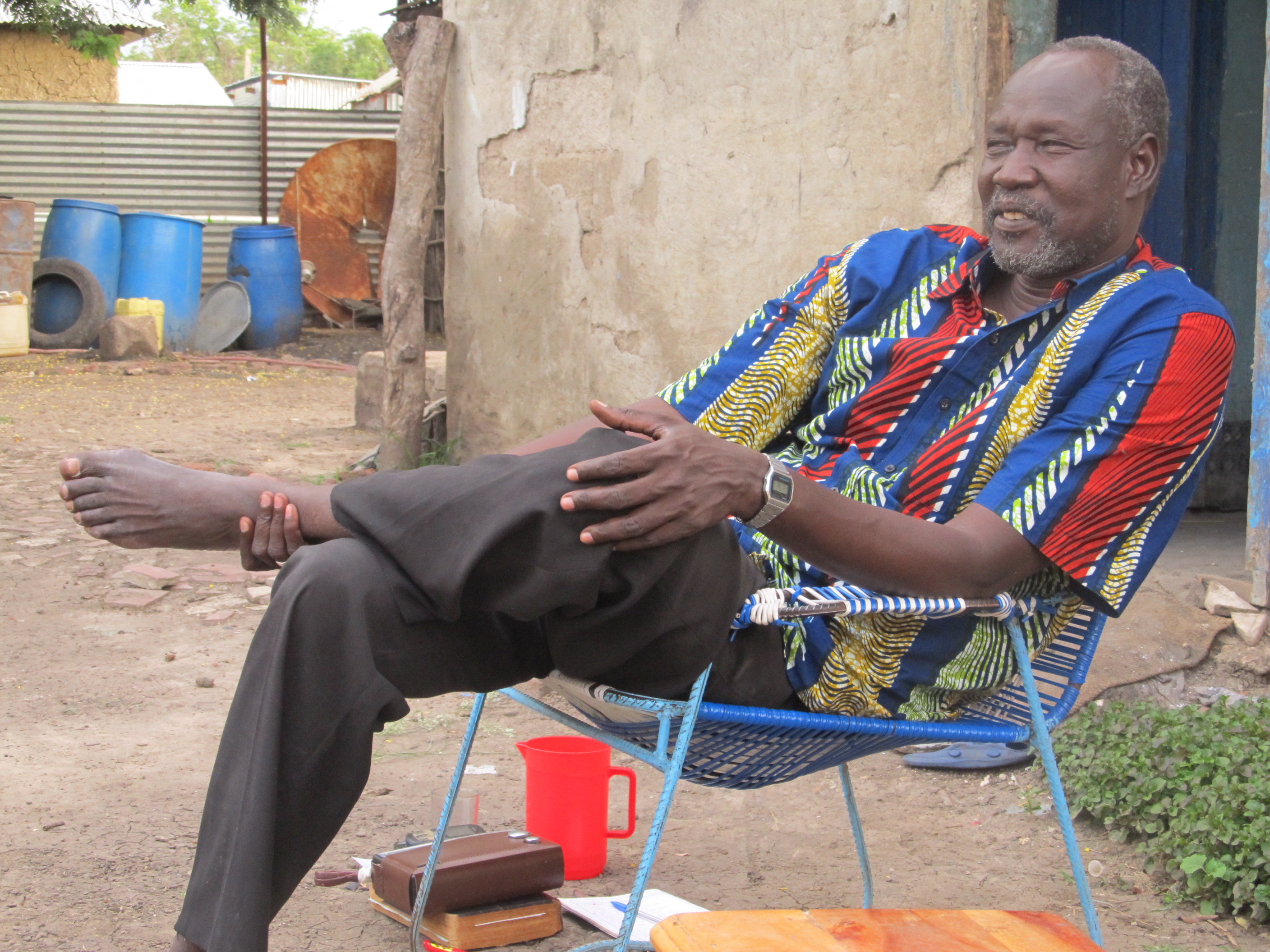
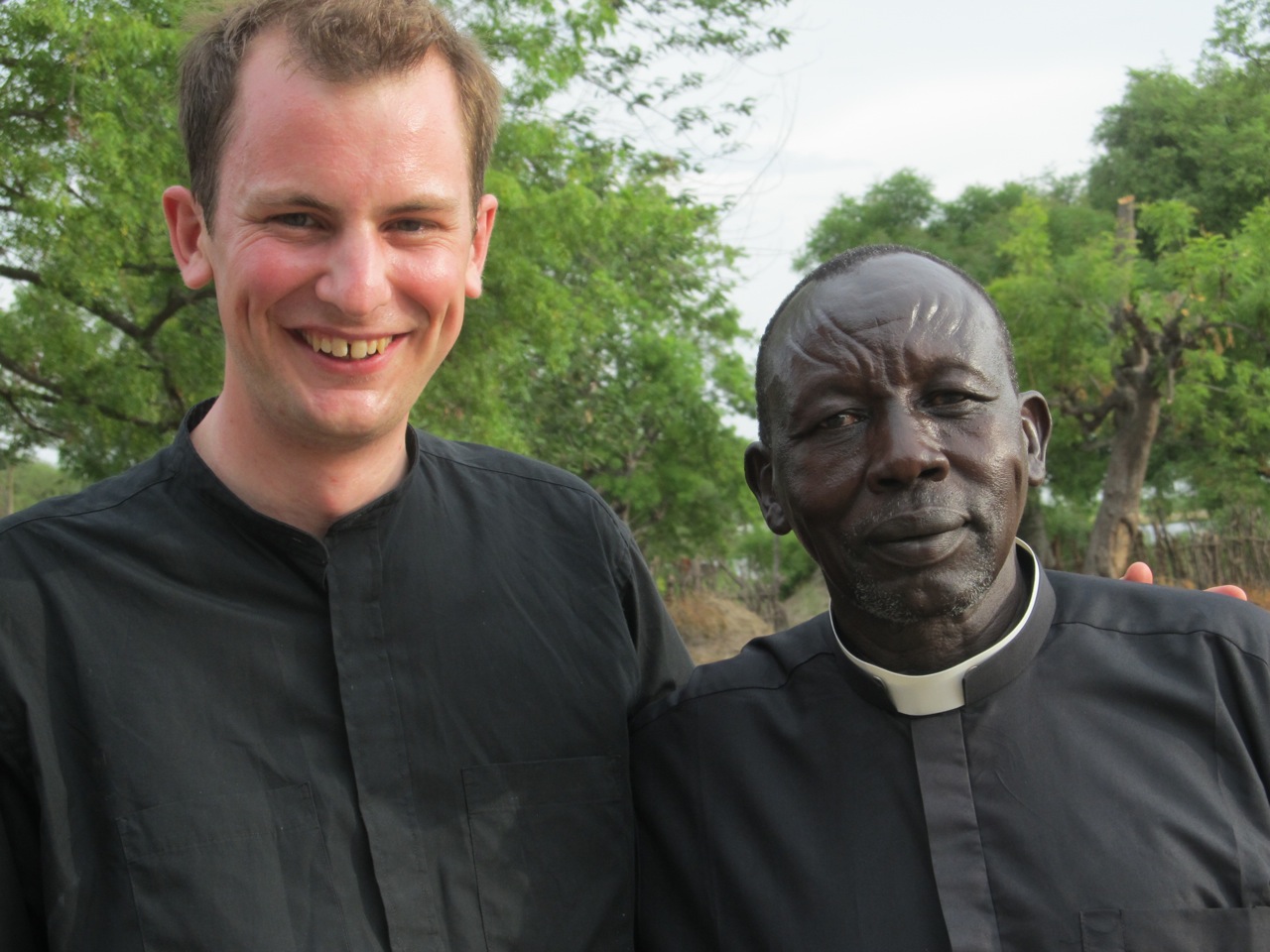
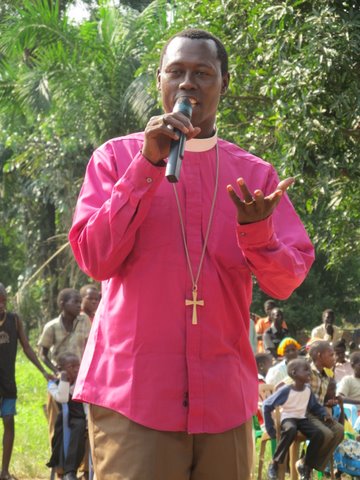
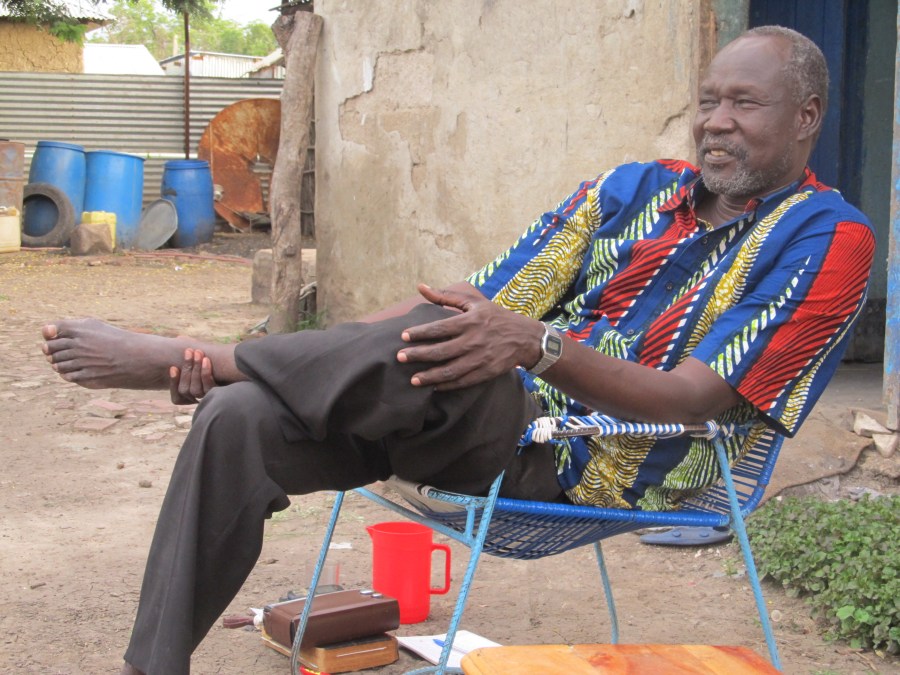
Hilary Garang Deng at home in Malakal, September 2013

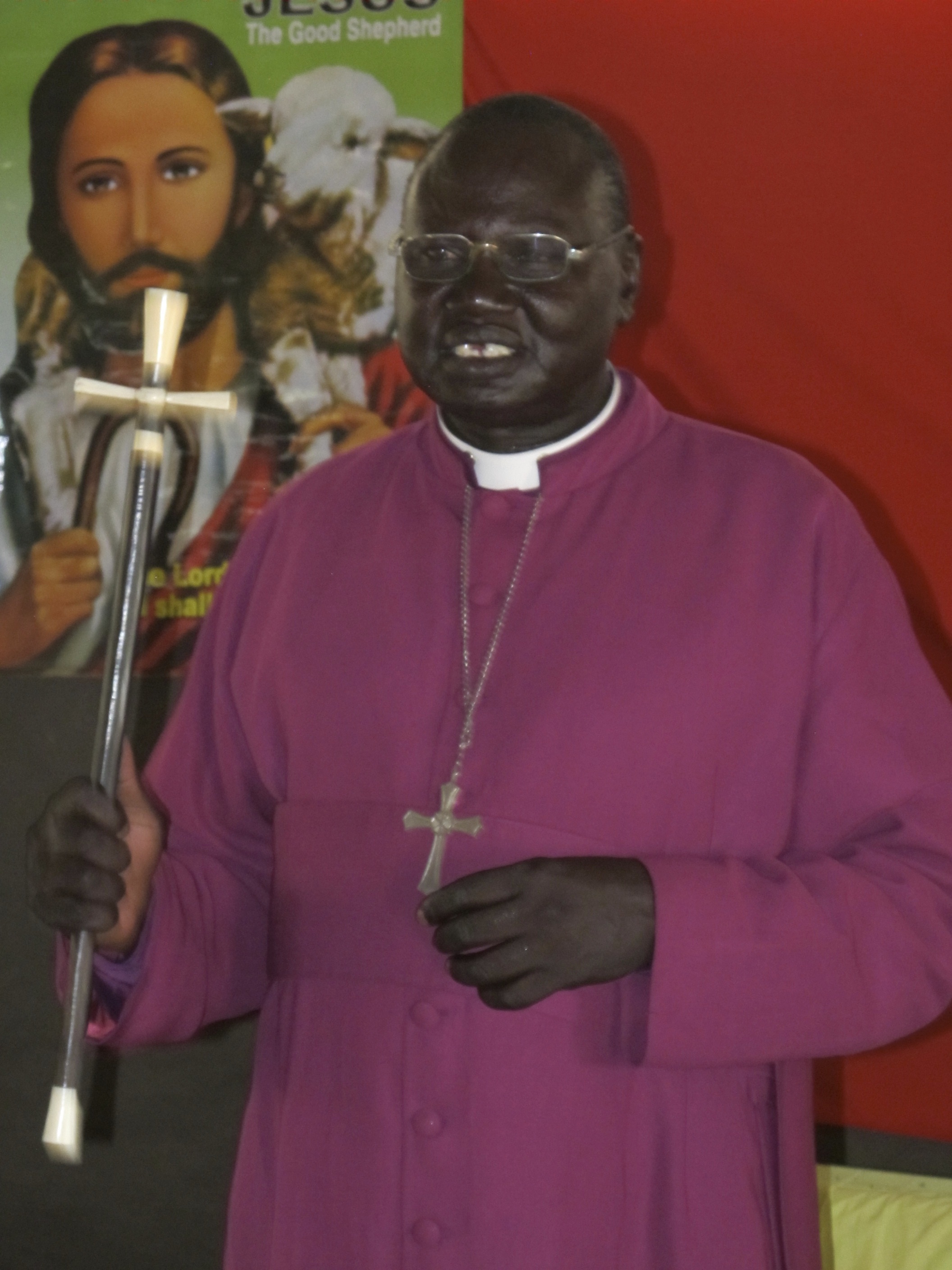
I have been unsuccessful in my attempts to contact Bishop Hilary Garang Deng of Malakal, South Sudan but the BBC succeeded yesterday. (Must be the modest difference in the resources available to us.) The NewHour program on the World Service interviewed Bishop Hilary in Malakal with the sounds of gunfire and explosions in the background. You can listen to the five-minute interview at this link. It begins around 4:30. A little background. Malakal is a major settlement in South Sudan. It occupies a critical place on the road and river network in the region, connecting north, east, south, and west. It is also—and always has been—a multi-ethnic city. Shilluk, Nuer, Dinka, Bari, and many others live there. Because of this, the church has a particularly important role to play as a site of reconciliation. When I was there in September, I attended a church service at the cathedral in which people from all those ethnic groups were worshipping together in a variety of languages.

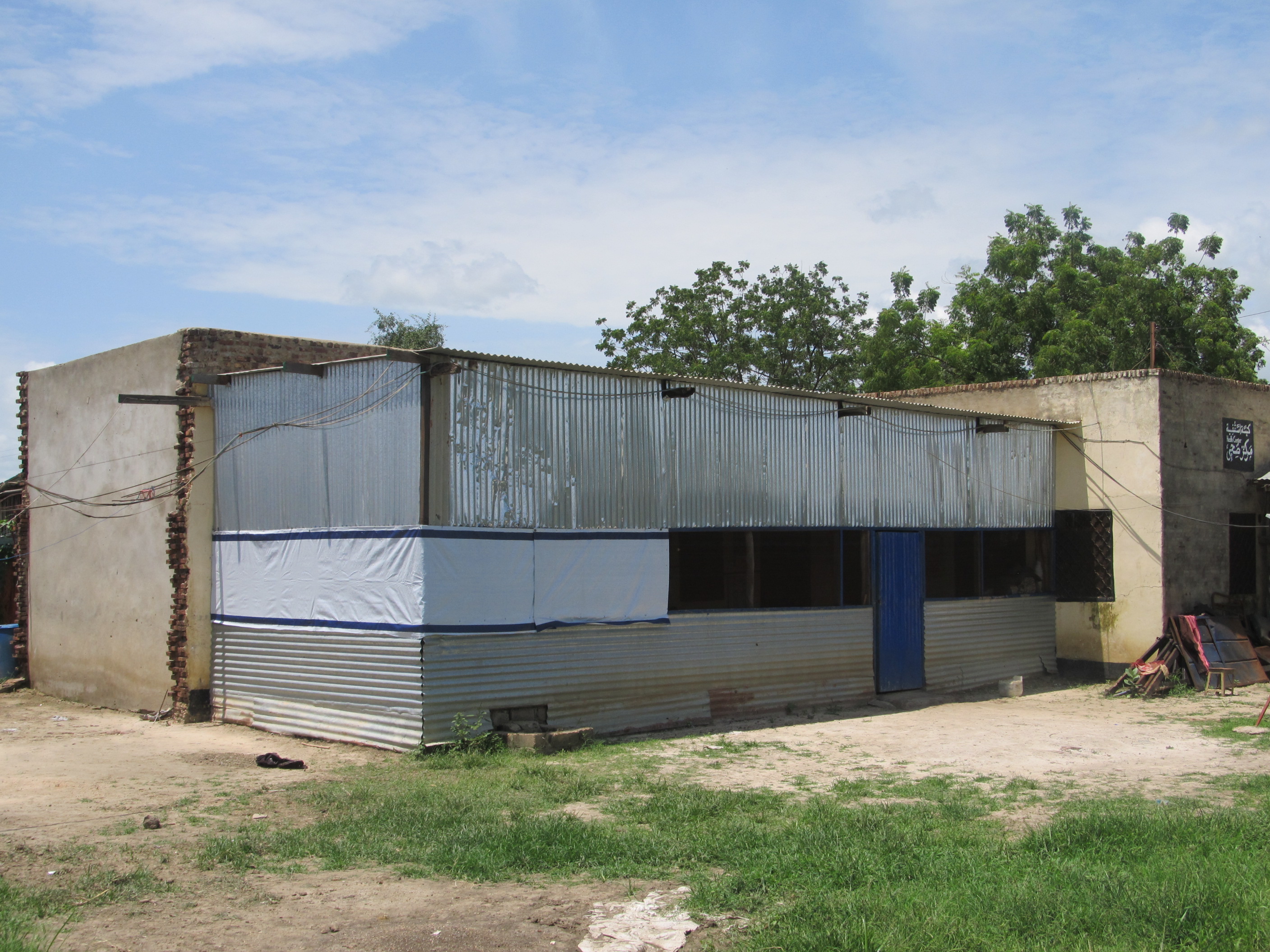
Diocese of Malakal compound: the under-construction cathedral is on the left, the school is in the middle, and the diocesan offices are on the far right
Health clinic in the Diocese of Malakal, funded in part by Episcopal Relief and Development

Bishop Hilary is originally from farther south in Jonglei state and has been bishop of Malakal for about ten years. He was educated at Bishop Gwynne College in the early 1980s, a critical period in the church’s life when several people who are now senior bishops were in school together and the quality of instruction under principal Benaiah Poggo was superb. (That era came to end in 1987 when the civil war reached the college, an event BGC is still trying to recover from. Another bishop who was at BGC in that era was Ruben Akurdit Ngong of Bor, whom I spoke to yesterday.) Bishop Hilary is also a talented artist and musician. I hope some day you’ll have the opportunity to see his artwork or hear him play the guitar. No transcript of the NewsHour interview appears to exist, so I have transcribed a few of Bishop Hilary’s comments. I make no promises for its accuracy.

There is no government functioning, there is no light, there is no water and people are fleeing, are going away. The town is divided in two. Today, there is heavy shelling. About five shells have come into the middle of the town and also some houses near my residence where I am near the church…. The SPLA has taken us this far. They are almost going to let us down. It is a pity. I appeal to the friends of IGAD and all who have brought us peace in South Sudan that they should really help us to resolve the issues. Because at the end if they don’t help them, they are going to wreck the ship…. We the citizens are being frustrated. We need maturity. People who can be nationalists, who can stand for the sake of South Sudan and the people of South Sudan. We cannot have South Sudan without Dinka. We cannot have South Sudan without anybody. All of us, we are children of this land. And we have to care for one other.

Amen to all that.

News from Bor

Ruben Akurdit Ngong, bishop of Bor, April 2013

The Anglican bishop in Bor, South Sudan is asking for prayers and assistance as his see city emerges from intense violence over Christmas.

I spoke on the phone this morning with the Rt. Rev. Ruben Akurdit Ngong, bishop of the Diocese of Bor in the Episcopal Church of Sudan and South Sudan. (Bishop Ruben was my host in Bor for most of the month of April.) The connection was poor and we only managed to talk for about ten minutes but I managed to gather some information.

Since December 19, Bishop Ruben has been seeking shelter in the UN compound in Bor, along with a reported 17,000 others. He reported that there is sufficient water in the compound but insufficient food.

South Sudan’s violence has enveloped Bor in recent days. Reports indicate that the SPLA/government forces pushed out forces that were loyal to a commander who defected from the SPLA. The only media reports I have seen from Bor so far are this disturbing video from Al Jazeera.

Bishop Ruben indicated that people were leaving the UN compound during the day and returning to see what had survived of their homes. St. Andrew’s Cathedral in Bor is reported to be still standing with minor damage.

The bishop’s primary concern was that as people look for assistance, they will be looking to the church. He expects that as people realize what they have lost, they may begin to gather near the cathedral. He is concerned that the diocese will be unable to meet people’s needs—food, water, shelter, and especially medicine—with its current resources. In many parts of South Sudan, people look to the church with expectation and hope because they know of the church’s international links with other Christians.

The challenge of offering relief and assistance is compounded by the fact that as rebels left Bor they took with them many of the vehicles in the town belonging to government officials, international organizations, and so forth. Bishop Ruben’s car is safe in the UN compound but he foresees a serious logistical challenge in making relief aid available.

The fighting has now moved north of Bor in areas around Baidit and Jalle, several hours north of Bor.

Women at the Anglican church in Baidit payam, April 2013
Women church leaders near Jalle, South Sudan, April 2013

Separate fighting is also reported in Malakal, about a day’s journey north of Bor. I have been unable to be in touch with Bishop Hilary Garang Deng, who hosted me in September.

Bishop Ruben asked me to convey the message that he is grateful for the prayers and support people have already offered. I hope that the phone connection may improve in coming days and I may actually post some of his own comments, rather than paraphrases of them.

I have written before about the deep links between Bor, the church, and South Sudan’s civil wars.

UPDATE, Dec. 27: Bishop Hilary Garang of Malakal is briefly interviewed by the BBC: “There is no government functioning, there is no light, there is no water and people are fleeing, are going away. The town is divided in two.” More on that conversation—along with background on the significance of Malakal—is here.

What we talk about when we talk about “Africa”

About a year ago, there was this excellent satirical video that encouraged Africans to send heaters to Norway to help address the cold.

If all you knew about Norway was what you saw in those clips, you would think it was pretty awful, right?

I have been thinking about that video as I read coverage of the unfolding disasters in South Sudan and the Central African Republic. The conflicts exemplify the two ways that international media have to report on conflict in sub-Saharan Africa.

First, there’s the Christian-Muslim frame. The violence is seen as the result of hostility between followers of two great faiths. We have seen this in the last month in reporting on the Central African Republic. The archetype for this reporting is the ongoing violence in Nigeria.

Second, there’s the “ancient tribal hatreds” frame. This is the theme that has dominated coverage of the violence in South Sudan. (This Guardian story, for instance.) The Dinka and the Nuer are said to be at each other’s throats as they always have been. There is little analysis of just how “ancient” these “hatreds” are and how real a construct the “tribes” are. The archetype for this reporting is the Rwandan genocide, which usually, before long, gets invoked in this kind of reporting.

There are many problems with these frames. “Tribes,” as is now widely recognized by scholars, were frequently a creation of colonial governments. Prior to the arrival of the British in southern Sudan, for instance, the lines between Dinka and Nuer were permeable and fluid. The British wanted to firm up these boundaries to facilitate their policy of indirect rule. This is not to say that people do not now identify as Dinka or Nuer, but it is to say that the reason for the violence is not lost in some pre-historic “mists of time” but is the result of actual decisions made by outsiders.

The other major problem with both frames is that it encourages the reader to throw up their hands and walk away. If you read the comments after some of these articles, count how many times people say something like, “Well, if they’ve just been killing each other for so long, why should we intervene and risk our own lives in a never-ending conflict?” That would be a good question—if it were based in reality.

Moreover, these frames neglect the actual voices of people on the ground. No reporters that I have seen appear at all interested in interviewing people who do not fit into their “tribal” schema. Yet if you listen to church leaders in South Sudan speaking across the Dinka-Nuer divide or follow the Twitter hashtag #MyTribeIsSouthSudan, you can see that there is a lot more complexity here than gets reported.

What none of this reporting seems to acknowledge is the real reason for these conflicts: leadership. What is happening in South Sudan right now, is in large measure, the result of the inability of the country’s leaders to address their differences without resorting to violence. Time and again in these last days, I have thought back to Chinua Achebe’s famous opening to his book The Trouble with Nigeria: “The trouble with Nigeria is simply and squarely a failure of leadership.”

Another way of saying this is that the conflict in South Sudan is a political conflict. And political conflicts between leaders have solutions: create institutions that can credibly address conflict; educate and raise up other leaders; reduce the huge number of weapons that are present in situations like this so that if violence happens it is less destructive; create opportunities for people from different backgrounds to come together in peace. None of these are easy tasks. All of them take huge amounts of energy and time. None are guaranteed to succeed. But that doesn’t mean we should not continue to try them.

The one thing, above all, that would change how we think about “Africa” is if we would simply listen to the voices of Africans. This would challenge our listening abilities in many ways. But there is simply no substitute for listening to how people experience, perceive, and understand what is happening to them.

Christians around the world are preparing to celebrate the Feast of the Incarnation, in which God came to share human existence in a deep, intimate, and loving way. How can we begin to learn about, understand, and share the experiences of our sisters and brothers around the world?

(And, of course, if you haven’t, you should read, “How to Write about Africa” by Binyavanga Wainaina.)

Disaster and Displacement: Sudan’s exilic church

In the last fifty years, the great shaping force for the church in southern Sudan has been displacement. This week, as some southern Sudanese have once again been displaced, I find myself wondering what the impact will be on the church.

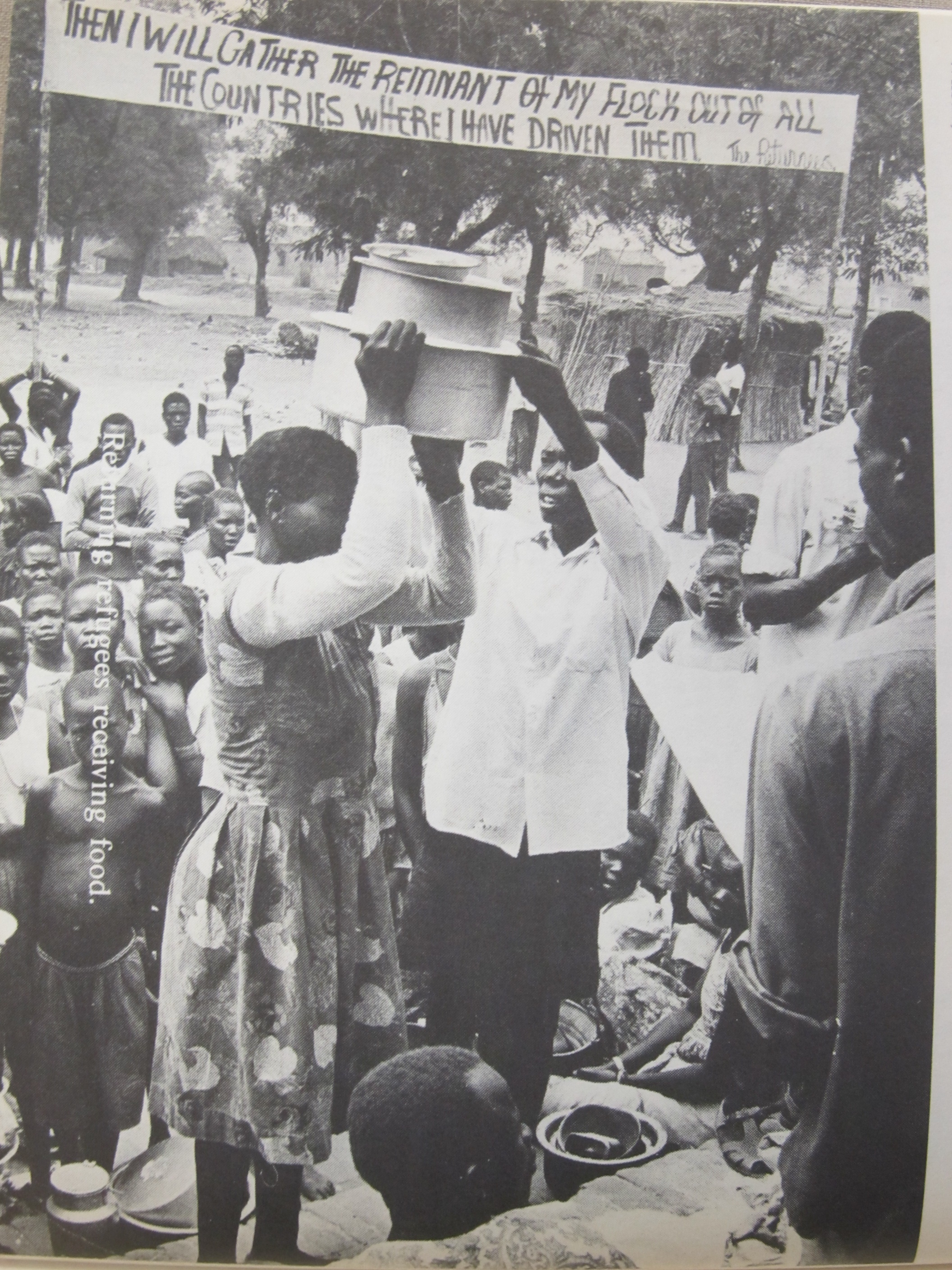
IMG_6558.JPGDuring Sudan’s first civil war, from 1955 to 1972, hundreds of thousands of people were displaced from their homes in the Equatoria region in the far southern part of the country. Some ended up in refugee camps in Uganda, Zaire, and the Central African Republic. But most were displaced within the country. They fled away from the unsafe roads and deep into the bush. Whether externally- or internally-displaced, one thing these refugees did was re-create the church in their new homes. Towards the end of the war, one Sudanese pastor wrote to his British bishop from the bush: “Do not be sad for us. We are still going on with our work, and the Church is still growing in this area. We have no leader or bishops to help us but here we have our great Bishop. He is leading us in the great difficulties of our work.” When the war ended, people began to return home. They interpreted their experience in Biblical terms. The picture on the left shows returning refugees with a banner quoting Jeremiah: “Then I will gather the remnant of my flock out of all the countries where I have driven them. The returnees.”

Sudan’s second civil war, from 1983 to 2005, similarly displaced hundreds of thousands of people, though many were from the middle band of the country, places like Jonglei, Lakes, and Bahr el Ghazal. Again, whether displaced in refugee camps in Ethiopia, Kenya, or Uganda, or within Sudan, these people re-created the church where they were. In the Ethiopian refugee camps in the late 1980s, there were multi-day services where thousands of people were baptized. In Kenya in the 1990s, one bishop confirmed several thousand over the course of a three-day service. In Ugandan refugee camps, a committee laboured to create a new hymnal to share with others some of the huge number of hymns that were being written by new converts during the war. (I wrote about this in an earlier post as well.)

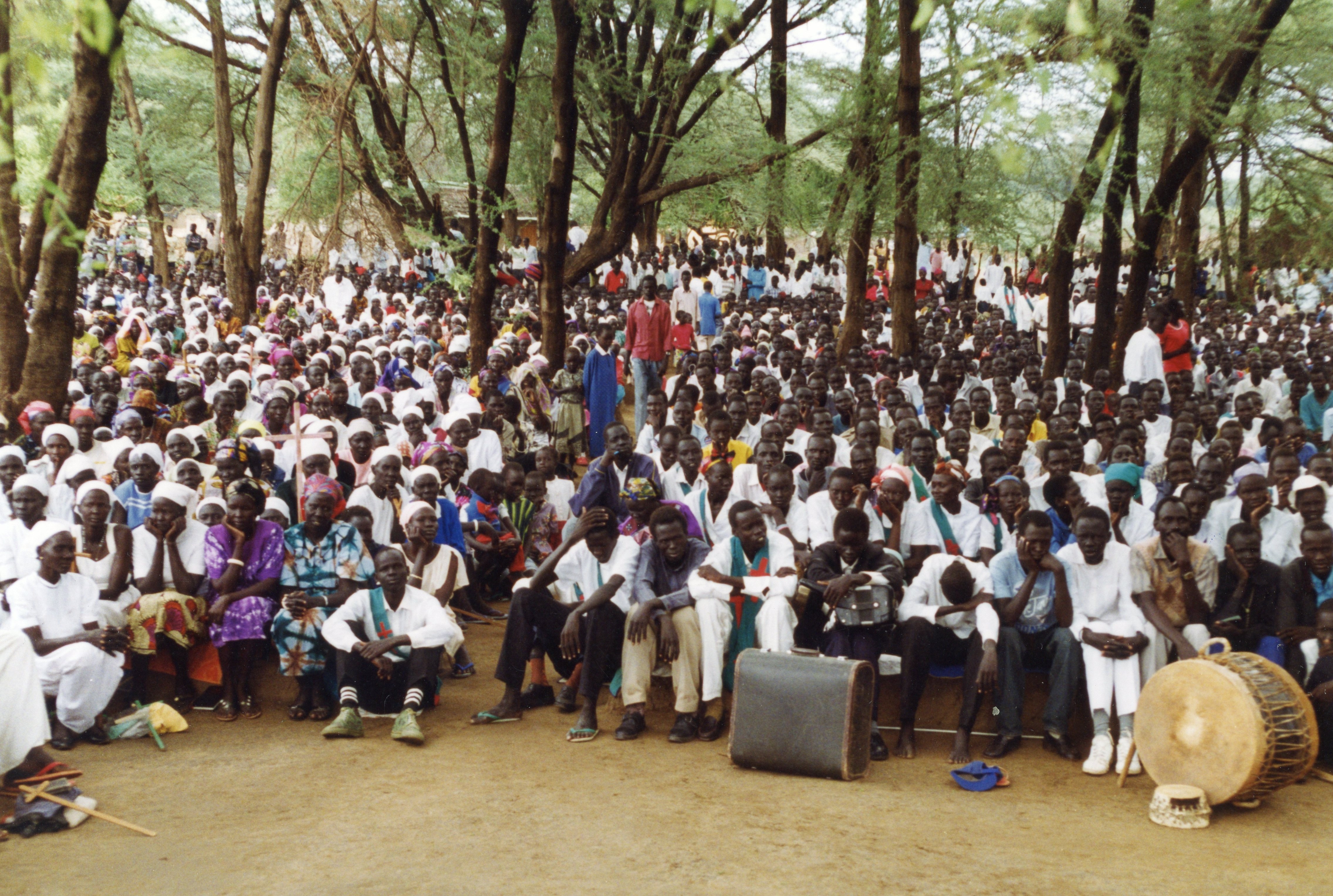
A church service at Kakuma Refugee Camp, Kenya, c. 1995

Many people were displaced within the country. In the centre of the country, some Anglicans founded a Bible school at a place deep in the bush called Dhiaukuei. It became a place where Christians came for Bible training, literacy education, and mutual support. Every year between Christmas and New Year’s, thousands of internally-displaced southerners would gather for a giant celebration of the nativity. It was a chance to be strengthened by the bonds they shared as one people in Christ before returning to their villages and the uncertain future that awaited them.

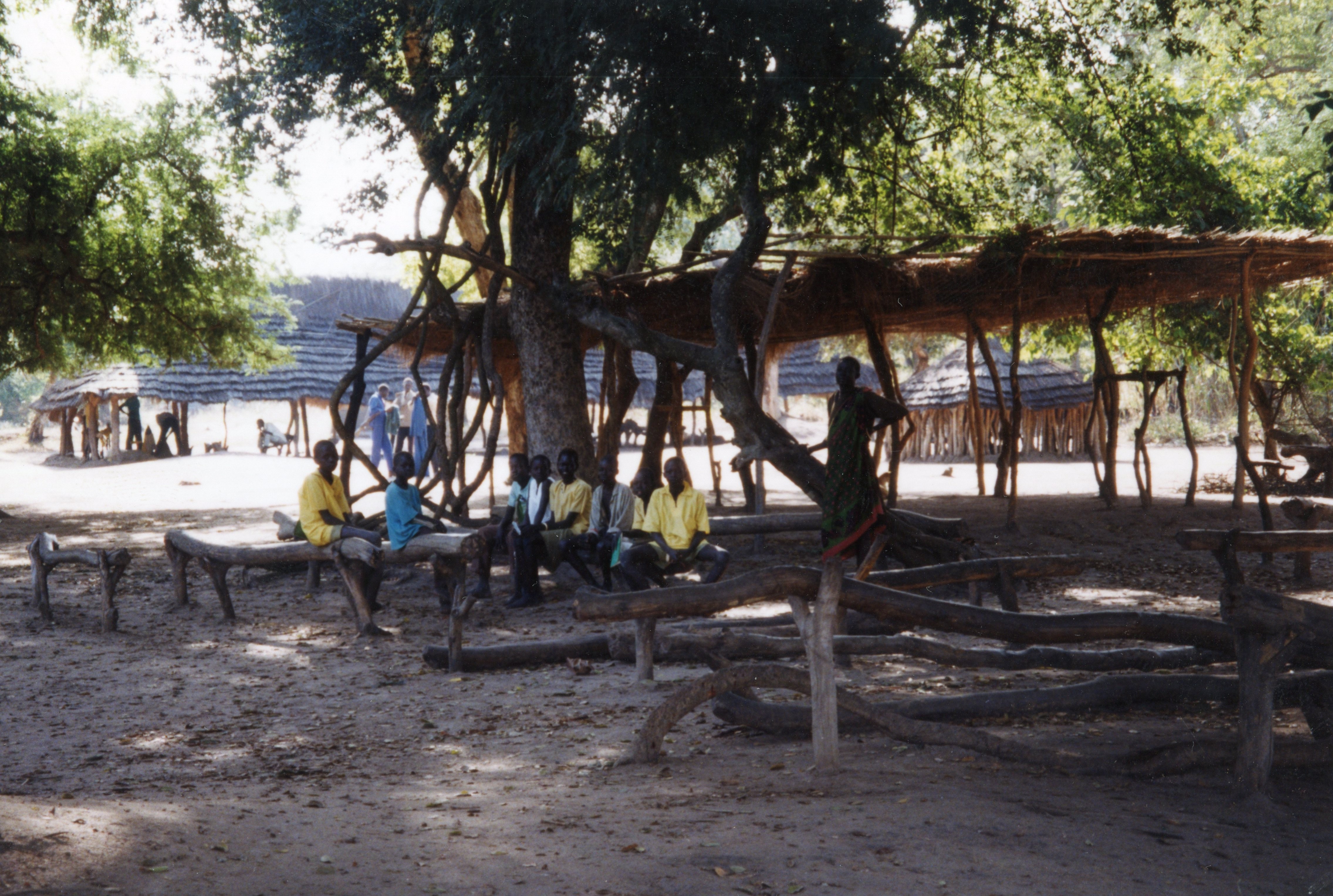
A quiet moment at Dhiaukuei Bible School, c. 1995

I know this because this is the area of research for my doctoral dissertation. These are stories that I have been privileged to hear in the course of my oral history interviews. But there’s also another theme I have heard repeatedly: when displaced, these church members felt like the rest of the church around the world had forgotten about them. Time and time again I have seen in the letters that survive from this period the theme, “We are all members of the body of Christ. But how come you Christians around the world are ignoring us?” For instance, between 1983 and 1991 over 400,000 southern Sudanese sought refuge in camps in Ethiopia. In that time, a single British pastor—a man named Tim Biles—came to visit Anglicans there. In April, I interviewed the southern Sudanese pastor in charge of one of the camps. Out of the blue, he asked me if I knew Tim Biles. I said I did. The Sudanese pastor looked straight at me: “You tell Tim Biles we still remember him. Of all the world, he was the only one who remembered us when we were suffering in Ethiopia.” Tim Biles visited the camp for one day twenty-five years ago. By embodying the reality of the body of Christ, he had an incredible impact on the church.

When he was archbishop of Canterbury, George Carey visited Dhiaukuei. I have spoken to many people who remember that visit. It is clear the memory of it has not dimmed one bit in the intervening twenty years. One woman told me that when he came, “We thought, ‘OK, if part of our body from a different part of the world came to visit us, then the message of Jesus Christ which said, “We are all parts of the same body,” is true.'”

As I have read the news in the last week from South Sudan (not to mention in the last month from the Central African Republic), I have been struck—and disturbed—by how similar it is to reports from Sudan’s two previous civil wars. This week, I have been trying to contact Daniel, the priest who translated for me on a recent visit to South Sudan, but have learned only that he is one of many people who have fled into the bush. Those of us who rely on computers for communication know little about what is going on. But if past experience is any guide, we can be sure of one thing: the church is there, interpreting the experience for its members and, in turn, being shaped by the experience.

To use the Biblical term, the church in South Sudan is an exilic church. It is a church whose members know both what it is like to wander in the wilderness and what it is like to have been driven from their Jerusalem and into foreign lands. I wish it weren’t so. I wish that Sudan had known more peace in the last fifty years. But exile is part of life in our fallen world, though its burden falls more heavily on some than on others. For those of us who do not share the experience of exile, the question is: how do we embody the reality of our relations as one body in Jesus Christ and help bear the burden of exile?

(Some of the photos in this post have been collected from private individuals in the course of my doctoral research. Please do not use them without first contacting me. The themes in this post are adapted from my chapter in the forthcoming Oxford History of Anglicanism and from my new book, Backpacking through the Anglican Communion.)

Bor and Jonglei, the church and state—a history of deep inter-connection

As violence continues in South Sudan, attention has come to be focused on Bor and Jonglei state. It is not surprising. This is a region that has played a key role in the history of the country—and the church. As events continue to unfold there, they are sure to continue to shape the country and the churchThe region that is now Jonglei state has long had a variety of ethnicities—Dinka, Nuer, Murle, and others. While it is tempting for outsiders to see these as fixed, concrete, “tribal” identities, it seems more likely that before the colonial period the boundaries between ethnicities were fluid and shifting. Dinka and Nuer, for instance, had much in common in terms of religion, language, etc. It was the British colonialists who insisted on fixing identities more firmly because it made them easier to rule.

Sudan’s second civil war more or less began with an army mutiny at Bor in 1983. In 1991, the rebel Sudan People’s Liberation Army, which had grown out of that 1983 mutiny, split. The leader of the breakaway faction was Riak Machar, who has become a key player in the confusing events of the past week. In November 1991, with the support of the Khartoum government, his forces unleashed what became known as the “Bor Massacre,” in which several thousand Dinka around Bor were killed and hundreds of thousands displaced into an international Dinka diaspora that persists to this day. This event, more than any other, politicized ethnic identities in Jonglei and resulted in factional violence that was the most catastrophic part of the civil war.

Nathaniel Garang Anyieth, first Anglican bishop of Bor, c. 1992

The church has been present in the midst of all this history as well. The first Anglican mission station in southern Sudan was founded about six miles south of Bor, at a place called Malek, in 1906 among the Dinka. For a variety of reasons, the missionaries didn’t have much success. It wasn’t until 1984 that an Anglican bishop was consecrated for Bor. His name was Nathaniel Garang Anyieth and shortly after his consecration, Bor was attacked by the Khartoum government. Bor essentially emptied, as its residents fled for safety to their home villages or into the deep and inaccessible marshes along the Nile River.

Bishop Nathaniel was among those who fled. For the next five or six years, he moved among his people in these rural areas, cut off from the world but ministering all the same. At Lambeth 1988, he was referred to as the “Lost Bishop” because no one knew what had happened to him. Finally, in 1990, he was able to re-establish contact with the outside world—and he had quite the story to tell. The Dinka had turned to Christianity in great numbers and he had been baptizing, training, and ordaining just about as fast as he could.

In the 1990s, the church began what was known as the People-to-People peace process. Only the church was trusted to bring together grassroots Dinka and Nuer leaders to address conflicts and work towards reconciliation. These conferences are widely recognized as significantly reducing inter-communal violence and setting the stage of Riak Machar’s eventual reconciliation with the SPLA and his integration into the government of the new country.

All of this is background to the events of the past week. I spent much of April in Bor and Jonglei and have this week been trying to call people I know—with little success, as cell phones batteries appear to have run out. I have, however, managed to speak with people not in Jonglei but who have heard from those who are there. People are reported to be fleeing Bor to their villages and across the Nile—just as they have done in the past.

Ruben Akurdit Ngong, bishop of Bor
Ruben Akurdit Ngong, bishop of Bor, April 2013

Bishop Nathaniel’s successor, Ruben Akurdit Ngong, is reported to be in the UN compound just outside Bor. He, along with an unknown—but large—number of other people are seeking refuge there. Again, this is what bishops in this part of the country do. They go to where the people are and stay with them. During the civil war, some bishops were forced to seek refuge in Juba, Khartoum, or abroad. I once asked Nathaniel Garang why he went into the bush with his people, rather than to a city. He looked at me like the answer was the most obvious thing in the world: “Because I was there with the people. If I leave them, the church would not happen. My staying with the people, that’s how they received the gospel.”

What we desperately don’t want is another civil war with Bor at its centre. The Anglican archbishop, Daniel Deng Bul (who is from Jonglei), this year was appointed to chair a national peace and reconciliation commission. Shortly before this week’s violence broke out, that commission released an exciting update on their work. Given the church’s history of peace-building, it seems like they have ever chance of succeeding—if supported and given the opportunity. But South Sudan’s leaders seem intent on ruining the chance for reconciliation before the work can even begin.

Just as I was finishing this post, I came across this video from the UN compound in Bor.

It is situations like these that are the setting for the profoundly incarnational ministry of the church in South Sudan.

(Some of the photos in this post have been collected from private individuals in the course of my doctoral research. Please do not use them without first contacting me. My new book, Backpacking through the Anglican Communion, contains much more about the history of the church in South Sudan. I have followed this post up with a second with more gleanings from South Sudan’s history relevant to the current moment.)

South Sudan church leaders respond to recent violence

Readers of this blog will know I have more than a passing interest in the goings-on in South Sudan. So it is with some alarm that I have been hearing of the violence in Juba and elsewhere this week.

Church leaders in South Sudan have issued two statements recently in response to the violence—both models of Christ-like reconciliation at a deeply uncertain and precarious time.

The first is from several senior clerics:

MESSAGE OF PEACE AND RECONCILIATION

FROM CHURCH LEADERS IN JUBA, 17th DECEMBER 2013

So the king said, ‘Bring me a sword’, and they brought a sword before the king. The king said, ‘Divide the living boy in two; then give half to one, and half to the other.’ But the woman whose son was alive said to the king—because compassion for her son burned within her—‘Please, my lord, give her the living boy; certainly do not kill him!’ The other said, ‘It shall be neither mine nor yours; divide it.’Then the king responded: ‘Give the first woman the living boy; do not kill him. She is his mother.’All Israel heard of the judgement that the king had rendered; and they stood in awe of the king, because they perceived that the wisdom of God was in him, to execute justice. (1 Kings 3:24-28)

Whatever has happened in Juba over the last few days, we are concerned about the consequences.

There is a political problem between leaders within the SPLM. This should not be turned into an ethnic problem. Sadly, on the ground it is developing into tribalism. This must be defused urgently before it spreads.

Reconciliation is needed between the political leaders. Violence is not an acceptable way of resolving disputes. This must be done in a peaceful and civilised manner. Reconciliation is at the heart of the Church’s ministry, a key Gospel value, and so we offer ourselves as mediators.

The way this incident is handled will have an effect on the future of our nation, whether positive or negative, both internally and in terms of international relations.

We are concerned about ongoing insecurity. Today was supposed to be a normal business day, but that was not the case. Fighting, killing and looting continued. The army must be controlled. We appeal to the security forces, who are our brothers, our sons and our parishioners, to exercise restraint and responsibility and to respect civilians.

We urge the civilians to remain calm and to stay somewhere safe. The government should give information to civilians when there are security operations and direct them where to go for safety.

We wish to see assurances for the safety of our international friends, including those from neighbouring countries, who are here to help us.

We urge the government, UN and NGOs to provide humanitarian assistance to the displaced civilians in Juba, and to ensure that water and food are available for the population.

We are in the season leading up to Christmas. This year’s Christmas may not be what we expected, but it is what we have been given and we must accept it as it is. As we celebrate the birth of the Christ-child, let us remember that God is with us, and pray for the strength and courage to bring peace, reconciliation and healing to our new nation.

Text of message given to TV and radio media on 17th December 2013 by Archbishop Paulino Lukudu Loro on behalf of the following Church leaders:

Archbishop Paulino Lukudu Loro, Catholic Church
Archbishop Daniel Deng Bul, ECSSS
Bishop Arkangelo Wani Lemi, AIC
Moderator Rev Tut Kony Nyang, SSPEC
Rev John Yor Nyiker, Secretary General PCOSS
Bishop Emeritus Paride Taban, Catholic Church
Bishop Michael Taban Toro, Chair SSCC
Rev Mark Akec Cien, Acting Secretary General SSCC

As these leaders make clear, the violence is first and foremost the result of a political conflict—though media representations tend to highlight the ethnic elements.

In response to that, Dinka and Nuer church leaders have issued this statement, showing that reconciliation is not only possible, but happening even now.

December 18, 2013

We, the Archbishop, Moderators, Overseer, and clergy from various denominations of the churches in South Sudan, and native members from the Dinka and Nuer Communities:

Identify ourselves not as representatives of tribes or denominations but as leaders and representatives of one church and one body of Christ.

We are gathered, united and speaking in one voice that peace and reconciliation must prevail in our country.

We are saddened of the conflict which has happened in Juba and ongoing in other areas like Bor in Jonglei State. We are concerned about the consequences. It is unfortunate many lives have been lost, many more wounded while many others displaced in their own country. We condole with the families who have lost their loved ones and those separated from their families by the conflict in Juba, Bor and other areas

We condemn the clash and acts of violence which have happened within the barracks of the Republic of South Sudan.

We condemn and correct the media statements and reports that refer to the violence as conflict between the Dinka and Nuer tribes. Whatever has happened should not be referred to as ethnic conflict and not between the Dinka and Nuer communities. These are political differences among the Sudan People’s Liberation Movement (SPLM) Party, political leaders of the Republic of South Sudan.

Therefore, we appeal to the two communities of Dinka and Nuer not to accept that the conflict is between the two tribes.

We appeal to the army and security organs of our Government of South Sudan to take control of the situation and protect its citizens. Our citizens are running for refuge in UN Compounds because they do not feel safe from their own security forces.

We are concerned about the reports of abuse, harassment and killing of individual citizens based on their ethnic affiliation. These are happening and witnessed for the last three days. Soldiers are asking civilians to identify themselves by tribes and we cannot accept to be identified by our tribes as we are all South Sudanese. We condemn such acts of abuse and hope that no more human lives should be lost.

We appeal to our Government to ensure safety of leaders under arrest and ensure speedy justice for any criminal act but most importantly reconciliation for political differences.

We appeal to our political leaders to refrain from hate speeches that may incite and escalate the violence. We urge to initiate dialogues and resolve issues amicably.

We appeal to the international community to respond fast and positively to the humanitarian crisis which has developed in the last three days particularly in Juba and Bor.

We appeal to our President of the Republic of South Sudan, His Excellency Salva Kiir Mayardit to continue to calm and ensure safety for our nation.

Most Reverend Daniel Deng Bul, Archbishop of Episcopal Church of South
Sudan and Sudan (ECSS)
Rev. Tut Kony Nyang, Moderator of the South Sudan Presbyterian
Evangelical Church
Bishop Dr. Isaiah Majok Dau, Overseer, Sudan Pentecostal Church
Rt. Rev. David Akau Kuol, Bishop of Diocese of Awerial, ECSS
Bishop Michael Taban, Chairperson of South Sudan Council of Churches
Rev. Mark Akech Cien, Acting General Secretary of South Sudan Council
of Churches
Rev. James Yout Chuol, ECSS, Diocese of Akobo
Rev. Daniel Deng Anhiany, ECSS, Diocese of Malakal
Rev. Samuel Galuak Marial, ECSS Diocese of Twich East
Rev. Peter Adum Deng, ECSS, Diocese of Twich East
Rev. William Mou Deng, ECSS, Diocese of Wau and Aweil
Rev. Philip Aduong Thiong, ECSS Diocese of Juba
Rev. John Chol Daau, ECSS Diocese of Bor
Rev. Yat Michael Ruot, South Sudan Presbyterian Evangelical Church
Rev. Gatkuoth Chuol Bul, South Sudan Presbyterian Evangelical Church

The list of signers includes Samuel Marial, principal of Bishop Gwynne College.

For me, the key unknown at this point is the situation in Jonglei, one of South Sudan’s states and a key site of inter-ethnic violence during the civil war. I hope to hear more from there soon.

With prayers for peace in South Sudan!
Malek, South Sudan

Malek has a special place in the mission history of South Sudan.

IMG_6694
The first CMS team, plus a visitor from the Uganda mission. Shaw is back row, left.

In early 1906, six young men—none older than 30—arrived at this community on the east bank of the Nile River, fresh-faced and eager to convert the Dinka people to Christianity. They were representatives of the Anglican Church Missionary Society, and what they lacked in experience they made up for in enthusiasm.

Within 18 months, five of the six were gone, felled by a combination of ill health, incompetence, and sheer frustration at the perceived obstinacy of the Dinka. The one who remained, Archibald Shaw, soon contracted malaria and was sent to Khartoum to recuperate. The Anglican presence among the Dinka was nearly extinguished almost before it had begun.

Shaw returned to Malek and began building a mission station. By the time he retired in 1939, Malek had a school and a church but CMS had found much greater success elsewhere in southern Sudan. Malek continued on as a mission station, but Shaw and others saw their work among the Dinka largely as a story of failure. Such Dinka Christians as there were were former students who were largely disconnected from their traditional way of life.

In time, the independent government of Sudan took over running the school at Malek. But the school was destroyed during Sudan’s first civil war. It was re-built in the 1970s during a period of peace, and then destroyed again during the second civil war.

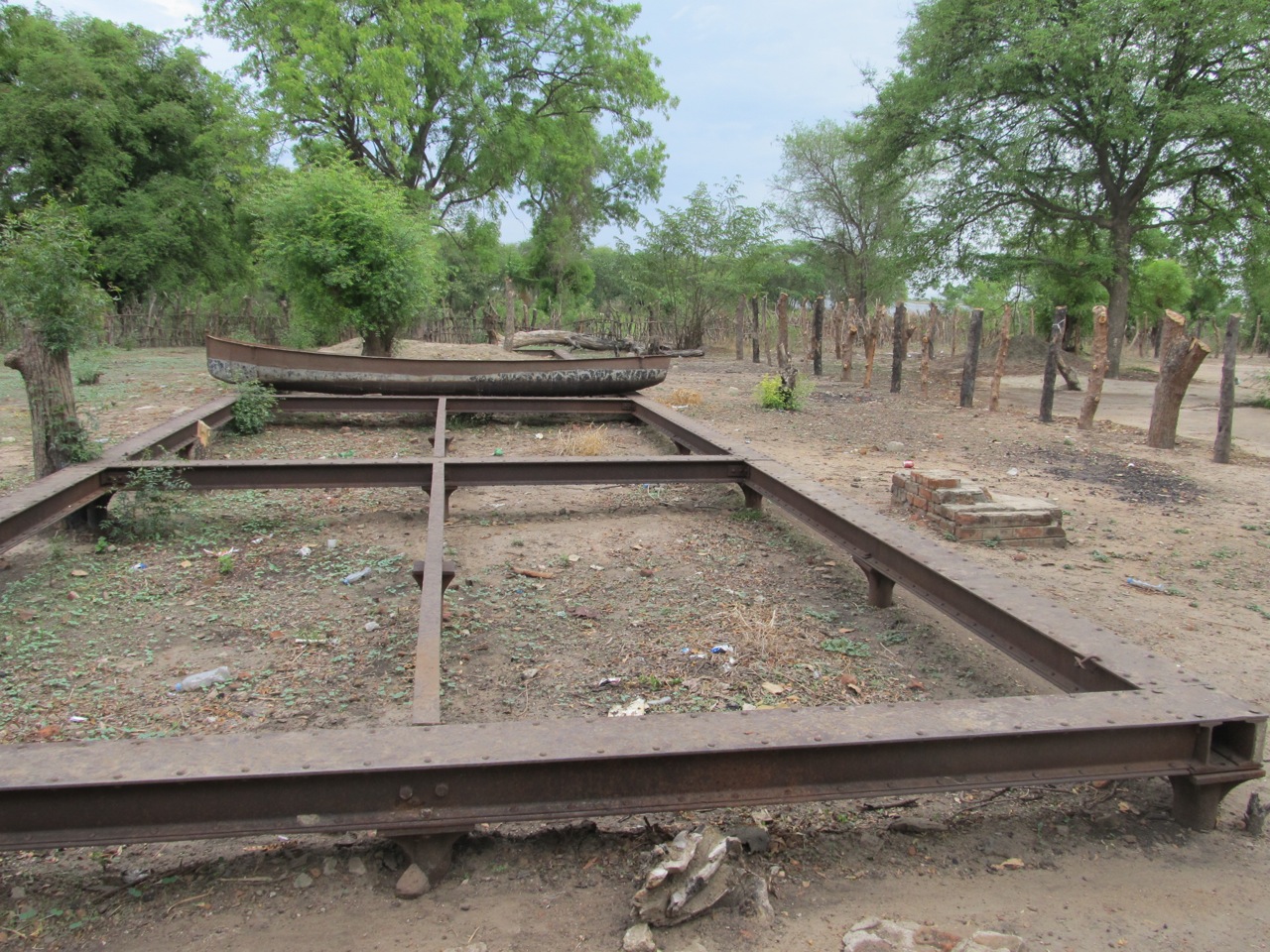
Today, this is all that remains of the house that the CMS missionaries built for themselves.IMG_7324

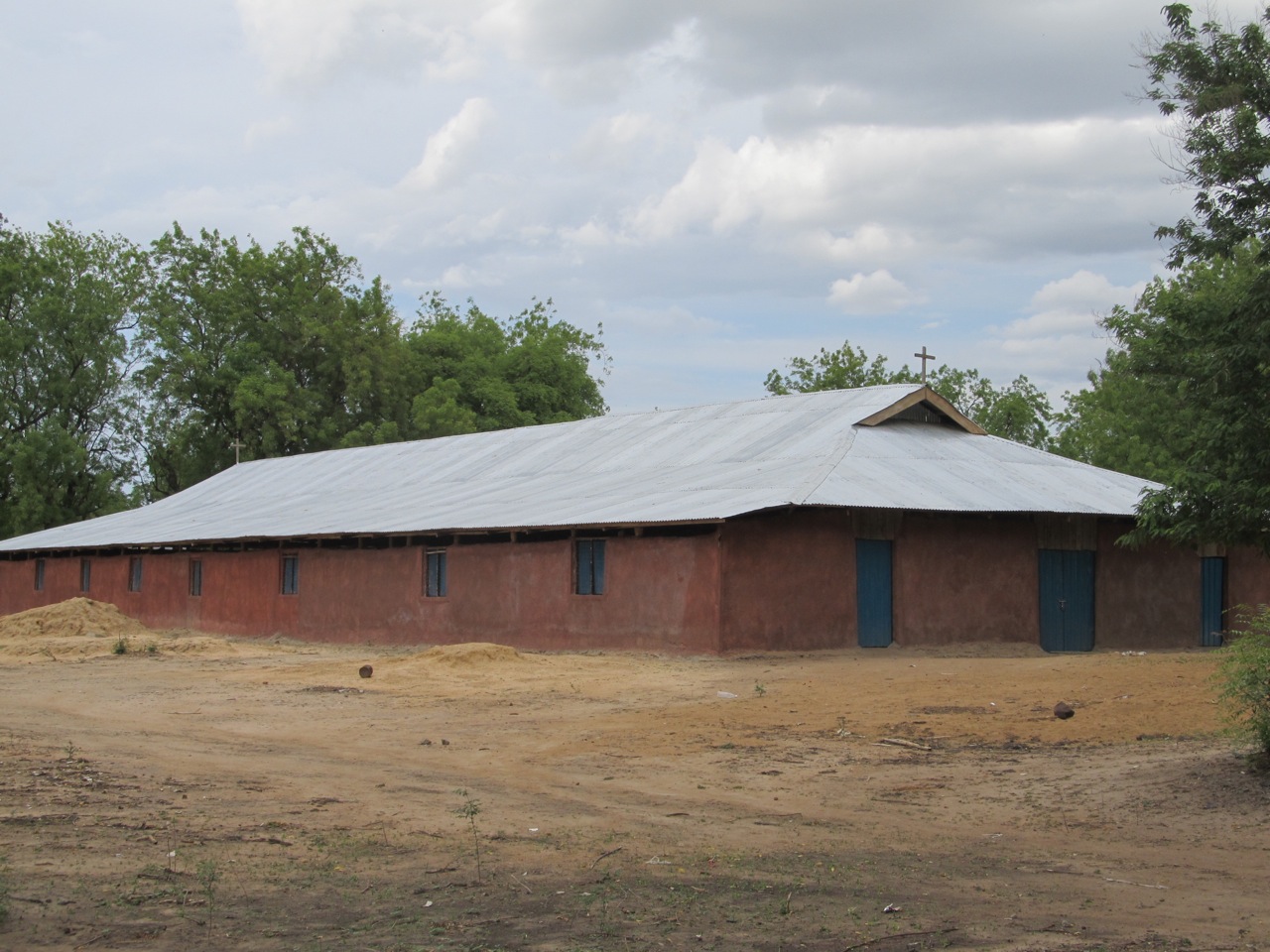
But here is the church.IMG_7326

And there’s not only a primary school, but also a secondary school in the community.

In virtually every village around Malek, there is now a mud-and-thatch church, a fact that would have stunned those early CMS missionaries, whose evangelical tours through those same villages are a record of frustration.

The Dinka church on the east bank of the Nile River is a thriving institution. Indeed, the growth has been so quick and comprehensive, that Anglicans in Malek now want the church to carve Malek out of the existing Diocese of Bor and make it a free-standing Diocese of Malek.

One of the clerics in this picture decided it was just too hot to wear a collar.

It is this man who now oversees the Malek archdeaconery and is leading the effort to create the diocese. Joseph Akol Gak was ordained in the 1980s, when the school had just been rebuilt (and was about to be razed again). He spent time ministering to Christians in refugee camps in Ethiopia and across southern Sudan. In the span of his ministry, he has seen the Dinka church move from being a socially marginal institution to one that is at the centre of Dinka life.

Regardless of whether or not Malek becomes a diocese, it will still stand for me as an example of the importance of consistent, faithful Gospel witness across generations. The world is always pressing on us the need for results, the sooner, the better. Timelines contract. Horizons shrink. The church is not immune from this pressure.

But mission requires the long view. Sometimes our plans seem frustrated. But when we look closer, we can see the hand of God at work often even despite our best efforts.

“I started under a mango tree”

IMG_4070Samuel Peni, bishop of the Diocese of the Nzara in the Episcopal Church of the Sudan, was recently at the AFRECS conference in Chicago and gave this interview.

Readers of this blog might remember that I recently profiled Bishop Samuel in an article for the Anglican Communion News Service.

Bishop Samuel mentions the work in his diocese to reduce mortality in childbirth. The traditional birth attendant program is underway, but the diocese is looking to expand it. More information on how to support that particular aspect of his ministry is here.

“Hey, we’ve got something good going on over here. Come join us!”

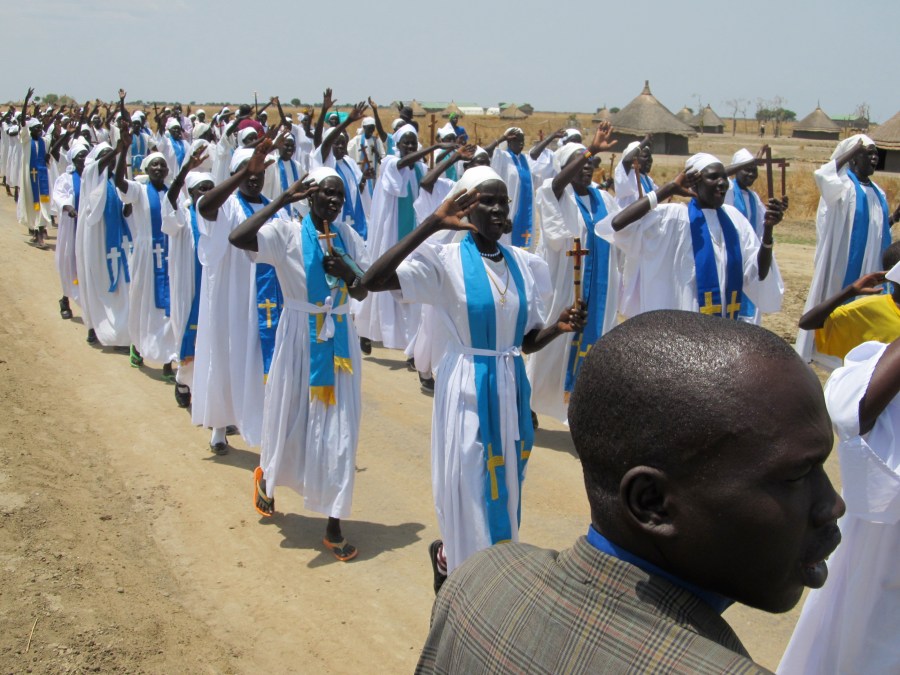
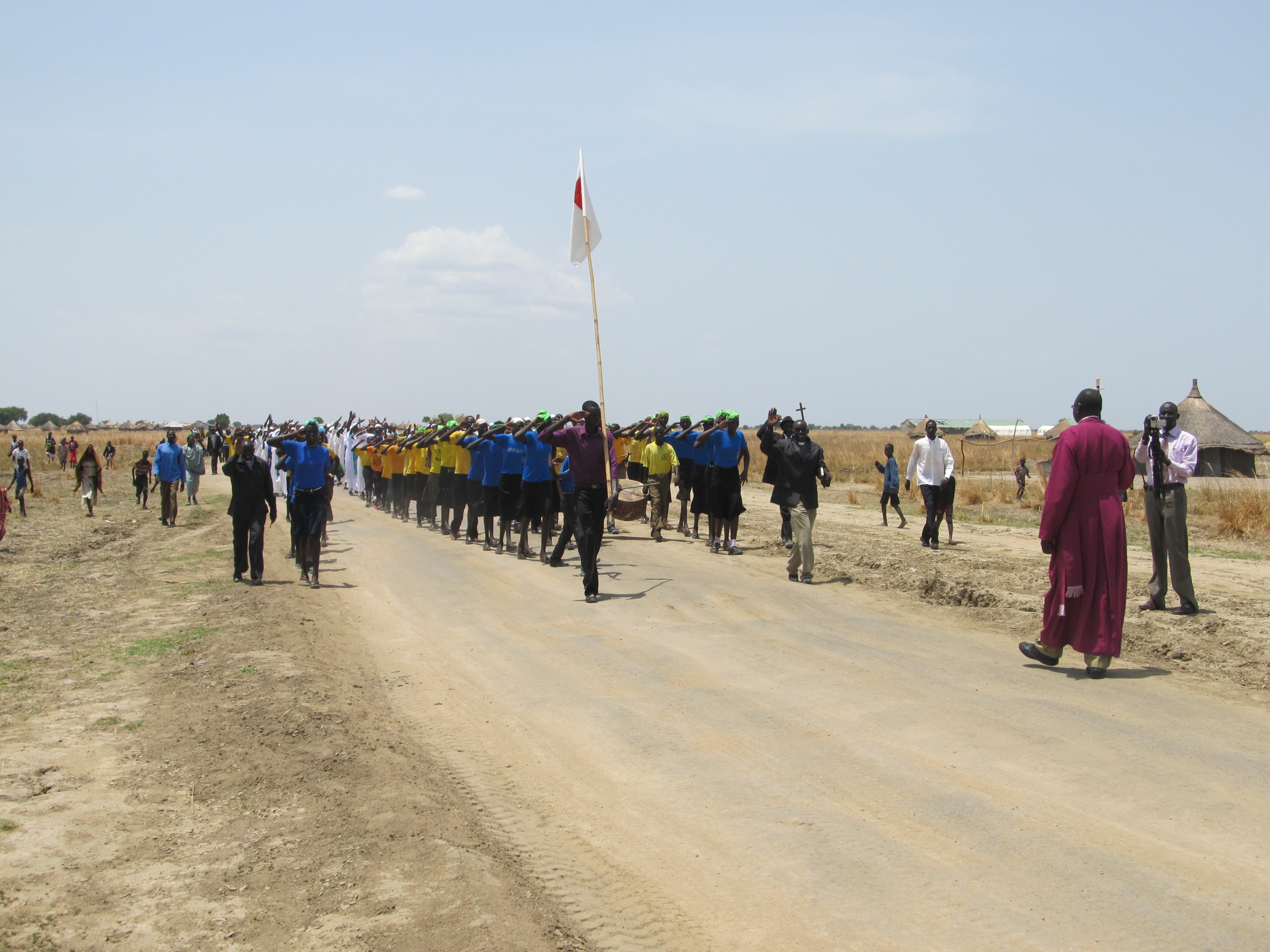
The Church Times this week published a reflection of mine on the role of processions in the church in South Sudan. I write about how time after time when I was visiting churches, it would involve marching through town, a village, or down the road beating drums, singing songs, and making lots of noise. After one such parade down the main street of Akot, I thought:

“Well, aren’t we making a big deal of ourselves!” But then I realised that this was precisely the point. Processions are not simply an expression of the joy and hospitality that people might be feeling on a particular occasion. They are an evangelistic tool: “Hey!” we were saying, in effect: “We’ve got something good going on here. Come and join us!”…

Christianity is a public faith. From an early time, Christians realised that faithfulness to what Jesus had taught them meant that public action was necessary. The early Christians preached on Pentecost, for instance, and defended themselves in front of hostile crowds. You couldn’t be a Christian and keep it to yourself. Anyway, why would you want to?

You can read the rest of the article here. And here are some more pictures of processions, truly an incredible thing to be a part of.

IMG_7163 IMG_7165_2

Supporting theological education in South Sudan

In a recent post, I suggested that if we wanted more women bishops in the Anglican Communion, we needed to support theological education. That comment sparked some conversation on Twitter as people asked just what that might mean.

"Evangelism is one blind beggar showing another blind beggar where to find food." -D.T. Niles
“Evangelism is one blind beggar showing another blind beggar where to find food.” -D.T. Niles

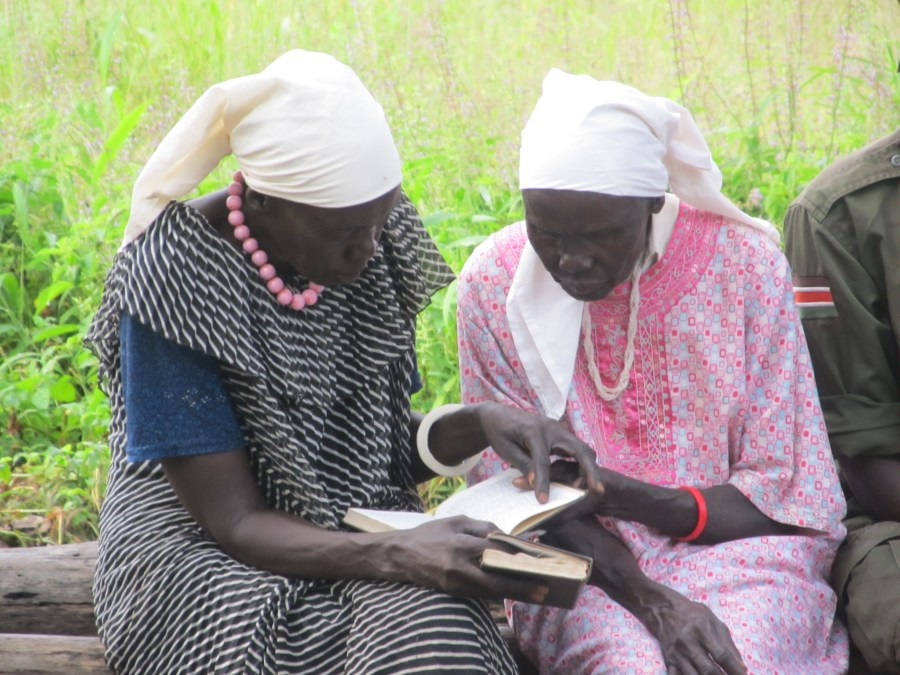
Here’s the first thing to say: South Sudanese Christians are eager/enthusiastic/desperate for further education. One reason so many South Sudanese converted to Christianity during the civil war was that they realized their lack of education was hampering their ability to assert themselves against northerners. Education and Christianity had always been linked so as they sought education, they sought baptism as well.

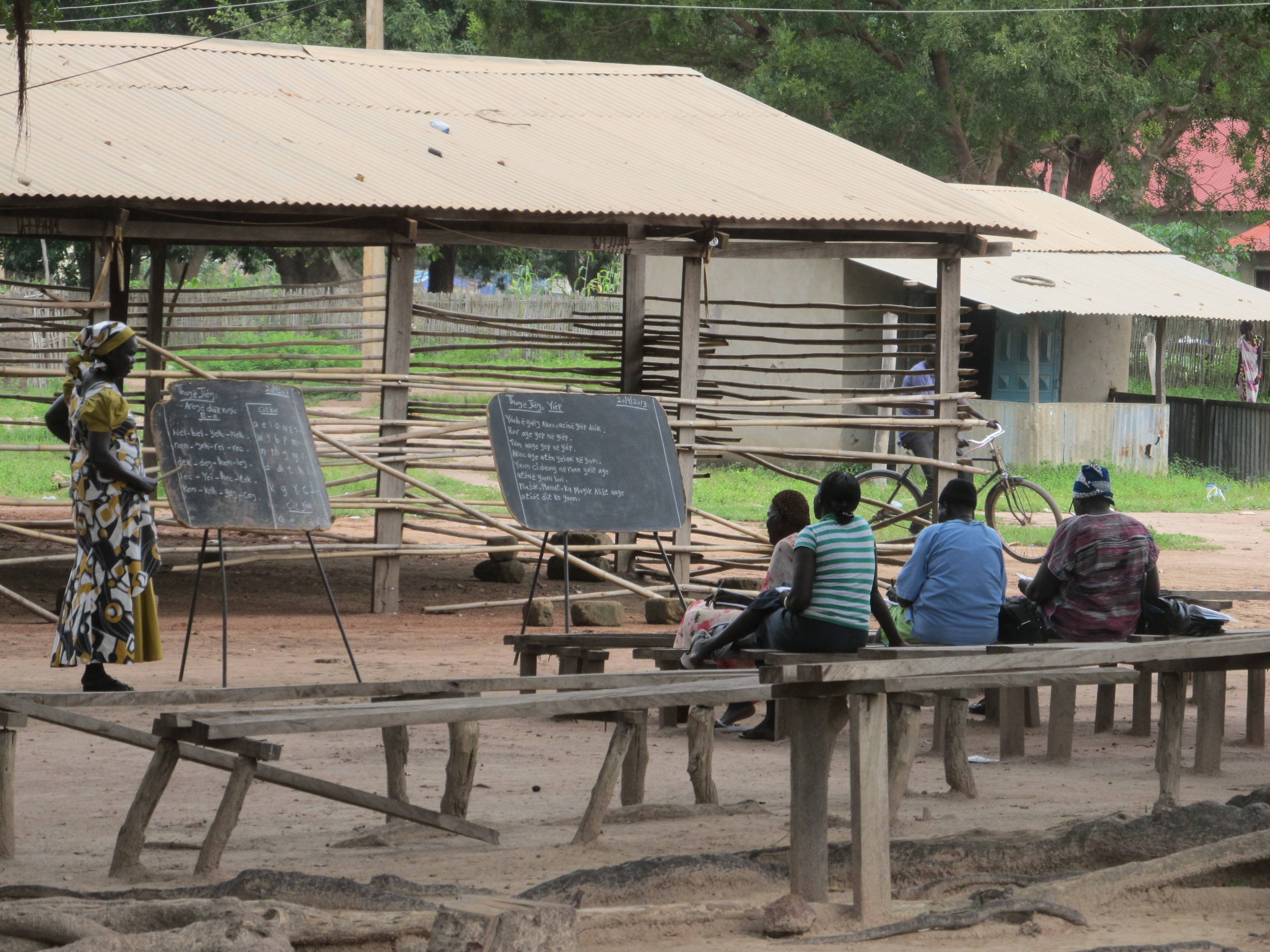
Afternoon literacy class, Diocese of Rumbek, South Sudan

That enthusiasm continues today. Teaching and education is a huge part of what the church does. On a local level, that means, for instance, literacy lessons for women. On a broader level, it means that I am continually meeting people who want me to find them “sponsors” abroad who can pay their school fees for further study, whether at the Episcopal Church of the Sudan’s seminary, one of South Sudan’s overmatched universities, or at some place abroad.

There have been a variety of efforts to respond to this need. Thirty years ago, a Theological Education by Extension program was created in which courses were designed, published, and then circulated to be offered in small groups in various dioceses. In the time since, they have not been updated, revised, or augmented, and translation work into South Sudan’s many languages has been sporadic. But in a measure of how important education is—and how few the resources are—I still see these books in use in dioceses. When it’s all you have, you’re going to use it, even if it’s imperfect.

But the major message I get from South Sudanese is that they know they don’t have the resources to do a sufficient job of education; they can’t meet the need themselves. I remember meeting a bishop two years ago. Within—literally—seventeen seconds of meeting me, he said, “My clergy need better education. Can you come start a Bible college in my diocese?” On this recent visit to South Sudan, I spent time at Dhiaukuei, a village that became an important clergy training site during the civil war. The training has dwindled, but people are eager for it to start again. When I visited, I was repeatedly asked if I had come to be its principal and when I would be starting courses.

So how to move forward?

There is, of course, the need to finance scholarships for people to study at existing institutions in South Sudan and abroad. But the vast majority of Christians in South Sudan will never be able to do that. They’re too busy living a subsistence agriculture life that doesn’t allow for time off.

Instead, I have become convinced that there is an enormous unmet need for regional clergy training sessions. I did something like this on a very small scale two years ago. During the dry season when people aren’t busy cultivating, clergy, Mothers Union members, and youth leaders could come to a central point for a week or two for lectures, Bible study, group work, etc. on particular topics.

Lest you think that the teachers of these sessions have to be super-educated, extensively-published, multiple-degree-holders, remember how great the need for education is. I offered clergy trainings as a seminarian. When I did, the students eagerly welcomed everything I had to offer, no matter its imperfections. When I was finished, they asked for more—not only of what I had been teaching, but also of more practical issues, like parish administration, stewardship, etc. You don’t even have to be ordained to teach those topics! In fact, it probably helps if you are not.

I am convinced that trainings such as these would be eagerly welcomed in a place like South Sudan. What’s more, they would introduce Christians from the Euro-Atlantic world to day-to-day life in an inspiring and fascinating part of the Anglican Communion—but one that is also struggling under the burden of ministering in the world’s newest nation. When it comes to building relationships with fellow Christians, there is no substitute for gathering around the Bible together and trying to figure out what it means. The incarnational aspect of these trainings remains their most important aspect.

St. Paul writes, “Let us then pursue what makes for peace and mutual upbuilding.” (Romans 14:19) Theological education is a route to that goal.

(I would be remiss if I did not note that many of these ideas are developed in much greater detail in my forthcoming book, Backpacking through the Anglican Communion.)