I have been staying up late several nights this week finishing the proofs of my new book about the Anglican Communion. It is a book that argues that not only is unity in a world communion possible, it is a vital part of that communion’s witness to the world.
Then I woke up this morning to read that Andrew Brown (“England’s most sanctimonious atheist,” in the words of one Church Times letter to the editor) thinks the Anglican Communion is dead.
Wow. Poor timing on my behalf.
But then I started reading the article and wondered just what grounds Brown had for making his case.
We might notice that his article commits more or less all the errors I outlined in a previous post about writing about the Anglican Communion—he doesn’t travel anywhere, he relies mostly on bishops and men as sources, etc., etc.
He writes, for instance of the Church of Nigeria, that it doesn’t matter how “many Anglicans there are there and however sincerely they seem to hate gay people.” I read that and I think, “Has he ever actually been to Nigeria? Are we talking about the same church?” Were people who write about the Anglican Communion to start moving from behind their computers and instead spend their time and money visiting with Anglicans, I think the story they would find is different. Instead, everyone sits comfortably in their prejudices and certainties and shows little desire to change that situation.
On the other hand, perhaps the Anglican Communion is dead. Perhaps the days when our understanding of the Communion was constituted almost solely by what bishops and other men had to say are coming to an end. Perhaps we can now start listening to the voices of the young, the female, the non-ordained and see that they are hardly in lockstep agreement with what their bishops have to say.
The core of my faith is the belief that death is not the end. Maybe we can pray that the death of our current forms of relationship will lead to a resurrection in newness and fullness of life.
Maybe.
But it’s going to take a willingness to move beyond the same old ways of doing business.
Malek has a special place in the mission history of South Sudan.
The first CMS team, plus a visitor from the Uganda mission. Shaw is back row, left.
In early 1906, six young men—none older than 30—arrived at this community on the east bank of the Nile River, fresh-faced and eager to convert the Dinka people to Christianity. They were representatives of the Anglican Church Missionary Society, and what they lacked in experience they made up for in enthusiasm.
Within 18 months, five of the six were gone, felled by a combination of ill health, incompetence, and sheer frustration at the perceived obstinacy of the Dinka. The one who remained, Archibald Shaw, soon contracted malaria and was sent to Khartoum to recuperate. The Anglican presence among the Dinka was nearly extinguished almost before it had begun.
Shaw returned to Malek and began building a mission station. By the time he retired in 1939, Malek had a school and a church but CMS had found much greater success elsewhere in southern Sudan. Malek continued on as a mission station, but Shaw and others saw their work among the Dinka largely as a story of failure. Such Dinka Christians as there were were former students who were largely disconnected from their traditional way of life.
In time, the independent government of Sudan took over running the school at Malek. But the school was destroyed during Sudan’s first civil war. It was re-built in the 1970s during a period of peace, and then destroyed again during the second civil war.
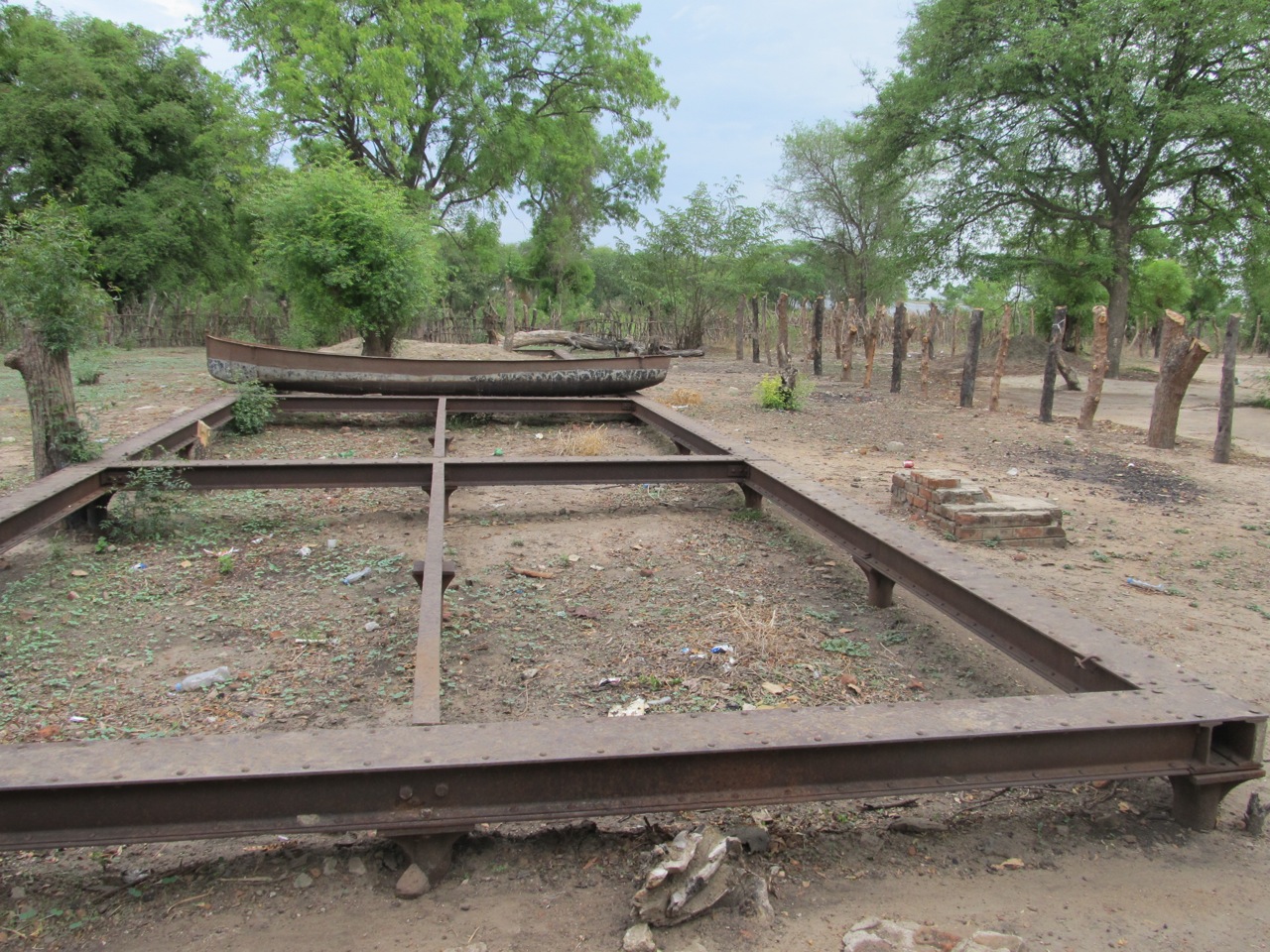
Today, this is all that remains of the house that the CMS missionaries built for themselves.
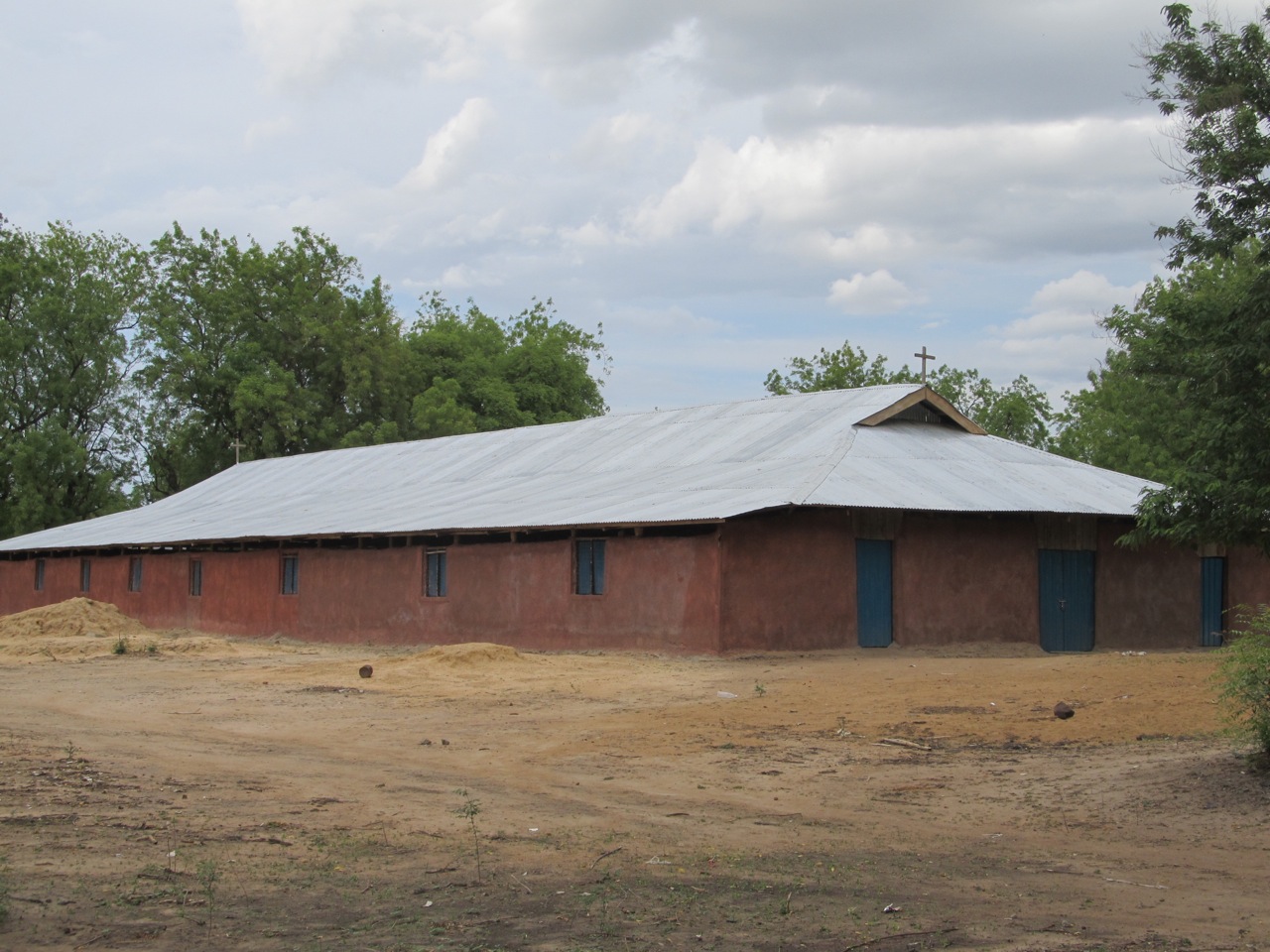
But here is the church.
And there’s not only a primary school, but also a secondary school in the community.
In virtually every village around Malek, there is now a mud-and-thatch church, a fact that would have stunned those early CMS missionaries, whose evangelical tours through those same villages are a record of frustration.
The Dinka church on the east bank of the Nile River is a thriving institution. Indeed, the growth has been so quick and comprehensive, that Anglicans in Malek now want the church to carve Malek out of the existing Diocese of Bor and make it a free-standing Diocese of Malek.
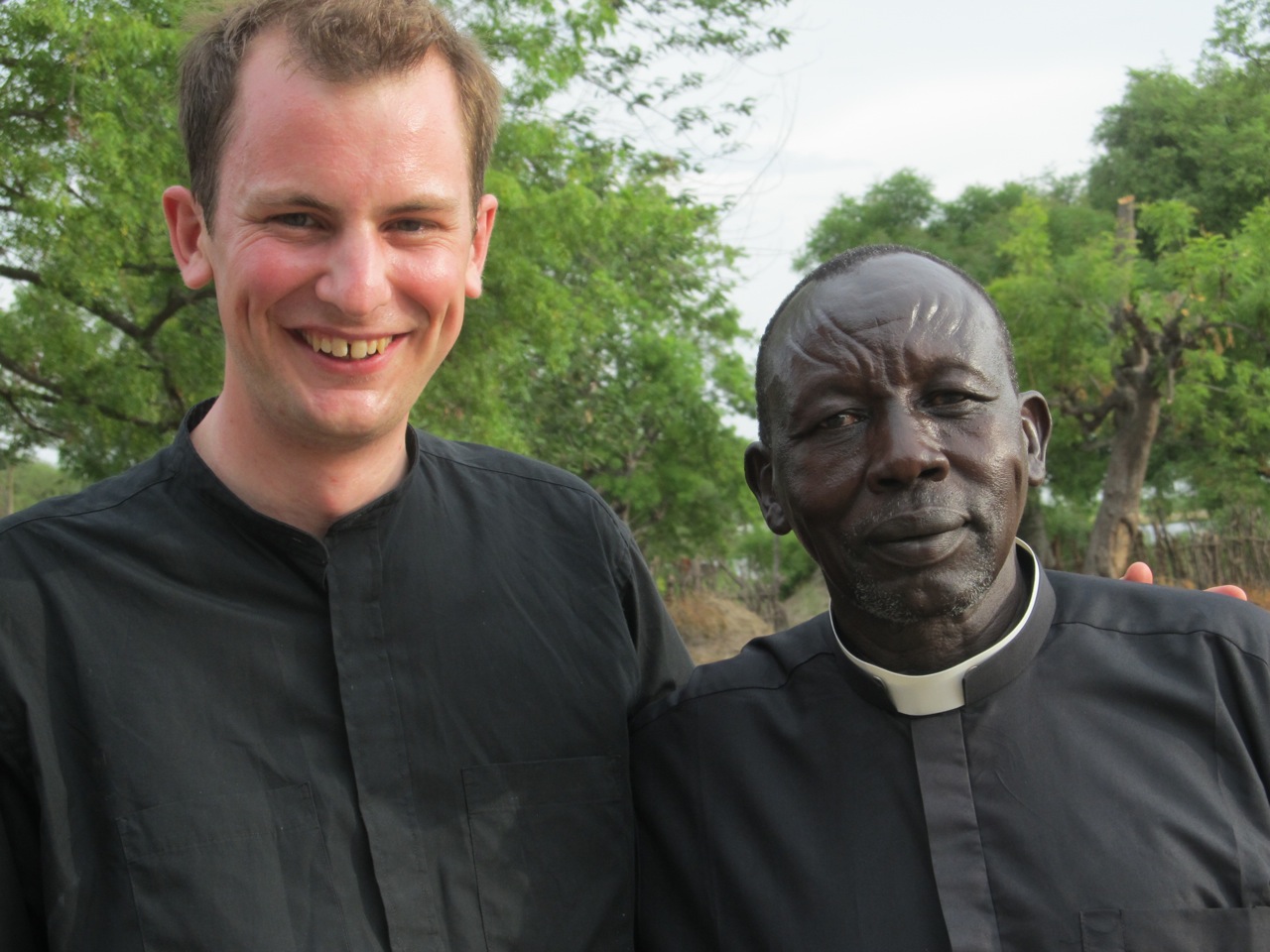
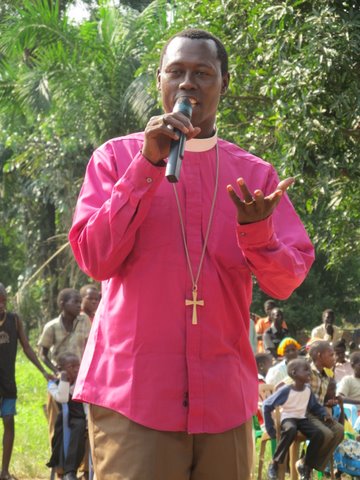
One of the clerics in this picture decided it was just too hot to wear a collar.
It is this man who now oversees the Malek archdeaconery and is leading the effort to create the diocese. Joseph Akol Gak was ordained in the 1980s, when the school had just been rebuilt (and was about to be razed again). He spent time ministering to Christians in refugee camps in Ethiopia and across southern Sudan. In the span of his ministry, he has seen the Dinka church move from being a socially marginal institution to one that is at the centre of Dinka life.
Regardless of whether or not Malek becomes a diocese, it will still stand for me as an example of the importance of consistent, faithful Gospel witness across generations. The world is always pressing on us the need for results, the sooner, the better. Timelines contract. Horizons shrink. The church is not immune from this pressure.
But mission requires the long view. Sometimes our plans seem frustrated. But when we look closer, we can see the hand of God at work often even despite our best efforts.
Samuel Peni, bishop of the Diocese of the Nzara in the Episcopal Church of the Sudan, was recently at the AFRECS conference in Chicago and gave this interview.
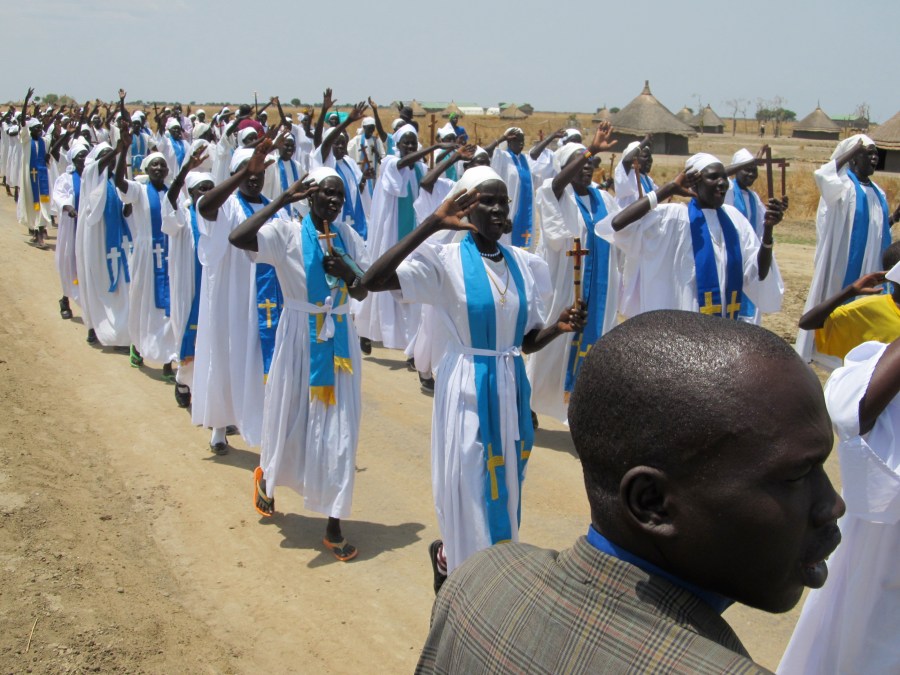
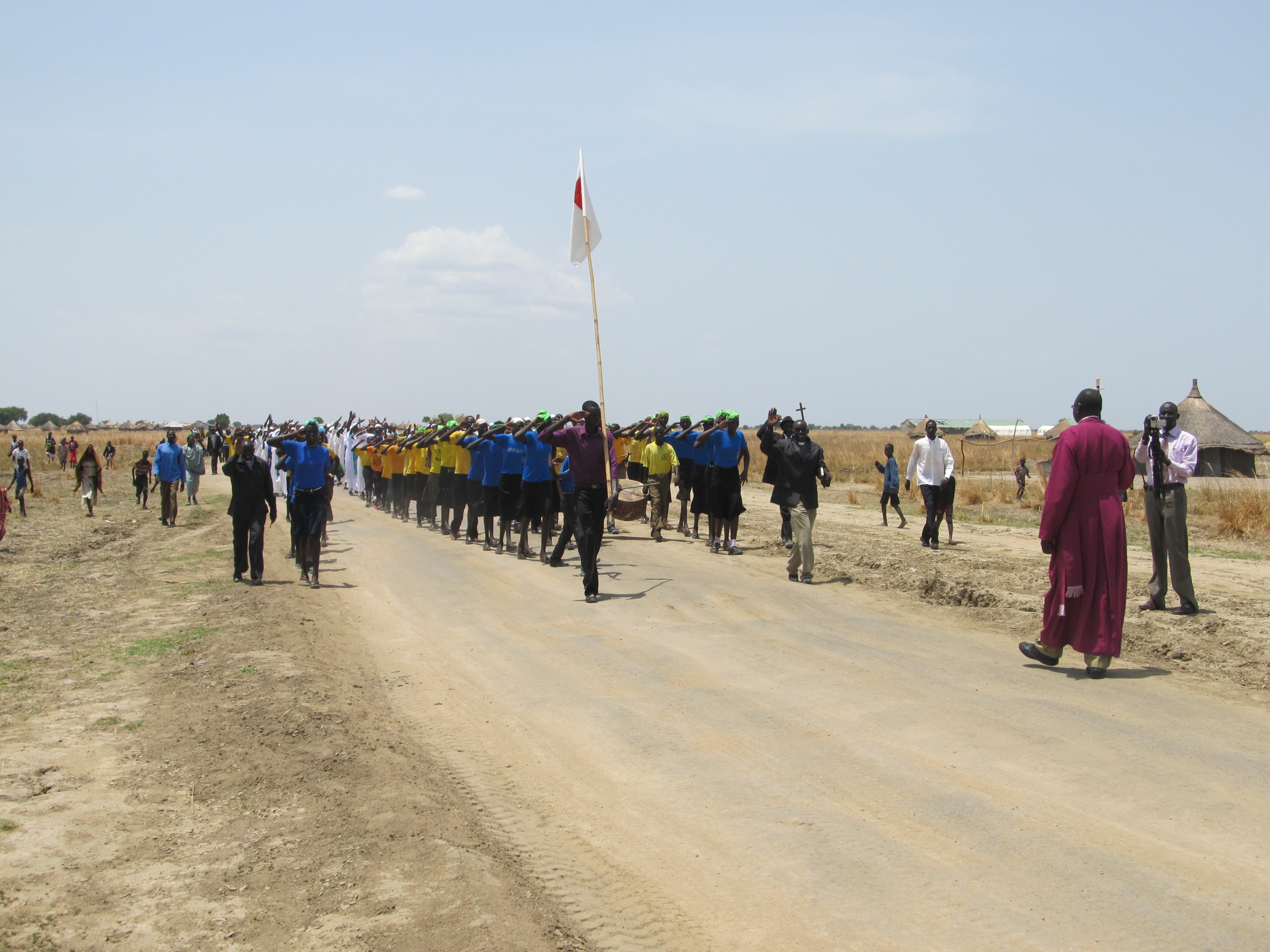
The Church Times this week published a reflection of mine on the role of processions in the church in South Sudan. I write about how time after time when I was visiting churches, it would involve marching through town, a village, or down the road beating drums, singing songs, and making lots of noise. After one such parade down the main street of Akot, I thought:
“Well, aren’t we making a big deal of ourselves!” But then I realised that this was precisely the point. Processions are not simply an expression of the joy and hospitality that people might be feeling on a particular occasion. They are an evangelistic tool: “Hey!” we were saying, in effect: “We’ve got something good going on here. Come and join us!”…
Christianity is a public faith. From an early time, Christians realised that faithfulness to what Jesus had taught them meant that public action was necessary. The early Christians preached on Pentecost, for instance, and defended themselves in front of hostile crowds. You couldn’t be a Christian and keep it to yourself. Anyway, why would you want to?
You can read the rest of the article here. And here are some more pictures of processions, truly an incredible thing to be a part of.
“Evangelism is one blind beggar showing another blind beggar where to find food.” -D.T. Niles
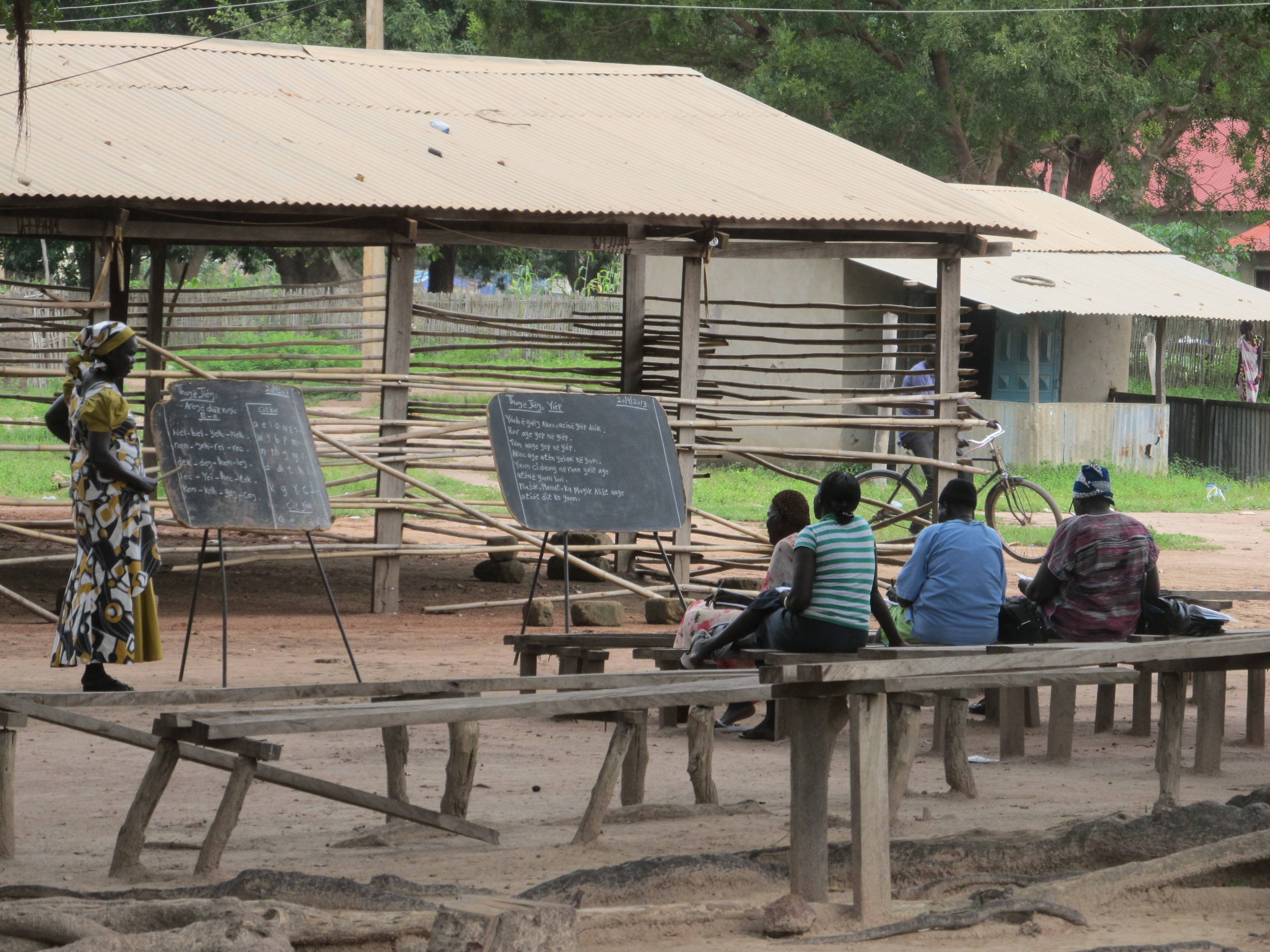
Here’s the first thing to say: South Sudanese Christians are eager/enthusiastic/desperate for further education. One reason so many South Sudanese converted to Christianity during the civil war was that they realized their lack of education was hampering their ability to assert themselves against northerners. Education and Christianity had always been linked so as they sought education, they sought baptism as well.
Afternoon literacy class, Diocese of Rumbek, South Sudan
That enthusiasm continues today. Teaching and education is a huge part of what the church does. On a local level, that means, for instance, literacy lessons for women. On a broader level, it means that I am continually meeting people who want me to find them “sponsors” abroad who can pay their school fees for further study, whether at the Episcopal Church of the Sudan’s seminary, one of South Sudan’s overmatched universities, or at some place abroad.
There have been a variety of efforts to respond to this need. Thirty years ago, a Theological Education by Extension program was created in which courses were designed, published, and then circulated to be offered in small groups in various dioceses. In the time since, they have not been updated, revised, or augmented, and translation work into South Sudan’s many languages has been sporadic. But in a measure of how important education is—and how few the resources are—I still see these books in use in dioceses. When it’s all you have, you’re going to use it, even if it’s imperfect.
But the major message I get from South Sudanese is that they know they don’t have the resources to do a sufficient job of education; they can’t meet the need themselves. I remember meeting a bishop two years ago. Within—literally—seventeen seconds of meeting me, he said, “My clergy need better education. Can you come start a Bible college in my diocese?” On this recent visit to South Sudan, I spent time at Dhiaukuei, a village that became an important clergy training site during the civil war. The training has dwindled, but people are eager for it to start again. When I visited, I was repeatedly asked if I had come to be its principal and when I would be starting courses.
So how to move forward?
There is, of course, the need to finance scholarships for people to study at existing institutions in South Sudan and abroad. But the vast majority of Christians in South Sudan will never be able to do that. They’re too busy living a subsistence agriculture life that doesn’t allow for time off.
Instead, I have become convinced that there is an enormous unmet need for regional clergy training sessions. I did something like this on a very small scale two years ago. During the dry season when people aren’t busy cultivating, clergy, Mothers Union members, and youth leaders could come to a central point for a week or two for lectures, Bible study, group work, etc. on particular topics.
Lest you think that the teachers of these sessions have to be super-educated, extensively-published, multiple-degree-holders, remember how great the need for education is. I offered clergy trainings as a seminarian. When I did, the students eagerly welcomed everything I had to offer, no matter its imperfections. When I was finished, they asked for more—not only of what I had been teaching, but also of more practical issues, like parish administration, stewardship, etc. You don’t even have to be ordained to teach those topics! In fact, it probably helps if you are not.
I am convinced that trainings such as these would be eagerly welcomed in a place like South Sudan. What’s more, they would introduce Christians from the Euro-Atlantic world to day-to-day life in an inspiring and fascinating part of the Anglican Communion—but one that is also struggling under the burden of ministering in the world’s newest nation. When it comes to building relationships with fellow Christians, there is no substitute for gathering around the Bible together and trying to figure out what it means. The incarnational aspect of these trainings remains their most important aspect.
St. Paul writes, “Let us then pursue what makes for peace and mutual upbuilding.” (Romans 14:19) Theological education is a route to that goal.
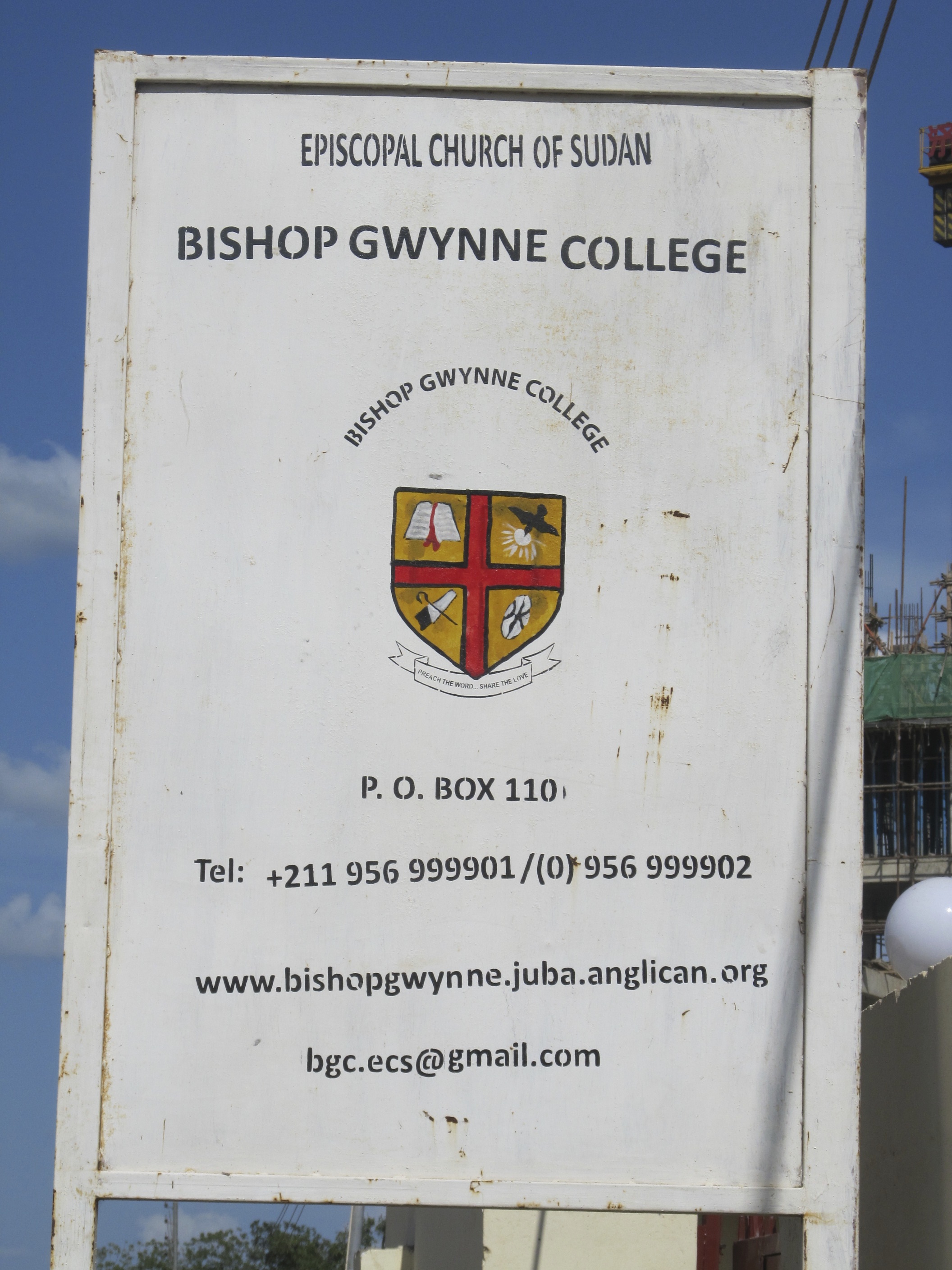
Almost exactly three years ago, I first came to Bishop Gwynne Theological College, the leading seminary of the Episcopal Church of the Sudan. I came as a student, to learn about what ministerial preparation was like in a different part of the Anglican Communion. It was my introduction to the country that became South Sudan, and I’ve been coming back in a variety of forms—theological educator, relief-trip accompanier, doctoral dissertation researcher—ever since.
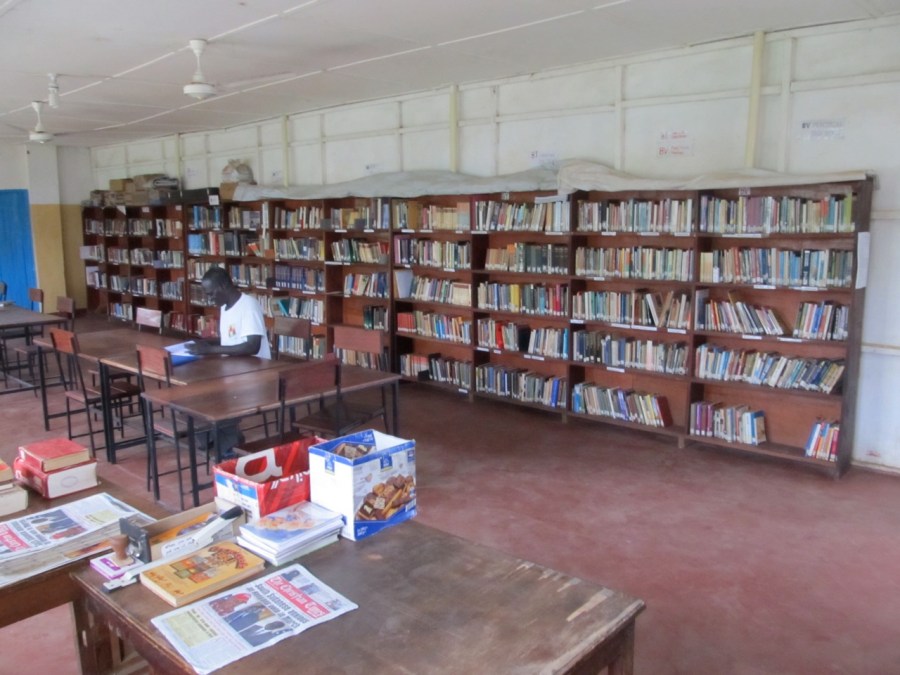
When I first visited, BGC had only recently re-opened after a short closure that the church decided was necessary to reassess the quality of education being offered. There were plans for a “new site” for the college, so that it could expand over time, but on that visit all that the new site held was one long, low dormitory building, surrounded by a goat market and a machine welding shop. Most of the classes, the library, and several students’ rooms were in the “old building,” the very lovely (but way too small) courtyard the college had been given when it abruptly had to be moved to Juba in the middle of Sudan’s second civil war. That building had its own drawbacks. For instance, it lacked electricity, which makes it hard to do your homework at night.
My travels in South Sudan take me elsewhere now, but I still visit my friends at BGC. One of the delights of my recent visits has been to see the remarkable progress that the school has made. The old building is still in use, but it is primarily for faculty offices and the odd guest room. There’s solar-powered electricity—still limited, but better than nothing.
Meanwhile, the new site has been transformed. The goat market and machine welding shop are gone. In their place are some very nice dormitories and a new two-story building that when complete (soon!) will be a lecture hall and a much-expanded library. (The library will be upstairs. Why? Because less dust makes it up that high.) There are plans for an administration building to be built, as well as a chapel.
But even more impressive are the students. Later this month, about ten students who were just beginning when I was here three years ago, will graduate with diplomas granted by the well-regarded St. Paul’s University in Limuru, Kenya. One of the great strides BGC has made has been to become an accredited extension site of St. Paul’s. The diploma has greater currency to be used when applying for further study.
None of this is to say that there aren’t big challenges ahead. Tragically, the college principal, Joseph Taban, died earlier this year of brain cancer, just as he was getting a full head of steam on running the place. There’s a new administration in place which is doing a superb job, but any transition of this nature is difficult. The library resources, while good for Juba, are still very limited. There’s a wealth of material available online, of course, but for that the college would need computers, something it is hoping it might one day be able to acquire.
One story in closing: the new principal is a talented, capable, and hard-working man named Samuel Galuak. In fact, I was so impressed when I first met him that I was nearly fell out of my chair when he mentioned in passing that the first time he went to a school of any kind was when he was 19 years old and living in a refugee camp in Ethiopia. In the 25 years since, he has found his way to two separate masters degrees and a vocation to theological education. For me, he is proof that hope is a real, tangible, and concrete virtue. The arc of the universe actually does bend towards justice. (There’s a new student in this year’s intake from the Nuba Mountains in Sudan, who has spent the last several months in Yida Refugee Camp, fleeing the forgotten conflict in his home. Hope, hope, hope.)
South Sudan faces a huge number of issues, as does ECS. BGC is not immune from any of this. But every time I come here and see what has changed since I first arrived, I remember that change actually is possible. Christians are the people who keep pushing and prodding and poking and pressing the world in the direction of the kingdom of God. There are setbacks and detours along the way, some self-inflicted, but change actually does happen, and there truly is reason to hope.
BREAKING: On my last day in South Sudan, I went to Morning Prayer at BGC—and there was electricity! Perhaps municipal services in Juba are finally picking up!
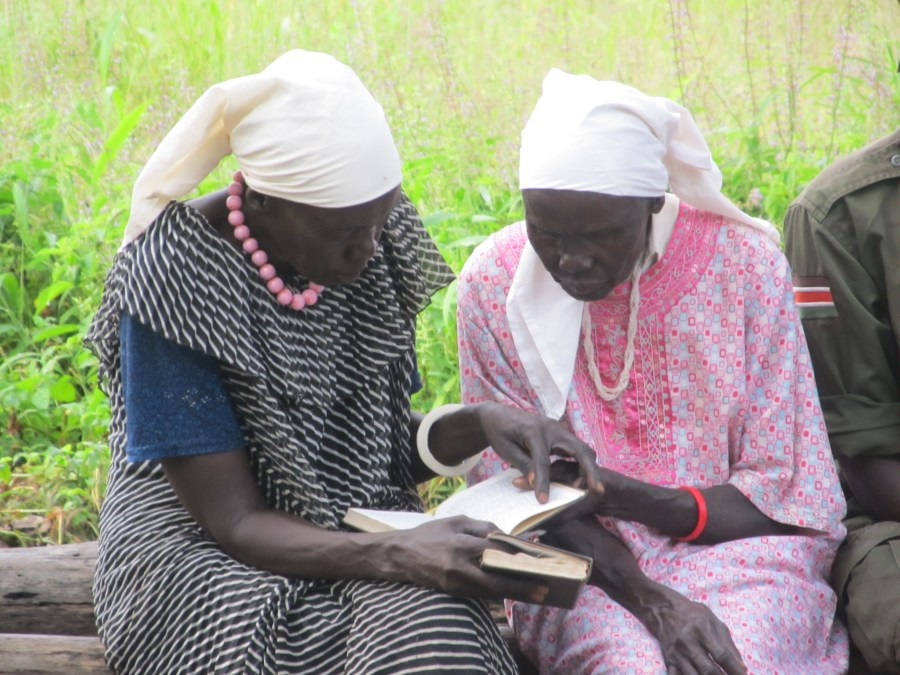
The woman on the left is Martha Yar Mawut, the archdeacon of Akot in the Episcopal Church of the Sudan. Akot is a see city, so it’s a pretty important role. She was an important lay evangelist during the war, was later ordained, and now, by all accounts, performs her job with admirable skill and talent.
If you believe, as I do, that having women bishops is part of the Anglican charism to the wider body of Christ, then women like Martha matter. Archdeacons are among the prospective bishops of the church. The more women like Martha there are in South Sudan, the greater the chance that one of them will become a bishop.
But I don’t think Martha will ever be a bishop. And thinking about her helps us think through some of the obstacles to women bishops in the Anglican Communion.
The topic of women as bishops came up frequently on my recent visit to South Sudan. Everyone I spoke to—male bishops, male and female priests, lay people—were in favour of the idea. It makes sense. Women played a huge role in the growth of the church during the civil war. Male church leaders know that the strength of their church is in the women.
The Episcopal Church of the Sudan has ordained women for about a dozen years. A few are archdeacons, canons or, in one instance, a cathedral dean. In fact, on a rough estimate, I’d say the proportion of female clergy in ECS compares favourably to that in the Church of England, given that the C of E has ordained women as priests for roughly twice as long
Nor is there any canonical impediment to women bishops in South Sudan. When ECS made the decision to ordain women as priests and deacons, they (sensibly) concluded that it did not make sense (theological or otherwise) to deny women to be ordained as bishops.
So there are women like Martha in leadership in dioceses—not many, but some—and there is a path towards women bishops. So why aren’t there any?
The answer I heard, time and again, is education. Given the civil war and the lack of resources in South Sudan, training for ordination is of a necessarily ad hoc and contingent nature. Some people go for a few months to a vernacular Bible college or a diocesan training course, others are fortunate to attend ECS’ English-language seminary, a very small handful have studied abroad. For a variety of reasons, women clergy, by and large, are less educated than their male counterparts.
But ECS has a de facto requirement that its bishops be able to speak English so that they can take part in churchwide meetings. They also have to have some kind of diploma or degree. These are good requirements to have, but it means that many women who perform faithful, important ministry in their local context are unable to be considered when it comes time to elect bishops. Martha could greet me in English, but all my conversation with her was through a translator.
None of this is to minimize the unique array of cultural obstacles women in South Sudan face in pursuing leadership. But to people who know only about the “African church” that it is some kind of misogynistic institution, you would be surprised how much support I heard for women bishops in ECS.
So much of the debate about women bishops focuses on the canonical changes necessary. That’s good, but it’s not enough. The lesson of my recent visit to South Sudan seems to be that if you want more women bishops, support theological education.
If the only thing you knew about the Anglican Communion was what you read in these articles, you could be forgiven for thinking the end of the Communion is nigh.
It’s not.
That’s the message I have heard time and time again as I travel around the world church. (I’m writing this post in South Sudan, as a matter of fact, where I have been spending the last month with the church here.) But articles such as these propagate a narrative of disunity that has largely gone unchallenged.
Let’s look at what these articles have in common:
They quote mostly bishops. Fair enough, I suppose, since bishops are leaders in the church. In my experience, however, bishops are far from the most interesting (or representative) people in the church.
Relatedly, they quote mostly men. Most bishops are men. Of the Anglicans who speak English (and thus can be interviewed by reporters who speak only English), a larger percentage are men. But this neglects the viewpoints of the majority of Anglicans who happen to be women.
They quote people who can travel. Articles like these are written by reporters who don’t leave the comfort of their home. They let the subjects come to them: attend a conference, interview a few people on the sidelines, go back to the office, and write it all up. What about people who can’t afford plane tickets, whose visa applications are rejected, or who are too busy in ministry to travel? When I was a reporter, I wrote several stories like this. I rarely found that they did more than scratch the surface.
They call reporting “analysis”. (Like this one) If we’re going to analyze a topic, it seems that something more than merely quoting other people is necessary. For instance, the conference at Wycliffe featured a line-up of speakers of a decidedly conservative tilt. That fact is barely mentioned in the news coverage.
My new book, Backpacking through the Anglican Communion: A Search for Unity is born of precisely these frustrations. As I have traveled around the world, working and visiting and listening and praying with my fellow Anglicans, I have found stories that fundamentally challenge the narrative of disunity that is propounded in articles such as these. I have found these stories precisely by going past the bishops, men, and English-speakers who dominate stories such as these.
This is not to say that what these male bishops have to say is necessarily wrong. There’s truth in their comments, of course, but it is, at best, partial truth. Nor is it to say the Anglican Communion is in a perfectly unified body. Like other parts of the body of Christ, it has its own dysfunctions, idiosyncrasies, and broken bits that create a unique set of challenges.
But if we’re serious about being a worldwide family of churches, we need to start with an honest appraisal of the situation. Articles like these do nothing to help with that.
On the surface, the purpose of my visit to South Sudan is pretty straightforward. Since I am writing a dissertation about the history of the church here during the 1980s and 1990s, and since that was a period of civil war from which few written documents survive, my primary goal is oral history interviews with the men and women who were central to the church during that period. It’s relatively recent, so many of them are still alive and active in ministry.
Sounds easy, right?
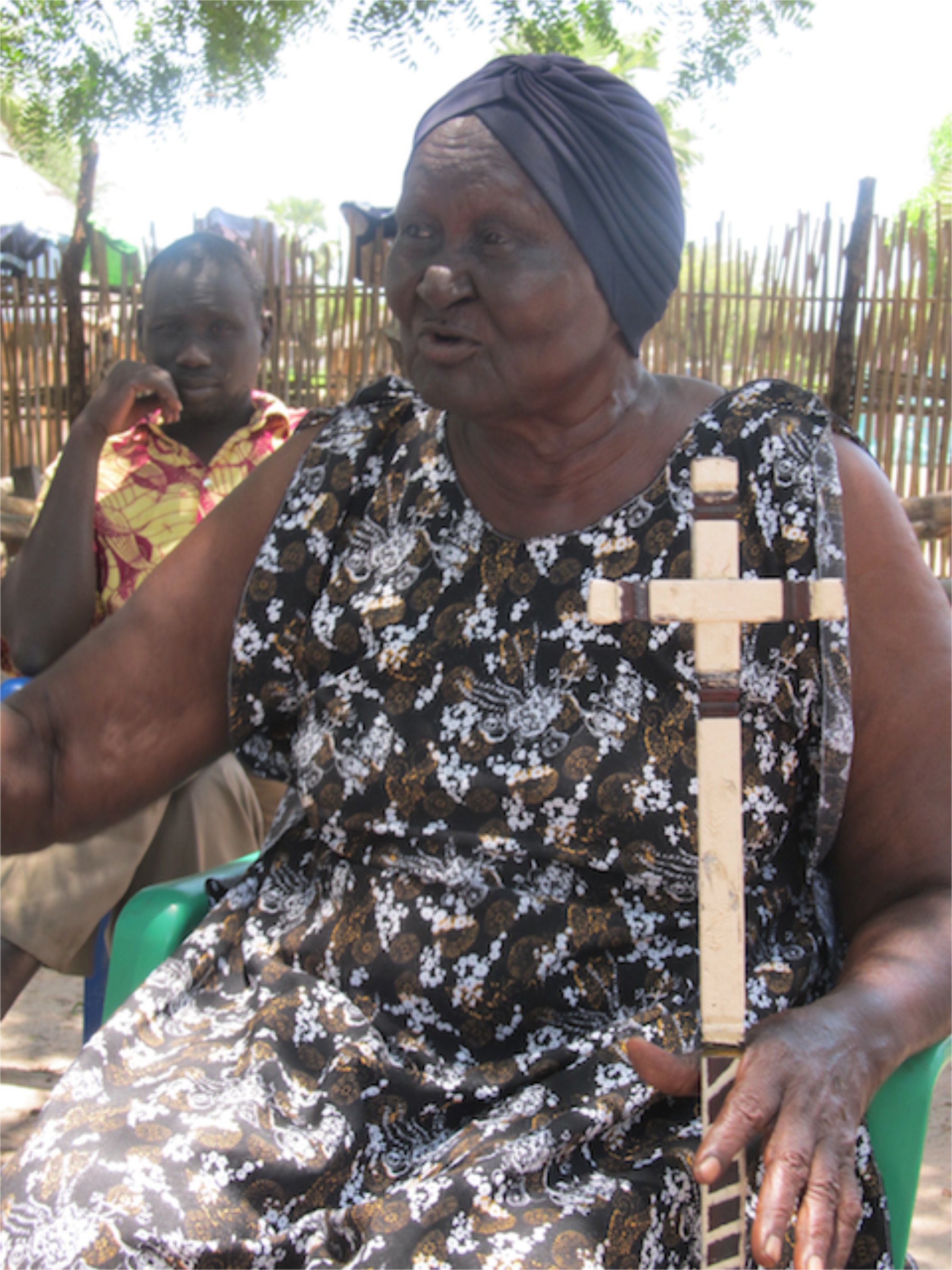
Last week, I was trying to find a woman named Mary Aruay. During South Sudan’s civil war, she was a critical evangelist who travelled all over her county, founding about two dozen churches, mentoring hundreds of young people, and ultimately laying the foundations for her home area to be turned into a thriving archdeaconery where before it had no churches of any kind. It is an accomplishment all the more remarkable for the fact that she was a single, childless woman in a society in which marriage and children are prized.
The first thing was to locate her. Aruay is now retired and living in Rumbek, where I am staying, so it spared me a trip to her home county. But it’s not like South Sudan has many street names or numbered houses. You just kind of have to know where a person lives and then start heading in that direction and ask for the person as you go along. This means I was traveling with John, the bishop’s assistant, who was also doubling as my translator. We only had to ask once before we found our way to the church near Aruay’s home.
While we waited for her to arrive, a stream of other people came to see us. It’s not often a khawaja makes it to this part of town, so there were lots of young children. But several older people came as well—clergy, youth in the church, the archdeacon of the area—who wanted to know just what this khawaja thought was so interesting in Aruay to come all this way to see her.
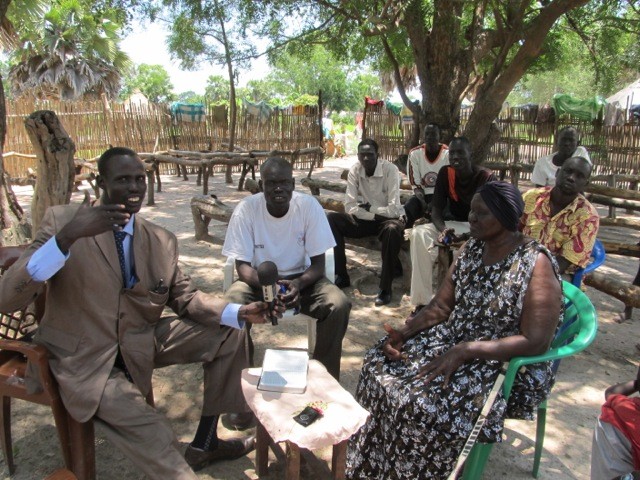
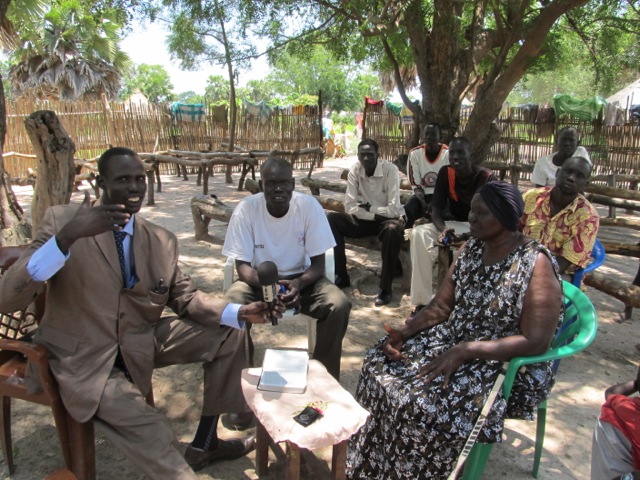
Eventually, Aruay herself arrived and we launched into the interview. I used to be a reporter. Most of the interviews I did for that job involved pulling people to the side of a room or talking to them in a sound-proof studio. That is, they were more or less private affairs. Not here. To have a khawaja ask an older woman questions about her life was just such a strange and mysterious event that the crowd we had gathered decided to stay. Their contributions were various. One child fell asleep and started snoring. Another fell off the bench he was sitting on and started crying. A few of the youth spoke English and at a few moments decided John’s translation was not good enough and so offered their own. Some of the other clergy occasionally thought that they had a good answer to my question—or that Aruay’s answer was missing some crucial detail—so they freely volunteered their own answers. So much for the private interview. It was like having a Greek chorus peering into my conversation.
To them I am not just a doctoral student (which is a hard concept to communicate in a place where so few people even graduate from high school) but a priest and a fellow Christian. When I was done asking questions about the past, they wanted to tell me about the present and the future—their plans to turn their archdeaconery into a diocese, the challenges they currently confront, and how important it was to them that I had come to visit. We finished in prayer.
My understanding and expectations of my research are shaped by knowledge of a certain cultural form—the private, one-on-one interview. But that’s a cultural form that is largely foreign in South Sudan. Much more common than one-on-one conversation is the group conversation of everyone sitting around together under a tree. What I perceive as people butting in to my conversation is really just them doing what they always do.
And in the end, it didn’t matter. I got some great information from Aruay—and some of what other people said will be helpful too. And they seemed to appreciate my presence. Over the weekend, she sent a message to the bishop: “Thank you for sending that khawaja to see me so I could tell him my story. I now feel like I am leaving something behind for others.”
 I have been staying up late several nights this week finishing the proofs of my new book about the Anglican Communion. It is a book that argues that not only is unity in a world communion possible, it is a vital part of that communion’s witness to the world.





 Jesse Zink