Failing in Sudan?

More of my own content about Sudan in the not-too-distant future but there’s a good column by Nicholas Kristof around all the issues I raised in the last post:

Yet these days, Mr. Obama is presiding over an incoherent, contradictory and apparently failing Sudan policy. There is a growing risk that Sudan will be the site of the world’s bloodiest war in 2011, and perhaps a new round of genocide as well. This isn’t America’s fault, but neither are we using all of our leverage to avert it….

Some 68 organizations have sent a joint letter to Mr. Obama, calling on him to work more energetically to prevent another round of war in Sudan. But so far he has been unengaged, and his administration has been less successful than the last Bush administration in getting Sudan to alter its behavior.

The upshot: Sudan’s on-and-off north-south civil war could resume soon. How bad could it be? Well, the last iteration of that war lasted about 20 years and killed some two million people. Mr. Obama’s former head of national intelligence, Dennis Blair, warned this year that the place facing the greatest risk of genocide or mass killing is southern Sudan…..

Southern Sudanese are expected to vote overwhelmingly to secede. But the region has most of the nation’s oil, and the north is determined not to lose the oil wells driving the nation’s economy…..

Most ominously, Sudan’s government has been stalling in preparations for the referendum in the south, and it may have been channeling weapons to disgruntled factions there. No one expects restraint from President Omar Hassan al-Bashir, who is facing charges of genocide from the International Criminal Court.

For all his faults, President Bush inherited a war in Sudan and managed to turn it into peace. Mr. Obama inherited a peace that could turn into the world’s bloodiest war next year.

Whither Sudan?

So I’m going to Sudan – that might be news to some readers of this blog. In another post I’m going to write about why I’m going and what I’ll be doing. But for now, I want to offer a very short summary of why I think Sudan is important and worth visiting.

You’ve probably heard of Darfur. That’s a region in western Sudan where there has been a lot of violence. I’m headed to Juba, which is way in the far south of the country and a long way from Darfur. (Sudan is a big place – the largest country in Africa and about a quarter the size of the United States.)

But the southern part of Sudan has been involved in a conflict of its own that has been much longer and more destructive than what has happened in Darfur. There have been two long civil wars between the northern and southern parts of Sudan since independence. These are the wars that produced the Lost Boys of Sudan, who have been memorialized in books such as What is the What. I’m not going to pretend to be able to identify what caused the wars but they have basically been between the Arab and Muslim north and the Christian and black African south. There’s oil that runs along the dividing line between the two parts so that probably doesn’t help the cause of peace.

The second war ended with a peace agreement in 2005 that ended armed hostilities between north and south. But the south is still a fairly unstable place, especially in recent years and there are often reports of scores of people being killed. (It’s possible that some of these deaths are from a Ugandan rebel army that has migrated north but that’s a story for a whole other time.)

A key provision of the peace agreement was that the south would be able to hold a referendum on independence. That is scheduled for January 2011. If folks in the south were able to freely express their will, it seems likely that they’ll vote for independence. But there is much that is unknown and my understanding is that no one really knows what the future holds for the south.

The Episcopal Church of Sudan is primarily concentrated in the southern part of the country and it has a significant presence. There are almost twice as many Sudanese Episcopalians as there are American ones and they are a much higher percentage of the population. ECS, along with other church groups, has been a vocal and active witness for peace and reconciliation throughout the region and I have long followed their activities from afar. I’m grateful now I’ll have a chance to see this firsthand and learn more about my brothers and sisters in Christ in this part of the Anglican Communion.

So that’s that for now. More to come.

Intrapsychic loss

I had to read part of All Our Losses, All Our Griefs this summer. In talking about different kinds of loss, the authors used a new phrase: intrapsychic loss

Intrapsychic loss is the experience of losing an emotionally important image of oneself, losing the possibilities of “what might have been,” abandonment of plans for a particular future, the dying of a dream.

I experienced a version of this last week when I went to the Connecticut DMV and replaced my Alaska license with a Connecticut one. I didn’t realize it until my Alaska license was no more but that little card meant a lot to me and my identity. And even though I only got the new license because the old one was about to expire, there’s a sense in getting the Connecticut license that I am unlikely to be returning to Alaska in the near future.

And that’s kind of sad.

If grace is a free gift, how come we have so much trouble receiving it?

I’ve really been enjoying attending St. Luke’s church in New Haven. Sometimes they even let me preach. Like a few weeks back.

Amos 8:1-12
Psalm 52
Colossians 1:15-28
Luke 10:38-42
18 July 2010
St. Luke’s Episcopal Church, New Haven, CT

Let us pray. O God who gives when we do not deserve, grant that we may open our hearts to your grace to be strengthened to perform you work in the world now and forever. Amen.

I’m working as a chaplain at a hospital this summer and it’s been an experience that has so far taught me quite a lot. For instance, what it’s like to try to be a calming presence in a chaotic emergency department. Or, how to sit with a patient in the oncology floor. Or, how to talk to someone in the ICU who has just had their first heart attack and is scared of what might come next.

Not long ago I met a patient named Susan. Susan was in the hospital for complications of bone marrow cancer and the prognosis wasn’t so good. But when we talked the first time she only wanted to hear about me. Where was I from? Did I like my job? What did I want to do with my future? It was a little confusing to me. Here was a woman who was quite sick and all she could think to do was make small talk and have a social visit with me.

A few days later I visited Susan and she looked quite despondent and depressed. When I asked how she was she told me she had just received a terminal diagnosis from the doctor. The cancer had spread and they would be unable to operate. She was to be discharged from the hospital shortly and sent home for hospice care. Having told me this – quite briefly – she immediately turned to me. “But enough about me,” she said. “How are you?” Again, she peppered me with questions about my life, how I came to be in the church, what my morning commute was like, and so on. Again, I was flustered and put off. Susan was nearing death and all she could think to talk about was me? I’m a chaplain to talk about “big” issues, “deep” issues, issues that make a big difference in people’s lives. I don’t want to talk about piddling little stuff about me. But Susan was persistent and did everything in her power to keep the focus off of her. I wanted to give her my attention and care and give her the opportunity to talk about her impending death but she was unable to receive that gift.

It’s with this story in mind that I approach this morning’s Gospel passage about Mary and Martha. Jesus and his followers reach a town and stay with two sisters, Mary and Martha. As you can imagine, this is a pretty big deal for Mary and Martha. Here is this wandering and itinerant teacher who has caused so much commotion and fuss these last few years with his teaching and healing and now he is planning on staying at their house. When I was growing up and we had visitors coming, my mother would turn into a cleaning machine, tidying up the house. I remember this because my brother and I were pressed into service, vacuuming, sweeping, cleaning up our things, while my mother focused on cooking a great dinner for the guests. Usually, by the time the guests arrived at our house, the cooking and cleaning wasn’t quite done, so someone – my mother – ended up in the kitchen taking care of those final details while the rest of us entertained whomever it was who was visiting.

If this is what we did for casual friends, imagine what it would have been like for Mary and Martha, getting ready to welcome Jesus. There would have been a lot of sweeping, preparation of food and beds, and so on and so forth. But something odd happens when Jesus shows up. Martha continues slaving away in the kitchen making preparations but Mary sits down at Jesus’ feet and – shockingly – stops working altogether. Jesus is talking, probably teaching, about this or that and Mary is content to sit casually at his feet and soak it all in.

This is a scandal for Martha. “Jesus,” she says. “Can’t you see how hard I’m working here? Don’t you think it is so unfair that she gets to do nothing at all while I am still slaving away in the kitchen. Really, now, how is this right?”

Jesus gives her a mild rebuke. “Martha, you are just too busy. Your mind is occupied by too many things. Only one thing matters and it is what Mary has found. She has the better part.”

If I were Martha, I’d find this to be kind of stinging. Working so hard and this is all she gets? To be told that she’s just too busy? You can imagine her thinking, “The whole point is to be busy, Jesus. I’m busy trying to make you happy and comfortable.” It is a perfectly understandable thing for someone in Martha’s position to be thinking. She is working so hard to please Jesus and all she gets is rebuked.

There’s this curious line that Jesus uses to Martha. “There is need of only one thing.” That’s a little confusing. We need lots of things. Water, air, food, shelter, friendship, love, attention. What is the one thing that Jesus is referring to? I think it is what we know as grace.

What is grace? It’s a word that gets thrown around in church a lot. We are “saved by grace” we are told. “Amazing grace, how sweet the sound that saved a wretch like me.” God’s grace is meant for all people. But sometimes the actual meaning of the word gets lost in the shuffle and confusion of church-related words and it becomes another empty buzzword.

Grace is classically defined as one-way love. God loves us unconditionally and absolutely, in spite of our plenty and multiple sins and offenses against God. We do nothing to deserve this love. In fact, we don’t even deserve it. But God gives it to us anyway out of God’s abundant care and concern for God’s creation, us.

We are reminded of how little we deserve God’s grace by the reading from Amos this morning. The passage begins with an attempt at humour. God shows Amos a basket of summer fruit and says, “What do you see?” I don’t know about you but this gets me scratching my head. First of all, why is God showing Amos something and then asking him what it is when the answer is so obvious? Second, what does summer fruit have to do with anything? Well, it turns out that the Hebrew word for “basket of summer fruit” is very similar to the word for “the end.” So the chapter begins with a joking and oblique reference to the end.

But it quickly becomes clear that this is no joking matter. When God is talking about the end, God really means that’s it. There will be no more opportunities for God’s people to get it right. When this end comes, God will have plenty to judge the people of Israel for. Even though God had brought the Israelites up out of slavery in the land of Egypt, the Israelites started backsliding. They cheat each other in business dealings, oppress the poor, and generally show a casual lack of concern for those commandments God gave them. When I read passages like this, I am struck by how much they apply to our own time. We are still not fulfilling God’s commandments in our world.

For Amos, it is clear that the punishment will be great. God will send a famine of the land. But it won’t be a traditional famine. It’ll be a famine of the word of God. What an awful thing. No longer will people be able to hear God telling them what to do. They’ve been disobeying those commandments anyway. Instead, people will wander the earth but be unable to find God. That seems like a pretty bleak picture. Not a lot of hope there.
From one perspective, this sort of punishment in the Amos passage makes a lot of sense. God rescued the Israelites from the Egyptians and gave them commandments to follow. If they followed the commandments, they would be blessed. If they didn’t, well, they had their chance – many times over – and now God is withdrawing from them. It’s hard to blame God for an attitude like this. God has experienced this history of rejection and disobedience. If I were God in that situation, I’m not sure so I’d be inclined to keep trying. At some point, I’m sure I would have thrown up my hands in disgust and said, “OK, forget it. I’ve tried to love you. I’ve tried to show you how much I care about you. And you just keep rejecting me. Well, I’m rejecting you now too.” To our modern mind, this seems eminently reasonable and fair.

Of course, we know that this not what happens. God does something completely opposite. Instead of withdrawing from God’s people, God commits to them in an entirely new ways. God loves God’s people so much, God takes the ultimate step of becoming human in the form of Jesus, being born in a little stable, wandering around the very land God’s people have been living in for centuries, and ultimately choosing to die just like any of the rest of them. In the death and resurrection of Jesus, God shows for all time that God loves and cares for and will not abandon the people God loves so much.

So where is the grace in the Mary and Martha story? The grace is in Jesus’ very presence in this village, in Mary and Martha’s home. God didn’t have to take human form. God didn’t have to visit some dusty, backwater village in Galilee. I’m sure it was hot and tiring walking all over. I’m sure the food wasn’t all that great. I’m sure it wasn’t easy to deal with the people who doubted and questioned Jesus’ divinity and status as a teacher. More than that, I’m sure it wasn’t easy to come save a people who had so often and repeatedly rejected God’s commandments and God’s love. But God, through Jesus, does so anyway. And Jesus’ presence with Mary and Martha in their home is incredible testimony to that grace. Mary and Martha don’t deserve to welcome God as Jesus into their home. But Jesus chooses to come anyway, sit there with them, share a meal, and spend the night. What an amazing thing. It is a free gift given to them. All they have to do is accept that free gift. Free gifts must be pretty easy to accept, right?

Mary has no trouble accepting this free gift. She sits at Jesus’ teach and listens to his teachings and understands the importance of welcoming Jesus into her life.

Martha on the other hand has a hard time accepting this gift.

Martha just wants to keep working. Everything has to be right for Jesus. “If I just wipe this counter down one more time,” you can hear her thinking, “then everything will be just right.” Or, “If I just prepare this one more salad and turn down his bed covers, then everything will be right.” This is a feeling I can completely identify with. I look at my life and look at the world and see all the things that are wrong. I see all the ways I am failing to meet God’s commandments. And I think to myself, somehow, if I just keep working a little more, try a little harder, then things will work out a bit better and Jesus will like me a little bit more. I’ll reach out to that homeless person I pass on the street. I’ll take more time with my friend when she tells me bad news in her life. I’ll put more money in the collection plate on Sunday. I’m just like Martha, only my kitchen is the world.

I wonder if there’s something else going on in Martha’s head as well. She just doesn’t think she’s quite worthy enough to accept the grace that God is giving her. This is how that patient Susan seemed to feel in the hospital. She wouldn’t let herself accept the attention I wanted to give her. Maybe she was convinced there was someone in the hospital who needed more attention than she did. Maybe she just didn’t think she was worthy of the attention I wanted to show her. I feel this way sometimes. When I consider the great gift of grace that God is giving to me, I think to myself, “I just don’t deserve this. I need to work extra hard to make sure that God can see he’s not wasting his grace on me. I need to earn this grace.”

Oh sure, I’ll say to myself at times, I know that I’m saved by grace and that there’s nothing I can do change that. But even so I need to be working just a little harder just to prove to God that I’m worthy of the grace God wants to give me and that if I just do a few more things the world will turn out right.

But here’s what Martha needs to hear and here’s what I need to hear: nothing Martha can do, nothing I can do will make things turn out right. This world of ours is imperfect, full of sinful people. Even if I reached out to every homeless and downtrodden person in New Haven, the world still wouldn’t be right and I’d be exhausted and unable to help my friends, which is also important. We are incapable of working just a little bit harder to make things right. No matter what we do, it’s just not going to turn out right. The need and sin in the world is just too great for us to overcome ourselves. It doesn’t matter how much time Martha spends in the kitchen, the meal she serves Jesus is still going to be not quite perfect.

Here’s the other thing Martha and I need to hear. We will never be worthy of the grace that God wants to give us. No matter how hard we work we will never earn it. It is a gift we do not deserve. No matter how good a meal Martha cooks, not only will it never be perfect but it will never make God love us more than God already does.

But here’s the grace. It’s fine that the meal is not perfect. God loves Martha anyway, just the way she is. As for me, no matter how hard I work, what I need to remember is that it is God’s grace that makes all things well, not my own efforts. Both Martha and I need to let ourselves receive God’s grace instead of trying to achieve things through our own efforts. Just like Susan in the hospital the other week couldn’t receive the gift of my attention to her, I can’t receive the gift of God’s grace to me. I want to be a vessel of God’s grace to others and work hard for them. But I can’t do that if I don’t let myself receive grace first.

Now it is here that we should emphasize something. It actually is important that the work of God be done in the world. You only have to step outside the doors of this church to see that this world of ours is hurting. And we know that God’s people are called to heal God’s world. It actually does matter that Martha finish her preparations. The house needs to be clean, the food needs to be cooked. It actually does matter that I reach out to the homeless person on the street. This is important work.  But if we focus on these things as if they are the most important thing, as if somehow doing them will prove our worth to Jesus, then we miss the point. The point is that we are not worthy of God’s attention, no matter what we do. But God gives it to us anyway and it is our choice to receive it. We simply cannot make things right in our own way. But God’s grace working through us can. It’s a complicated relationship. The work needs to be done but if we try to do it ourselves, we’ll fail. Only when we trust in God first will we have the power to do what needs to be done.

Here’s one quick way of thinking about it that Martin Luther used to illustrate this point. Imagine a tree that bears fruit. The fruit is the natural outgrowth of a healthy tree. If the tree is healthy, the fruit it produces will be healthy as well. But if the gardener puts all his energy into producing good fruit and forgets to tend the tree, then the tree will die and the fruit will wither, regardless of how much effort the gardener gave it. On the other hand, if the gardener tends to the health of the whole tree, then the fruit will be produced naturally and wonderfully.
This is how it is with us. If we focus only on doing good deeds in the world, then we’ll be like the gardener who focuses only on the fruit. We – the tree in this analogy – will wither and exhaust ourselves, just like Martha does in the kitchen and just like I find myself doing every day. But we if focus on our entire spiritual health, on the health of the entire tree, on accepting God’s grace into our lives, then good works will flow naturally from a life well-lived in the Lord.

There’s something important to emphasize about Jesus’ encounter with Mary and Martha. They are both women. This sounds obvious enough but it wasn’t in Jesus’ time. In a society where men were dominant, it was unusual for a woman to sit, as Mary does, at Jesus’ feet. In this story, as in so many others, Jesus is showing us that God’s grace is meant for all people, whatever their gender or skin colour or wealth or whatever. God’s grace is for everyone. We must show that grace to everyone we meet as well, even when society is telling us that they are somehow less than or different.

OK, this is all easy enough to say. How do we actually practice receiving grace so we can show it forth? As I’ve said, I’m no good at this so I might not be the right person to offer advice. But in the letter to the Colossians this morning, Paul says that we must “continue securely established and steadfast in the faith, with shifting from the hope promised by the gospel you heard.” I try to remain steadfast in faith by coming to church on Sunday and praying. This reminds me that God forgives my sin, even when I don’t deserve it. When I approach the communion rail, as we all will in a few minutes, I am reminded of the grace of Christ’s sacrifice for us, a sacrifice that none of us deserve but which was done on our behalf anyway because of God’s love for us. And Martha’s story gives us some hope in this regard. Although Martha doesn’t seem to “get it” here, she does so later. When her brother Lazarus dies and Jesus shows up, she talks about how she believes in the resurrection and how she believes that Jesus is the Messiah. Just because she didn’t get it on one day, doesn’t mean she doesn’t get it forever. She can learn. I can learn. We all can learn to receive God’s grace.

It doesn’t always work. Sometimes I come to church and walk right out of here again, forgetting about God and determined to save the world on my own. Sometimes I think I have to prove myself to Jesus so I can earn grace. To say the least, I am not always steadfast in the faith.

But sometimes things work when they are supposed to. I let myself receive God’s grace and let that strengthen me. I come to church and leave here determined that God, working through me, can heal the world. It is this grace that gives me the strength to encounter the suffering of God’s people, to keep visiting with people like Susan in the hospital who need help but are unwilling to receive it, to reach out of those who are different to me, to find my role in God’s reconciling love that surrounds me, and to show forth God’s grace that is at work in me and in all of us.

As Jesus tells Martha, there is need of only one thing. It is the grace that God freely gives us, grace that saved the world from the sin. We have only to stop trying to do things on our own, to allow ourselves to be strengthened by God, and that one thing that God gives us can and will change the world.

Amen.

Dusting off the old set of wheels

*kicks tires*

“Does this thing still work?”

*dusts off hood*

“Looks like it’s at least worth a shot.”

OK, so it’s been a little while since I last wrote here. I guess you can call it an unannounced sabbatical.

In my (limited) defense, however, I was spending my writing energies seeking other avenues for publication. And I’m delighted to report that I’ve found some.

In June, I presented a paper at the Tri-History Conference in Raleigh, NC. It was a conference of historians, organized by the Historical Society of the Episcopal Church, National Episcopal Historians and Archivists, and the Episcopal Women’s History Project, but somehow they let me in to present a paper that was more missiological in nature titled “Local Control vs. Noblesse Oblige: Reconciling Conflicting Mission Values in Mthatha,South Africa.” As the title no doubt reveals, it stemmed from my time in Mthatha.

Earlier this month, I received my copy of a book of a handful of essays from youth around the world in commemoration of the Edinburgh 2010 mission conference. The book is called Edinburgh 2010: Youth Perspectives, ed. Kirk Sandvig (William Carey, Pasadena, CA). My contribution is entitled, “‘The Word Became Flesh and Lived Among Us:’ The Missiological Implications of an Incarnational Christology.” (The winner of this worldwide contest was my fellow YASC alum Andrew Thompson for an essay on the Anglican missionary Roland Allen.)

And I’ve just learned that a paper of mine about Stephen Bayne and “Mutual Responsibility and Interdependence” will be published in the Anglican Theological Review next year. (Bishop Bayne was the subject of my most recent blog post.)

So… I hope you’ll forgive me my absence.

I’m gearing up for a trip to Bishop Gwynne Theological College in Juba, Sudan in September. More on that in another post, which I promise will not be too far distant.

Bishop Bayne on Being

One of the great things about studying history is the realization that the questions we are dealing with now have been questions that have been asked for hundreds and thousands of years. That’s what I learned when I was a Classics major. And it’s what I’m learning in a course on American religious history I am required to take this this term. The term project for the class has given me the opportunity to explore some Episcopal mission history.

I’m looking particularly closely at some writings from Bishop Stephen Bayne, who was the first executive officer of the Anglican Communion in the 1960s. Prior to that, he was a bishop in the U.S. (and prior to that he was rector of St. John’s, Northampton, Massachusetts, a parish of no slight significance to me).

I just read an address Bishop Bayne gave to the Overseas Mission Society in February 1961. He suggests there are “four notes” of mission. It was the fourth that really took my breath away:

The final note about mission is that basically mission is not about things that we do as much as it is about what we are. The mission of the Church is not, first of all, to do something but to be something.

In our world, broken and divided by the barriers between nations, it is very hard sometimes for us to do very much… I am not sure that measuring how little we can do or have done means too much because in our world it may be very difficult for us to do things.

I go in the Orient or to Africa, and look at the great benefactions of time past when it was possible for great hospitals and universities and school systems to be built out of the munificence of churches. This kind of things cannot happen any more in many parts of the world. We cannot give these things; we cannot send vast numbers of people; we cannot overawe and impress with our riches. Therefore, we are being forced back on being something, and the essence of being something is in the little cluster of ideas which is the only precious and irreplaceable treasure at the heart of the Christian body.

I almost gasped aloud when I read that because it reminded me so strongly of a similar conclusion I reached in South Africa.

Everything old is new again.

Forms of intellectual production

One reason I’ve done well in school in the past is that the traditional way in which students are graded – tests, term papers, presentations, etc. – is a form at which I excel. If I was graded based on my ability to compose original music or paint or sculpt I would not be as good a student.

As the archetype of normativity in American society (white, male, educated, etc.), I don’t often have to think about non-dominant forms of intellectual production in school. People conform to what I know and share their thinking in ways I can understand. I was thinking about this in my trip to Ecuador when we met with representatives of the Latin American Council of Churches and they showed up with PowerPoint presentations. I’m pretty sure PowerPoint is not a traditional Ecuadorian form of communication but they implicitly knew that if they wanted to be taken seriously by us that’s what they needed. My heart sank, as it always does when I see PowerPoint, but I was also gratified because I knew what to expect.

Anyway, I’m taking a class this term in which the form of my intellectual production is a little different. The final project, on which the entire grade depends, requires me to get involved with and learn about a local social service and/or religious agency in town. I almost didn’t take the class when I realized this. What? No term paper? You mean I can’t do well in class by spending several hours in the library and putting together my research? I have to – gasp! – get out in the world?

It’s turned out to be a really delightful project and actually led me to learn more about New Haven and get involved in some of the really neat, non-Yale things that go on in this city. I find that often happens when I stretch the bounds of what counts as normal and usual.

Books, books, books

One of the advantages of a place like Yale is, naturally, the library, or, rather, libraries. In particularly, the divinity library has a wealth of mission-related materials – mission theology, mission history, mission memoirs. (A couple of the memoirs are in the rare books library, which makes me feel super-important when I go read those.) I have been taking full advantage of these resources while here. Perhaps too much advantage. Here’s the stack of library books on my desk at the moment. (When the pile starts falling over, then I’ll start returning them.)

Here’s a fun fact for those of you from the Diocese of Western Massachusetts. Stephen Bayne, a former rector of St. John’s, Northampton (which now has a parlour named after him), went on to be the first executive officer of the Anglican Communion in the 1960s and was really critical as the Communion started growing in the post-colonial era. And to think I’ve preached in the same pulpit as him!

One problem is that if you spend your time reading these books all the time, you don’t have any time left for the books you have to read for class. That might explain why I am pathologically behind on my school reading.

Drawing the circle wide

(There are some pictures of Anele at the end of the sermon.)

31 January 2010
Jeremiah 1:4-10
Psalm 71:1-6
I Corinthians 13:1-13
Luke 4:21-30
St. Andrew’s, Grafton, MA
Let us pray.

Fling us out, o Lord, to the margins of the world that we may see you and know you more. Amen.

It is human nature, I think, to want to put ourselves at the centre of things. We interpret and define our experience of the world in terms of ourselves. Think about when we say something like, “Well, if I was you…” That line of thought assumes that our experiences have something to say to somebody else. I know that I can get so caught up in my school work that all that seems to matter is how I perform on an exam or what grade I get on a paper. I lose sight of other things that might matter in life like, say, my relationships with other people or world hunger or whatever new gadget Apple has out. I am tightly focused… and focused only on myself.

The people of Nazareth certainly put themselves at the centre of their thinking, as we see in this morning’s Gospel passage. This sequence is sometimes called Jesus’ “inaugural address” because in Luke it is the first teaching and speaking he does after his temptation in the wilderness. Last week, we heard the first half of the story. Jesus reads from the book of Isaiah: “The Spirit of the Lord is upon me, because he has anointed me to bring good news to the poor. He has sent me to proclaim release to the captives and recovery of sight to the blind, to let the oppressed go free, to proclaim the year of the Lord’s favor.” Then he rolls up the scroll and hands it back and sits down. You can almost feel the tension in the synagogue. Everyone is staring at him. They’re a bit confused because they know this Jesus as the child who grew up among them. But now they’re hearing stories about the power of this same Jesus. On this day, all he’s done is read a passage from Scripture they know well. That’s it? Surely this wonder worker they’ve heard of can do more than that.

Then Jesus speaks: “Today this scripture has been fulfilled in your hearing.” This is remarkable. The passages from Isaiah that predict the coming of the anointed one have finally come true and they’ve come true right here in Nazareth, a place that didn’t have a great reputation in Biblical times. You can imagine everyone sorting of sitting up a bit straighter in their pews and mentally patting themselves on the back. God has chosen to act right here in their little synagogue. The Messiah turns out to be that little snot-nosed kid who was training to be a carpenter. Everyone’s probably thinking back to their memories of the little child they once knew and giving themselves credit for all the hard work they must have done to produce such an upright young man. He’s the Messiah, he’s here, and he revealed himself not in Jerusalem or the other big cities but right here in tiny little Nazareth. Not bad for a Sabbath visit to the synagogue!

But Jesus isn’t done speaking. When he opens his mouth again, things begin to change a little. He cites a few examples from Old Testament history. There’s the time when the prophet Elijah, who could perform miracles and communicate with God, used that power to heal not Israelites suffering from a great famine but a foreigner from Sidon whose child had recently died. Jesus points to Elisha, also blessed with great powers from God, who used that power to heal Naaman of leprosy, even though Naaman was the general in charge of a threatening foreign army. The Israelites believed themselves to be a chosen people, a people who had been brought up out of slavery in Egypt by God, a people who had been given a covenant by God as a mark of their uniqueness. Jesus is pointing to a few examples from history that show that sometimes God is working on behalf of other people outside that covenant.

The mood of the people of Nazareth suddenly flips. If Jesus isn’t going to confirm their good opinions of themselves then they have no need of him. They drive him out of town and it is only divine intervention that saves him from death.

It’s very easy to think that we are at the centre of the world, to act as if the known world is only what touches our lives and matters to us. We do it. The people of Nazareth did it. But what Jesus does this morning is re-centre the faith of the Nazarenes. It’s as if the Nazarenes are putting themselves at the centre of a circle. God is working wonders in the world but those wonders are on the margins of their existence. The centre of God’s circle is somewhere else. The people of Nazareth all of a sudden need to draw their circle again and draw it wider.

I take two lessons away from the aftermath of Jesus’ inaugural address. The first lesson is that God is a God who messes with our expectations and challenges our cultural values. The people of Nazareth were a little surprised, I imagine, that the Messiah was one of their own but I am sure they quickly adjusted. It’s easy to justify news that is unexpected but also good. “Well, of course that makes sense.” “Naturally, the Messiah would come from Nazareth.” But then Jesus challenges them again and says, actually, no, you are not the centre of the world and my ministry is not primarily to you. Don’t think you deserve any special treatment. This is harder to take.

The second lesson is that God is a God who acts in the world. This sounds obvious but sometimes we forget it. God didn’t just create the world. God continued to act throughout the Old Testament, as Jesus reminds us with the healing of Naaman and the raising of the widow of Zaraphath’s son. God acted mostly fully in the form of Jesus himself, who taught and lived and loved as one of us and then died on the cross and rose again. And I believe that God continues to act even today in and through all of us. And when God does act, we are reminded by this scene in Nazareth that God is often acting on the margins. One of the reasons we may think that God isn’t very active anymore is that we are too busy putting ourselves at the centre of our world that we fail to see God at work in the fringes of the world around us.

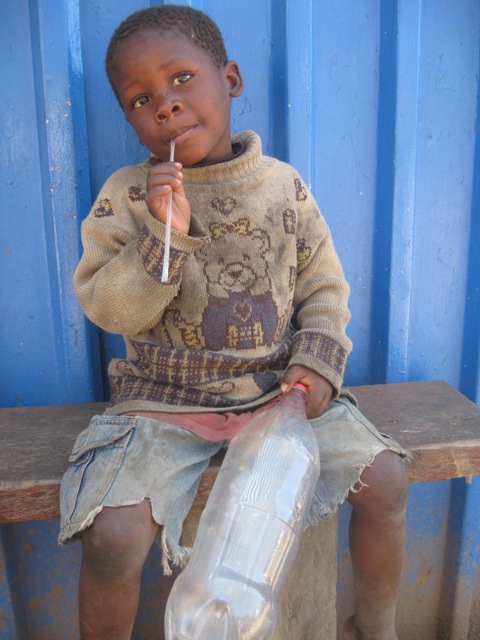
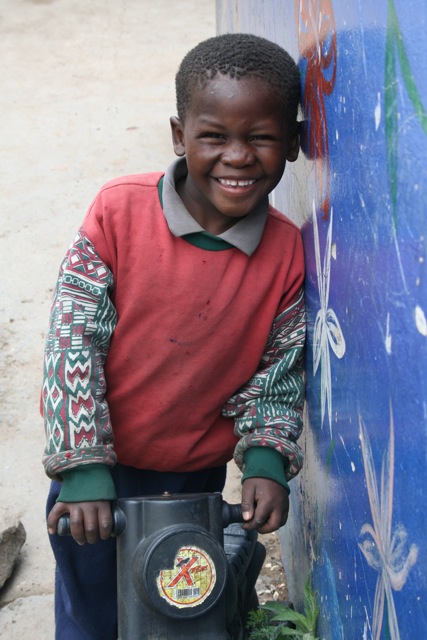
This reading from Luke reminds me a bit of an experience I had with a young child I knew named Anele when I lived in South Africa. For two years, I was a missionary of the Episcopal church in a town called Mthatha in South Africa. Specifically, I worked at a community center in a neighbourhood of Mthatha called Itipini. Actually, to call Itipini a neighbourhood might be going too far. Itipini is a word that means “at the dump” and that’s an accurate name for a shantytown community that was built on the site of a former garbage dump so people could scavenge off the garbage. There is no running water or electricity and the shacks people live in are made out of random pieces of tin, tarps, assorted old car parts, sticks, mud, and even, in one instance, a few beer bottles. Basically, people use whatever will provide minimal protection from the elements but it’s not much. When it rains, shacks leak, and during the winter, they get cold inside. Itipini is one of the poorest parts of South Africa and the socioeconomic indicators there are among the worst in the country – high rights of unemployment, school drop-out, and HIV infection, for instance.

Our community center had a pre-school and there were two kinds of children in Itipini: those who went to pre-school and those who didn’t. The former were the ones who had mothers who looked after them, washed their clothes, and made sure they were on time each day. The latter were generally children whose parents or guardians – if they had them – were so burdened with other responsibilities they couldn’t get their act together and get their children to pre-school. Our teachers made an effort to reach out to these parents but the teachers were fighting against entrenched social patterns that are hard to break.

I developed a kind of rapport with the children who did show up to pre-school. I played my guitar with them and taught them English through songs. I played with them on the playground. They always wanted to climb on me like a jungle gym but over time I was able to set some boundaries on their activity so that I wasn’t being constantly beaten up. My role with these pre-school children was becoming, in part, the centre of my existence in Itipini. I was getting comfortable with this role and putting myself at the centre of the pre-school action.

That’s when Anele entered the picture. When I first met him, he was about 4 years old and sort of hanging around Itipini. His clothes were dirty and tattered and he was so clearly lonely and bored. Even in a place like Itipini, Anele was a sorry case. He was on the fringes of Itipini and that means the fringes of South African society.

Now one obvious answer in a situation like this is to try to involve Anele in the pre-school program. He was the right age. He would get fed at pre-school. He would have some activities to keep him busy for part of the day. He might even learn something along the way. But there was a problem: Anele was so annoying! When I tried to engage him, he would get so engaged he’d start pulling my hair and yanking me around. He had so much energy but didn’t know how to channel it productively. It made him a very difficult person to love. It was easy to think – why bother? I have these other children and I don’t need to include Anele. Time passed and I wasn’t having much success. My efforts to invite Anele to pre-school result in his very sporadic attendance. When he did come, he was so annoying I just ended up liking him less. What was the point?

It took me a long time – too long – to realize this but God was acting in Anele’s life. God’s plan for Anele’s life did not include him sitting around all day with nothing to do in the same torn and dirty clothes. When I looked at the situation with fresh eyes, it was easy to see Anele’s rambunctiousness as a desperate cry for attention and TLC. I started doing some investigating. It turned out that Anele’s young mother had left him with his grandmother while she went to a big city to look for work. That was several years ago and no one had heard from her since. The grandmother was trying to take care of Anele and her other children and grandchildren. Like many other grandmothers in Itipini, she was overworked and struggling to support everyone. Anele’s obvious energy and enthusiasm that manifested itself in some exuberant behaviour made him easy to dismiss as a “bad kid” and so not worthy of a lot of attention.

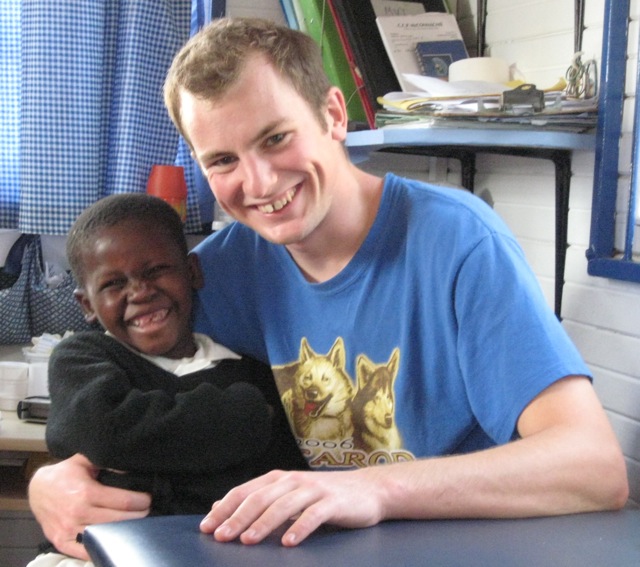
Seeing the situation in this way, I gradually started working more with Anele and his family. I checked to make sure he came to school. When he joined us on the playground, I tried to teach him the boundaries I had established. We made sure he had some extra clothes. Our relationship began to improve. As he grew older, he developed a love for washing my car. Except for the one time he got so enthusiastic he ripped the rear wiper off the car, I was happy to help him channel his energy. When the time came, he entered first grade and is still in school today.

Gradually, Anele who had been on the margins was drawn in. My circle, which had been focused on me and the other children, was drawn wider until we had a new centre that wasn’t about me but was more centred on God, with Anele and the other children and I taking our roles in that circle. God was calling me into action in Anele’s life. It just took me a while to realize that. I found God acting on the margins and fringes of what I had made my existence to be.

Now I know that it can sometimes to be a challenge to get us to look to the margins. I am not saying that all of us are called to play with the grubby, snot-nosed, dirty, and smelly children on a garbage dump in South Africa. Reaching out the margins is not exactly everyone’s idea of a good time. But guess what? God knows that. So to conclude, I want to suggest two bits of wisdom that God gives us to help us as we re-centre our faith and look to the fringes.

The first is that sometimes we don’t feel prepared for what God is calling us to do.  This is a major theme in the Bible and we see it particularly in the Jeremiah call story this morning. God calls Jeremiah to be a prophet and Jeremiah says, “Not me – I don’t know how to speak. I’m only a boy!” God will have none of it. God reminds Jeremiah that God has known him since before he was born and has formed him for this role. That’s important for us to remember: we may not feel prepared for what we believe God is calling us to do but we can take strength from the knowledge that God has known us and formed us for the roles God puts before us.

Even if we still feel uncertain about where God is leading us, we can remember that God is with us every step of the way. That’s what God reminds Jeremiah of this morning. We hear that reminder again in this morning’s psalm. God will deliver us and rescue us. God is our rock of refuge and strong fortress. God saves us from the wicked and unjust.

Sometimes when we look at those marginal areas in this world, it can seem pretty overwhelming. I thought that when looking at Anele – a broken home, little food or money in the household. Really, God, you want to me address this situation? The same is true of many situations in this world. Homelessness? Really, God? What do you expect us to do about that? There’s way too much to do! The second bit of wisdom that God gives us about heading out towards those marginal areas addresses this issue directly. God reminds us that sometimes it’s not about what we can do but who we are that really matters. We are, after all, called human beings and not human doings for a reason.

The reading from Corinthians this morning is a particularly good reminder of this. It’s the well-known reading about love – “love is patient, love is kind, love is not envious or boastful or arrogant or rude” and so on and so forth. A common Bible study idea with this passage is to insert your own name for love and see how you stack up. Jesse is patient, Jesse is kind, Jesse is not envious or boastful or arrogant or rude. So far, I’m 0 for 6. How are you doing? Jesse does not insist on his own way. 0 for 7. Jesse is not irritable or resentful. Did I mention how annoyed I got at Anele? Anyway, I think you get the idea.

What’s important to remember here is that none of these qualities of love are things we actually have to do – patience and kindness are qualities of our personhood. When we venture out towards those marginal areas, we must go as the people God has called us to be. I didn’t actually do much for Anele. I just tried to be patient and kind to him and his family and things started happening. It might seem overwhelming to do anything for the homeless person you pass on the street. But what happens when you first ask the question, who can I be around the person – patient? kind? not rude?

God is always calling us to re-centre ourselves and look to where God is acting – even now – in the world. It’s true that we draw in and gather together in church on Sundays but this isn’t the end of the story. We are here to be nourished and fed and strengthened so that we can be flung out again into the world, to those marginal and fringe areas outside our normal range of vision. We go to those areas to draw the circle of our lives wide to include all God’s people with God at the centre.

We can go out in the confidence because we know that God is with us and has called us to this role. And we go out with the knowledge that we are called simply to be, to be the people of God in the world. That is good news! It is the good news Jeremiah heard from God. It is the good news Jesus proclaimed in the synagogue in Nazareth two thousand years ago. It is the good news Paul shared around the Mediterranean. It is the good news I learned from Anele. And it is the same good news our world needs to hear this day and every day.

Amen.

“Deliverables”

One of the great things about being an Episcopal divinity student is that there is plenty of money out there to support any efforts you might want to make towards global mission. A couple of organizations routinely fund summer mission trips.

We had a representative from one of these organizations on campus a while back to explain the application process. This person spent a good bit of time on how to write a good project proposal and that prompted a question from me, similar to one I asked at the beginning of the term. I said that I thought the fruits of mission were mostly in the time spent and the relationships built, not in any projects completed, especially given the short time most divinity students have to devote to these trips.

The answer I got was very clear: “there have to be deliverables.” You have to come back with something to show for the money.

That word “deliverables” has been stuck with me ever since. I really don’t like it.