In 2010, I first went to Bishop Gwynne College, an Anglican theological college in Juba, South Sudan. Among the many students I met was Simon Wal Geng, a bright, funny, and hard-working student. Unusually for a member of the Episcopal Church of the Sudan, Simon was a Nuer and part of a small minority at the college. Nonetheless, he made many friends. I remember the way he engaged in the classroom and in conversation, whether that was when we talked about the ways in which our churches were different or when he was learning about agriculture in the college’s model garden. I remember how he liked to joke and to laugh but also was serious about his studies and knew the opportunity that had been afforded him by being able to study at Bishop Gwynne. I later learned that the college administrators had taken a chance on him in letting him enroll on the introductory foundation year. His past academic performance was not terribly stellar. Through his enthusiasm and his commitment, he succeeded and eventually transferred into the diploma program from which he in time graduated.
Simon on the front right, in a classroom discussion
Last July, I learned that Simon had been shot and killed in the violence of South Sudan’s ongoing civil war. He had returned to his home diocese of Akobo and was arranging local meetings for peace (something that grassroots church leaders in South Sudan have a lot of experience with) and it was then that the fatal shooting occurred. As with many deaths during this civil war, the details are sketchy but the outcome is not. Simon’s death is but one of many senseless deaths and one that makes peace that much harder to achieve.
Pope Francis has designated this Friday, February 23, as a special day of prayer and fasting for the people of South Sudan and the Democratic Republic of the Congo. Many Anglican leaders have joined this call as well. When I think about the scale of violence in these countries and in the world, it is hard not to feel overwhelmed and discouraged. When I think about the senselessness of a death like Simon’s, I grieve at the potential futures that are lost because of it. Prayer and fasting, in lament, from a place of pain and grief, are a wholly appropriate response.
But as a Christian I also know that it is in death that God in Christ works God’s great power to save. So I pray as well that Simon’s death and the deaths of so many tens of thousands of others become places in which the people of South Sudan and the DRC may see God’s reconciling grace working in new ways.
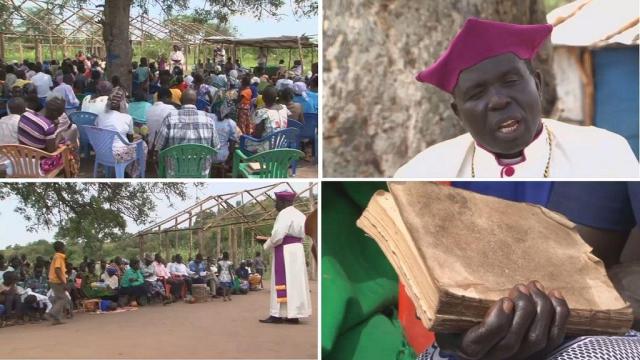
Reuters and AfricaNews have a short profile of Emmanuel Murye, Anglican bishop of Kajo Kaji in South Sudan.
As a result of violence in South Sudan, most of Bishop Murye’s diocese has been displaced to refugee camps in northern Uganda. Rather than stay behind in Kajo Kaji, Bishop Murye has chosen to go live in the refugee camps and minister to his people there.
This is not a new story. The Anglican Communion News Service has reported on the Diocese of Kajo Kaji over the last year, including this lengthy report, and the diocese’s own website has much helpful information. But it is always helpful when secular media report on religious stories. What is particularly devastating about this story is that prior to the current outbreak of violence, the Diocese of Kajo Kaji was one of the most successful dioceses in South Sudan. The previous bishop, Anthony Poggo (now Anglican Communion adviser to Justin Welby), built a thriving diocese with a strong Bible college and many other important institutions. One can only wonder what has happened to those in the last year.
Stories like this are an important counterpoint to many of the stories of migration and displacement that are in the news today. We often tend to think of refugees as helpless and lacking in agency, biding their time until those of us with agency and resources decide to help. What this story reminds us of, though, is that refugees and migrants are often actively working to shape their own lives. They don’t lose their agency. Rather, they seek to exercise it in different ways. Our job is to ask, “How can we assist you?”
As I watched this video, I also thought of the historical parallels. It turns out that Bishop Murye is not the first refugee bishop from South Sudan.
During Sudan’s first civil war in the 1960s, Bishops Elinana Ngalamu (later archbishop) and Yeremia Dotiro were forced to flee their own dioceses and ended up in northern Uganda where they lived and ministered to their people, working closely with dioceses of the Church of Uganda. There, they built a strong church that, when the civil war ended, returned to southern Sudan and made a significant contribution to the country’s recovery.
During Sudan’s second civil war in the 1980s and 1990s, Bishop Daniel Zindo of Yambio followed his people to refugee camps in the Central African Republic. Bishop Seme Solomona, in a quasi-Exodus moment that is much remembered in the South Sudanese church, led his people from Yei to safety in northern Uganda. Bishop Joseph Marona for a time lived among his people in what was then called Zaire and is now the Democratic Republic of the Congo.
Sadly, then, Bishop Murye is not unique. In the same way that the current violence in South Sudan has uncomfortable historical parallels, so too does the response of the church. For the most part, these important stories of Anglican history have gone mostly undocumented and unremarked upon.
Finally, I find that a story like this is, among much else, a helpful reminder of the role that bishops are called to play in the church. Being a bishop is not about having the nice house or car or cathedral but about being a beacon in the midst of one’s people, pointing the way to the kingdom of God in our midst. As Bishop Murye says in the video: “I was called to be leader of people, not a custodian of the soil, of the tree or of the houses, but I have to take care of the people.” In South Sudan, that is what being a bishop is all about.
In the past week, there’s been sustained violence in Yambio, the capital of Western Equatoria state in South Sudan.
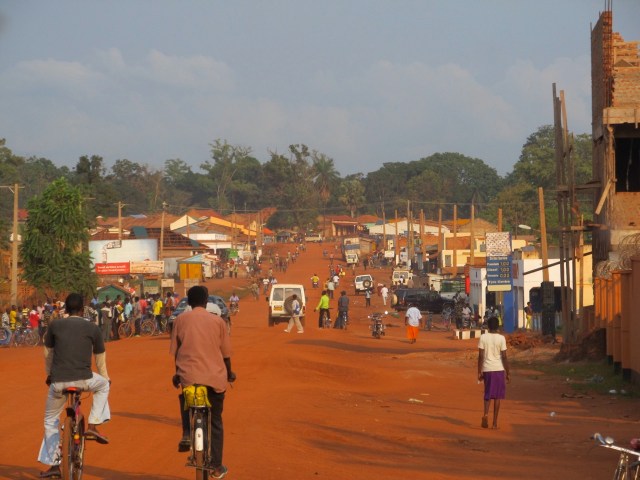
Main St., Yambio
A friend in the area wrote me this:
Beginning from Wednesday last week has been very hard for Yambio, many people have been killed. A delegation from Juba came in to try to sort out the issues. They left yesterday. [There are] many IDPs [internally displaced persons] in various points including the UPDF [Ugandan army] base in Nzara airstrip, ADRA compound in Yambio and other churches. Starvation is getting high.
The news is somewhat surprising because Western Equatoria has been largely remote from the ongoing violence in parts of South Sudan that began in December 2013. This news report frames the conflict as being one between members of the Zande and Dinka ethnic groups. There’s probably some truth to that, though as always it’s important to understand the long history.
The Zande are an agrarian people and the Dinka are cattle-keeping pastoralists. I don’t want to essentialize people, but I remember on a visit to Western Equatoria once seeing several Dinka driving a huge herd of cattle down the road. (Our car had to pull off to the side.) On either side of the road were the farms of the Zande. It’s basic, but you can see the potential for conflict right there.
But there’s a more recent history as well. Yambio is the heartland of the former Zande kingdom, which was dismantled with the coming of colonialism. Dinka are more recent arrivals. During Sudan’s second civil war in the 1980s and 1990s, the rebel Sudan People’s Liberation Army—dominated by Dinka—”liberated” western Equatoria early on but then ruled the territory in ways that made many Zande resent their presence.
In any event, this recent violence in Western Equatoria pales in comparison to what is going on in other parts of the country, where horrific reports are emerging of violence involving Dinka and Nuer. But I highlight this episode for two reasons.
First, it shows the logic of violence. When a state can’t stop violence—indeed, when it becomes a perpetrator—people start thinking that violence is a legitimate recourse to “resolve” grievances. In this case, the particular grievance appears to be the governor. As South Sudan’s civil war stretches on without any meaningful resolution, the logic of violence is that it will only spread until it comes to seem as if it is the only way to address conflict.
Second, I was struck by the note my friend sent me. The government comes. The government “sorts things out.” The government moves on. And what remains? People whose lives have been changed, who are seeking refuge and who are now displaced. What happens to them? The cumulative impact of these “small” outbreaks of violence is only to further destablize and set back the country.
My friend, who works in the church, concluded his e-mail by saying that church leaders are meeting to consider their response. I shall share more information as I receive it.
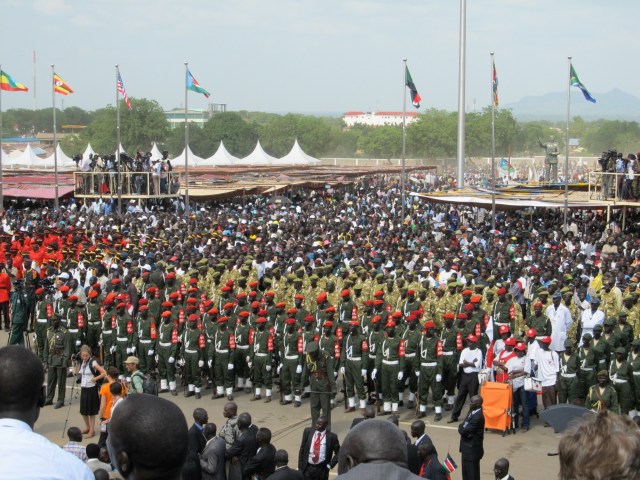
It is July 9. Four years ago on this day, I was in Juba, South Sudan as the newest nation in the world was inaugurated. After decades of civil war, South Sudan at last had achieved its independence. It was a day that was palpably full of hope, expectation, and wonder.
Now, those memories seem like a terrible joke. In the intervening four years, South Sudan has fought brief battles with the north. Most cataclysmically, since December 2013, parts of the country have been consumed by civil war.
I am in the process of writing finishing a dissertation about South Sudan during its earlier civil war, the one between 1983 and 2005. What has struck me most powerfully in these last 18 months is the sheer number of parallels between the conditions on the ground now and what was reported two or three decades ago. You would have thought we could have moved past this but, no, unfortunately, it seems we cannot.
When this latest round of violence began, I had a lengthy series of posts reporting what I had heard in phone calls and e-mails from friends across South Sudan. In time, I ended that series not because I stopped caring but because it didn’t seem as if many people cared. I have continued to stay in touch with friends and church colleagues in South Sudan and abroad, continued to attend conferences related to the matter, and continued to keep the country and its churches in my prayers. Meanwhile, South Sudan’s spectacularly inadequate leaders participate in periodic “peace negotiations” in some of Africa’s finest hotels, make all the right noises—and then fail to effect any improvement in the suffering of their people.
So where does that leave us now, “us” here meaning people who don’t live in South Sudan but feel a great attachment to its people and its churches and so desperately want to see them succeed? On the fourth anniversary of independence, three thoughts come to mind:
First, while it is true that the effects of the violence in South Sudan are horrific, it’s not the case that these effects are equally spread across the entire country. The entire country is not equally consumed by civil war. This is important, if for no other reason than that we should not write off the entire place as beyond our help.
Second, the causes of this violence are deeply, profoundly complex. It has to do with the prevalence of small arms in the country, existing patterns of religious leadership, opportunities for young men, the lack of infrastructure in the country, and a whole lot else. One part of this is the division between two major ethnic groups, Dinka and Nuer, a division we should note that is largely due to policies pursued by the British colonial government. It is this division, however, that tends to get all the attention.
Finally, at one conference I attended, there was much despair about the present situation. But one person who has been involved in South Sudan for a very long time said at the end of his presentation that his grounds for hope came from the possibilities of working with and through small-scale, local institutions. He had largely given up on the existing national leadership and national institutions, but he did think there was lots of potential for working at a more grassroots level in various places of the country. He didn’t say this at the time but I immediately thought, “Oh, the churches.”
It is very easy to lose hope when thinking about South Sudan. Christians, however, believe that new life follows moments of death and despair. The reconciling work of the church—however limited, local, and small-scale—remains the grounds of whatever hope I continue to have.
Three years ago today, I was in Juba, South Sudan for the birth of the world’s newest nation. After decades of civil war, South Sudan broke away from Sudan under the terms of a negotiated peace settlement.
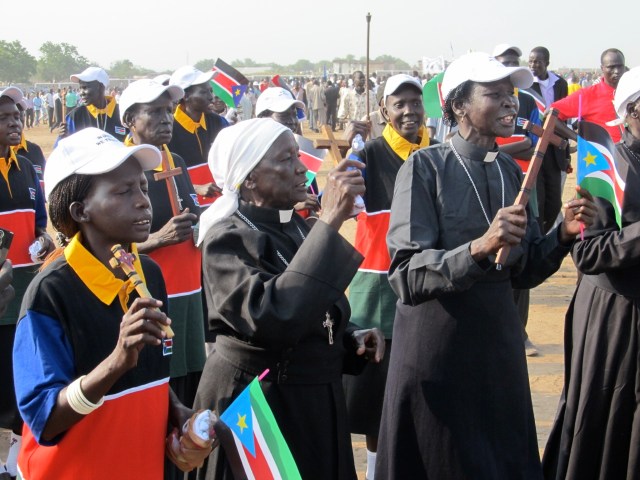
It was an overwhelming day. I remember walking out to the site of the celebrations around 6.30 in the morning. The streets were full of people with an eager energy. At the site itself, there were crowds and crowds of people dancing and singing and celebrating—including some Anglican priests.
There was this powerful sense of hope for the future, that at last, after so much war, South Sudanese would be able to set their own course. I remember speaking to one bishop who was near tears as he told me, “I know so many people who did not live to see this day.” Every word he met in a profoundly literal sense. There was a sense of obligation to those who had died to craft this new future together.
As I recall, the actual events surrounding independence were rather banal. They began late, the speeches lasted too long, the sound system didn’t work so well, the crowds began to get impatient, and the jaded foreign correspondents started smoking. It was hot, of course, and for those of us out in the cheap seats, it was not always terrible comfortable.
As I walked away that afternoon to write a story about the event, I remember holding these two contrasting emotions together: on the one hand, the sheer joy and expectation; on the other, the banality and mundanity of any major event. Independence was something special and unique, of course, but it was also something that took place fully within the context of daily life and was shaped by that context of lateness and verbosity.
In the three years since independence, the news from South Sudan has not often been good. A dispute between South Sudan and Sudan led to a shut-down of oil production. The health and welfare indicators in the country continue to be among the worst in the world. Most significantly, since December of last year parts of the country have been embroiled in a metastasising civil war.
It is hard, in reading about South Sudan, to think back to that sense of hope and expectation which was so strong three years ago. And I wonder if that’s not because we haven’t also lost sight of that second emotion, the sheer banality of everyday life. In all of the big plans for the future and big discussions about the political future of the country, it is easy to lose sight of the daily existence of so many South Sudanese.
So I am grateful on this third anniversary of South Sudan’s independence for the continued work of the church—in its work for peace and reconciliation at a local, grassroots level; in its commitment to delivering aid and assistance to the displaced across the country; and in the hope it embodies for a new future for the country. The work of building a new country is long and arduous. It is when the focus is placed on the concrete, day-to-day lives of the millions of South Sudanese who yearn for peace and opportunity that the country begins to move forward.
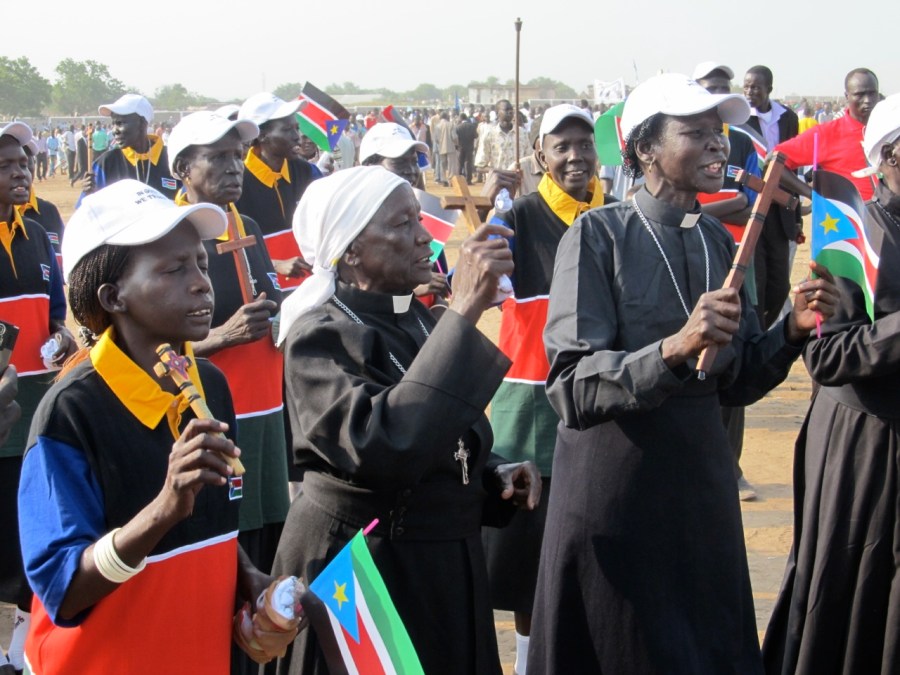
Daniel Deng Bul, the Archbishop of the Episcopal Church of South Sudan and Sudan, and leader of South Sudan’s National Platform for Peace and Reconciliation, has written an important letter outlining the efforts of so many to bring about peace in South Sudan.
I have uploaded the letter here so that you can read it in its full, but here are a few excerpts that struck me.
Why is it so important at this point to raise an independent voice for peace and reconciliation? The war is dividing and polarising the people and communities of our country. The middle ground is eroded. When you listen to one side you are criticized as biased towards one or the other. Each side wants you to be with them. And if you are not with them you are against them. Tribal allegiance is expected and people labeled accordingly. This makes it very difficult for people and leaders to stand in the middle and reach out to both sides equally. Motives are questioned, actions are doubted and words are twisted. Reaching out to both sides requires courage and commitment to the ideal of a healed nation. This is why being independent and united is so important. Standing in the middle is necessary to reach both sides and to bridge the divide between people and political leaders, between divided communities. We serve the people and we serve our leaders. We are inspired by the courage of our people and guided by our belief in the Word of God. Independence does not mean you are against the government or the Opposition, against one or the other community. Independence for the [Reconciliation] Platform means we can listen to everyone equally, openly and inclusively to bring the voices of all the people together to advance peace and reconciliation.
To be a reconciler is to be stuck in the middle of deeply conflicted situations. I am reminded of the Latin word for priest, “pontifex,” which means bridge-builder. The trouble with being a bridge, however, is that you get walked all over. It is that holy work of bridge-building to which Archbishop Daniel and others are dedicated.
Reconciliation is not just about a cessation of hostilities between warring parties but involves actors from across society.
To start the journey for our healing, we have to come together and speak with one voice against this war that is tearing our nation and our people apart. The Platform is reaching out to all constituencies and groups. The role of women, youth, religious communities, traditional leaders, government and opposition and many more are recognized as equally essential if we want to build a broad coalition of people to stand up against the war and urge our leaders to find and implement solutions that stop the war and begin the healing and development we all need. The Scriptures have countless calls for us to be of the same mind and consider others better than ourselves.
Be of the same mind toward one another… And let us consider one another to provoke to love and to good works (Romans 12.16; Hebrews 10.24, NKJV)
In all that is happening in the world—you can read about the work of an Anglican priest in Iraq here—it is easy to lose sight of South Sudan, particularly as the onset of the wet season leads to a necessary diminution of violence (though not of suffering). But the need for reconciliation remains acute and we can continue to pray and support the work of Christians there.
Last April, I was in Bor, South Sudan on the Sunday after Easter, the so-called “Low Sunday” because attendance (and the energy level) is generally a bit less than the previous Sunday. The announced attendance at St. Andrew’s Cathedral in Bor that day was 1,249. It was, as many Dinka services are, a high-energy worship service (which I wrote about in this Christian Century article).
Bor has had a traumatic two months. Control of it switched hands several times between the government of South Sudan and a rebel force. The centre of town was destroyed. The Sudan activist John Prendergast recently traveled to Bor and filed a lengthy trip report, which is devastating to read—they drove down one empty street; when they came back a few hours later, there were bodies lined up along the road that had been found in the interim and had been brought out for burial in a mass grave.
There is essentially no one there. Whereas when I visited, there was not a spare seat or corner of bench, now you can see the sea of empty places.
The dean of the cathedral is a man named Thomas Agau Kur, who has been interviewed by several of the handful of western reporters who have made their way to Bor. He has been presiding over funerals at mass grave sites. But he told one that he is concerned about the dead bodies in outlying villages and the lack of priests there to perform the rites:
There’s no funerals! Who’s there? The whole town is deserted, who can make the funerals? I’ve been used to being in the place of the burials like this morning, where that mass grave of 134 are buried, and one is still being dug, so that to put the other people who are still being collected in the towns.
Another friend in Bor wrote to say that he estimated that only about half of the bodies in Bor had been collected and buried. So the task will continue for some time.
What to say about all this? At times, it seems the situation defies description or response. If nothing else, however, it is a reminder of the way in which Christians are people who called to enter into the pain of the world, so that together we may come to share in the resurrection—no matter how distant or faint that prospect may seem.
Last April, when I was in Bor, South Sudan, I stayed in the compound of St. Andrew’s Cathedral. One of the great things about staying in a cathedral—and I imagine this is as true of Canterbury as it is of Bor—is the community of people who live and work there.
These women are actually from Jalle, a community north of Bor, but you get the idea of what it was like at the cathedral
Among this community were a large number of women. For a variety of reasons, they had come to be part of the cathedral community. Some were clergy. Some were widows of the war. Some worked in the shop that was on the grounds of the cathedral. My encounters with them were a constant—and welcome—part of my stay at St. Andrew’s. I remember one woman who came and sat next to me and started drawing in the sand before us. Then she pointed at what she had drawn and started saying Dinka words. It took me a little while to realize but she was teaching me to count in Dinka, a task made more complicated by our complete lack of a common language. But I got some of it. There are other women whom I remember because of their fervent, passionate, and extemporaneous prayers every morning and evening at the daily office. All of them carried with them their long crosses, a symbol for them of the death-defeating power of Christ.
Now comes the distressing news that several people who sought shelter at St. Andrew’s during the recent violence in Bor have been killed. One report says “scores of female church workers.” My friends still in Bor have told me that 31 people in total were killed, among whom were five priests who also happened to be women. It was, as I understand, the mass grave of these people where the archbishop of Canterbury prayed on his recent visit to Bor.
As best I can understand it, this is what happened: when the violence around Bor began, many people—including most of the women in the cathedral community—fled across the Nile River to place called Awerial. But many others left their home areas and came to the cathedral because they thought it would be safer there. The bishop of Bor, Ruben Akurdit, actually warned this would happen in a phone conversation in December. When the violence again swept through Bor a few weeks later, the cathedral was targeted not—importantly—because it was a cathedral but because it was a place where people were gathered.
None of the women who were killed were women I knew when I stayed at the cathedral, but that hardly matters. Whatever the context and whatever the details, this is horrifying news and these are horrifying pictures.
But it is also important to note that these are not the only people who have been killed in this violence. My friends in the Diocese of Bor have told me that last Thursday—after the signing of an alleged peace agreement—there was violence in the village of Kolnyang outside Bor. Twenty-eight people were killed, including both the wife and the father-in-law of the Episcopal archdeacon of the area, Simon Deng Yahu. Rev. Simon was injured in the attack. The whereabouts of eleven other people—eight of them children—are currently unknown.
Two days later, last Saturday, two priests—Rev. Peter Yuiu Gai and Rev. Isaiah Ayuen Akau—from Bor were traveling to Juba by road. Both were killed in an attack on the road, along with two lay people. Rev. Isaiah was the chair of the diocesan youth organization, which is called Jo Wo Liech.
I have a complex reaction to all this news—and, critically, how it is reported. I hate, hate, hate when South Sudan (or any other non-western country for that matter) only appears in the news when the words “rape,” “kill,” or “violence” can also be used. I want these stories to be reported. I want these people to be remembered. But I also want their ministry and lives to be remembered for far more than the way in which it ended. I don’t want us to be able to pass over this story with a glance—”oh, violent Africa”—without also understanding that these are people like you and me. Note that the story that started all this around the Anglican portion of the Internet doesn’t report precise numbers of people killed. What seems to matter is death, rape, violence, women.
I’m also uneasy with how this story can be used. The initial story comes from an organization dedicated to reporting stories about Christians around the world “under pressure for their faith.” This is a worthy goal, but I’m not sure the violence around Bor fits the bill. While it is true that Christians were killed in Bor, I don’t think it is true to say that they were killed because they were Christian. They were killed because they were in the wrong place at the wrong time. The way to address violence like this is to prevent the creation of these “wrong places.” And it’s not as if we weren’t warned. Bishop Ruben did talk about this back in December after all. Were we paying the kind of attention to Bor then that we pay now, after the fact?
Most of all, I worry about the tokenization of death. Why are we paying attention to these deaths at the cathedral and not the deaths in Kolnyang? Can we begin to grapple with the full scope of the suffering or do we only isolate it into a single incident because that is all we can handle?
Remembrance is not an easy task. No life—and no death—is simple and straightforward. The best tribute we can bring is to remember all who died in that way.
As a peace deal in South Sudan appears to take hold, more and more pictures are coming out of the areas most affected by the recent violence. This is the market in Bor, a town I spent time in last year.
Most horrifying of all has been the pictures of a mass grave at St. Andrew’s Cathedral in Bor, a church community I wrote about in a recent Christian Century article.
(These photos—and many more—are on the Facebook page of someone I met in Bor last year. He has made them available to anyone to see.)
As I have been reading about the macro-level of the violence—number of people displaced, relief needs, etc.—I have been trying to stay in pretty close contact with a friend of mine in Bor. For the purposes of this post, I’ll call my friend S.
Like many other reasonably-educated Dinka, S.’s wife and children live in Nairobi, Kenya. They are part of the large and persistent Dinka diaspora that was created by the civil war in the 1980s and 1990s. One of the reasons it is so persistent is that people like S. decide that because the schools are better in Kenya, they would rather their children grow up there, even if it means being apart from them. S.’s job with the church meant that he could afford to pay rent for a very small place in Nairobi for his family.
This week, S. was in touch to say that his family’s landlord in Nairobi is threatening to evict them because they have been unable to pay the last three month’s rent. Unless he gets the money—about $650 in total—his family will have to move from Nairobi to Kakuma Refugee Camp. Kakuma is the large camp in arid and remote northwestern Kenya, which was founded in 1992 to care for the so-called “Lost Boys of Sudan,” but now remains as a major community for people of lots of different nationalities. It is far inferior to living in Nairobi, however. It is isolated and cut off from the rest of the country and the schools are not nearly as good. It also means upending the lives of his children and cutting his wife off from her supportive social network.
On one level, S.’s story is familiar: bread-winner loses income, family displacement ensues. This happens as much in England and the United States as east Africa.
But on another level, S.’s story drives me crazy: THIS DIDN’T HAVE TO HAPPEN! The loss of income and the displacement is one microcosmic impact of violence that is the result of a struggle for control among member of the political class. If countries like South Sudan are to move forward, they need people like S.: educated, dependable, committed to their country and its future. In turn, people like S. need the same thing from their leaders. They need to be able to make long-term plans for the futures of their families. But they can’t do this if the very stability of the country is constantly in doubt.
Bishop Abraham Yel Nhial of the Diocese of Aweil, South Sudan has written an open letter to South Sudan’s political leaders. It expresses some of the deep frustration that so many South Sudanese are feeling with their leaders.
A MESSAGE FOR SOUTH SUDAN POLITICAL LEADERS AND CITIZENS
I want to appeal to South Sudanese political leaders, that if you believe in God, you must also believe that killing is a sin. Can you believe in God and not believing that killing is a sin? You all the times go to church to pray, what really do you pray for? What does God means to you and your faith? I thought that you, our leaders in persons of President Salva Kiir and Dr. Riek Machar knew what God’s will is for you in your leadership as leaders of our beloved nation over the last eight years? It is very unfortunate that both of you are forgetting why God gave you this responsibility to lead this nascent and fragile young nation.
Brothers in Christ, our leaders of South Sudan; God’s will for you President Salva Kiir Mayardit and former Vice Dr. Riek Machar is to bring peace, reconciliation and forgiveness among yourselves and to our innocent civil population who are dying because of you. South Sudanese have dangerously broken apart under your leadership. Please turn back and see by yourselves the damages that a month long war has caused this nation. How many people have died? What reasons have they died for? Have they taken part in your political debate in Juba? Give peace a chance!
Juba, Jonglei, Unity and Upper Nile states have lost all citizens that you would want to vote for you tomorrow to unjustified war. What message will you tell the remnant? All the remnants and those who are directly or indirectly affected are left with terrible trauma and or physical damages.
President Salva Kiir and Dr. Riek Machar, if you turn to peace, reconciliation, forgiveness and national healing, both of you will be remembered as great sons of South Sudan in this generation and generations to come. Please think and make your decisions wisely!
All in all, allow God to change your hearts! Scripture says, “Beyond all these things put on love, which is the perfect bond of unity. Let the peace of Christ rule in your hearts to which indeed you were called in one body; and be thankful” (Colossians 3:14-15). We, all Christians of South Sudan have one mission. Our mission in this fighting in our beloved nation is to plant peace, forgiveness, and national healing where hatred and unjust killing had been planted.
I believed all Christians have peace to offer to our politicians who lost the vision and the mission of South Sudan as a nation. It is also our role as Christians to encourage our people who are silently grieving for the killing of their beloved ones to accept reconciliation and forgiveness as the only way forward so that their contrite hearts are inwardly reversed. I appeal to all Christians to stand strong through the storm of conflict with message of peace in our heart knowing that this conflict will come to pass. Blessed are the peacemakers (Matthew 5:9). Be a peacemaker!
Finally, we all are heartbroken because of the wrong direction our nation has taken and continues in it. As a servant of God, my advice to you all is to take charge of your life and take charge of the future of our nation; don’t allow being used by desperate politicians.
Above all, lets continue praying to God to bring divine intervene soon and restore back the South Sudan in just peace; our hope is in Jesus alone. Jesus is the true foundation of our unity without Him we will never be united.
Written by Rt. Rev. Abraham Yel Nhial
The Bishop of Diocese of Aweil
Episcopal Church of South Sudan and Sudan (ECSS &S)
 In 2010, I first went to Bishop Gwynne College, an Anglican theological college in Juba, South Sudan. Among the many students I met was Simon Wal Geng, a bright, funny, and hard-working student. Unusually for a member of the Episcopal Church of the Sudan, Simon was a Nuer and part of a small minority at the college. Nonetheless, he made many friends. I remember the way he engaged in the classroom and in conversation, whether that was when we talked about the ways in which our churches were different or when he was learning about agriculture in the college’s model garden. I remember how he liked to joke and to laugh but also was serious about his studies and knew the opportunity that had been afforded him by being able to study at Bishop Gwynne. I later learned that the college administrators had taken a chance on him in letting him enroll on the introductory foundation year. His past academic performance was not terribly stellar. Through his enthusiasm and his commitment, he succeeded and eventually transferred into the diploma program from which he in time graduated.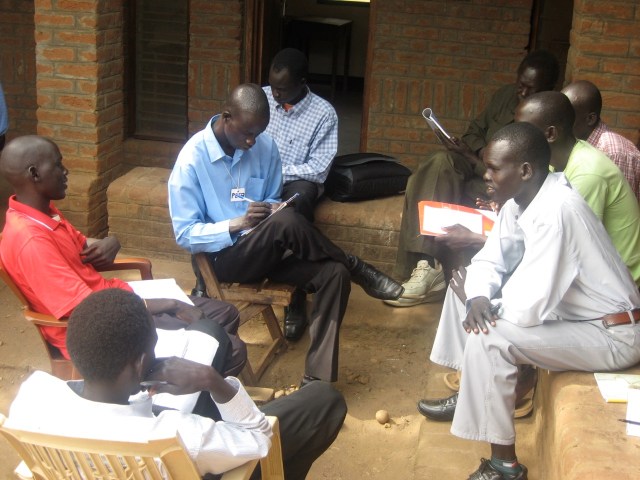




 Daniel Deng Bul, the Archbishop of the Episcopal Church of South Sudan and Sudan, and leader of South Sudan’s National Platform for Peace and Reconciliation, has written an important letter outlining the efforts of so many to bring about peace in South Sudan.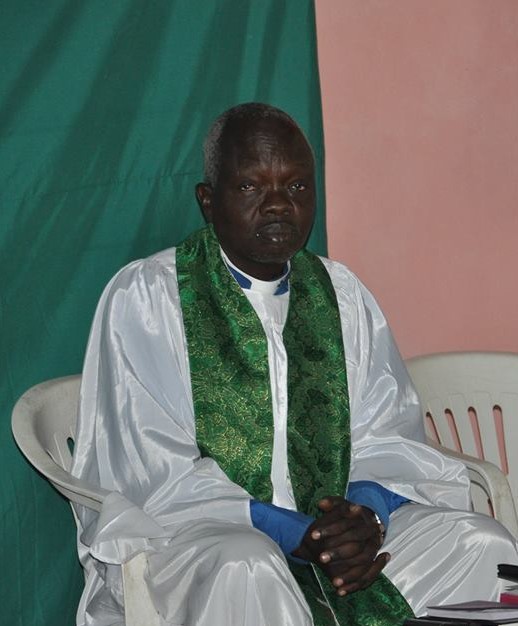




 Jesse Zink